
A federal judge has imposed new compliance measures on U.S. Immigration and Customs Enforcement after finding the agency violated a judicial order to stem overcrowding at a holding facility in downtown Baltimore.
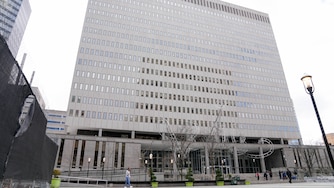
Attorneys representing detained immigrants alleged that ICE was continuing to overcrowd the five cells located in the George H. Fallon Federal Office Building and was providing inadequate medical care in violation of a preliminary injunction issued in March.
In a new order issued Monday, U.S. District Judge Julie Rubin ordered ICE to submit a sworn statement every two weeks attesting that the agency is following her limits and to provide information about how many people are held in each cell every day, as well as detailed information about detainees’ access to medication and their medical evaluations.
Rubin also requested within five days a copy of the notice of rights she ordered ICE to provide to detainees upon their booking into the facility, which outlines the details of her previous order.
ICE did not immediately reply to a request for comment.
The measures, part of an ongoing class action lawsuit over conditions at the Baltimore hold room, come as ICE has increased arrests across Maryland, leading to overcrowding and multiday confinements inside the temporary Baltimore processing site. Immigrants detained by ICE in Maryland are often held there before the agency transfers them to long-term facilities in faraway states.
Read More
The facility at Hopkins Plaza in downtown Baltimore has been under scrutiny since The Banner reported on poor conditions there over a year ago.
The facility was designed to hold detained immigrants for no more than 12 hours, enough time to complete processing paperwork and find space for them in a long-term detention center. As such, it does not have beds, bathing facilities, or other necessities for overnight stays.
But amid a spike in arrest numbers, ICE gave holding facilities like Baltimore’s an exemption to the 12-hour rule, allowing them to hold individuals there for up to 72 hours.
In her order this week, Rubin also indicated that she is considering the additional step of a court-appointed monitor to check for compliance with her injunction. She gave the parties two weeks to submit written arguments regarding that step and recommendations on whom she should appoint to the position.




Comments
Welcome to The Banner's subscriber-only commenting community. Please review our community guidelines.