
In the initial weeks she was confined to a detention cell, the 37-year-old Guatemalan woman clung to the brief moments she was allowed with her loved ones.
The daily phone calls to her husband and young daughter back in Maryland. And the Sunday visits from her nephew, who drove three hours north to see her in New Jersey.
One June day, she couldn’t call anymore. And there would be no more family visits.
Masked agents with U.S. Immigration and Customs Enforcement entered her cell carrying large guns, she said. They ordered the detainees to line up, shackled their wrists and ankles, and loaded them into a van headed for the airport. Along the way, one detainee asked where they were going.
“Somewhere bad,” the Guatemalan woman recalled an agent saying.
She would wake up the next morning inside a massive tent in the Texas desert, 2,000 miles away from her home, her family and her lawyer. It was the second transfer since ICE arrested her at a routine immigration check-in in Baltimore.
It would not be the last.
Follow one woman’s 2,000-mile journey through ICE detention
The Guatemalan woman, identified as D.N.N. in court documents, said she endured a handcuffed plane ride, limited care for her diabetes and other harsh conditions during her 300 days in custody.
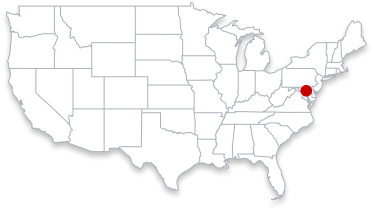

Baltimore
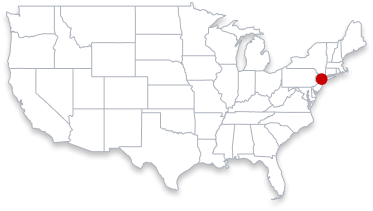
Newark, NJ
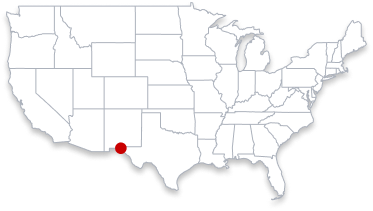
El Paso, Texas
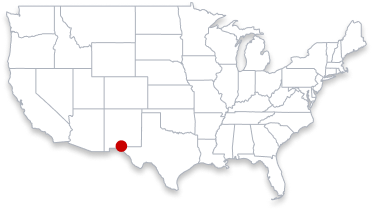
Otero County, NM
End of the line
On May 7, 2025, D.N.N. walked into a federal building in downtown Baltimore for a routine check-in with U.S. Immigration and Customs Enforcement, as she’d been doing for more than a decade.
This time, she didn’t walk out. ICE agents shackled her wrists and led her into the building’s holding room.
She said she spent three days there without access to a bathing facility, her bed a bench attached to the wall.
Under President Donald Trump’s unprecedented deportation campaign, ICE has made a practice of transferring people the agency accuses of being in the country illegally to detention facilities thousands of miles across the country, creating vast distances between them, their loved ones and the lawyers fighting for their freedom.
Maryland residents are transported across greater distances than people arrested in most other states. A Banner analysis of ICE records found that a person first detained in Maryland is typically transferred more than 1,200 miles, roughly the driving distance between Baltimore and southern Louisiana.
That’s in part because Maryland has no long-term immigration detention center.
The state has taken increasing steps to limit federal immigration enforcement. In an act of defiance, the Maryland legislature in 2021 outlawed the use of local jail beds for ICE detention. State Attorney General Anthony Brown earlier this year sued to block construction of an ICE long-term facility outside Hagerstown. And in February, Gov. Wes Moore signed a law barring local law enforcement from entering into formal cooperative agreements with ICE.
In a statement last month about a surge in immigration arrests in Maryland and Virginia, Patricia Hyde, acting assistant director of ICE’s Enforcement and Removal Operations, criticized states like Maryland for failing to cooperate with the Trump administration’s efforts.
“When sanctuary politicians refuse to work with ICE, they force our officers to make these arrests at large in the communities,” she wrote.
With no beds in the state for those caught up in the Trump administration’s mass detention efforts, immigrants from Maryland are being sent as far away as Texas and California, with little or no advance notice, which can imperil their legal defenses. Those detained say being so far from their homes in Maryland also exacts a deep psychological toll.
It’s upended the lives of Marylanders from all backgrounds: A Johns Hopkins public health researcher with a pending asylum application shipped off to Virginia, then Louisiana and then Texas, all within days. A Mexican laborer and father of four living in Baltimore who was sent to California. And a dual Mexican and U.S. citizen transferred five times across three states before federal agents dropped a monthslong effort to deport her.
If they are released, they typically are left to find their own way home.
Dozens of daily flights crisscross the country as ICE shuttles around an unprecedented number of people. In July, the agency launched 1,363 flights — a new monthly high under Trump — according to flight data collected by Human Rights First. That’s more than double the busiest month under President Joe Biden.
In an emailed statement, ICE called the transfers a logistical necessity based on bed space, medical needs and other factors.
Michelle Brané, who served as a Department of Homeland Security ombudsman for immigration detention issues under Biden, said a specific facility might be better equipped to meet a detainee’s particular needs by pairing them with a mental healthcare provider or an interpreter for a less common language. Other times, someone might be transferred because ICE is preparing to deport them and needs to move them closer to the right airport.
ICE said in emails that it ensures that detained individuals are able to attend their court proceedings — often virtually — before an immigration judge. But the agency declined to say who makes the decisions to transfer people and how.
The sprawling immigration detention system was designed to make sure that people who are considered flight risks or threats to public safety show up for their day in court, legal experts say. But some attorneys and experts accuse the Trump administration of using long detentions and multiple transfers to punish those detained and scare those yet to be arrested.
“A part of this administration’s strategy that we’ve seen in various policies over and over and over again is ‘Can we make things really, really difficult for people, and then they may opt to ... self-deport?’” said Colleen Putzel-Kavanaugh, an analyst at the nonpartisan think tank Migration Policy Institute.
In emails, ICE said any claim that transfers are being weaponized against those it detains is false.
Long-distance detention transfers weren’t always so common for Marylanders.
In the final year of the Biden administration, about a third of immigrants detained in Maryland were never transferred out of state, with many granted a supervised release. The remaining two-thirds were transferred out of state. But of that group, the vast majority — more than 4 out of 5 — were moved to neighboring Pennsylvania and Virginia.
During Trump’s second administration, ICE has detained more than 8,300 people in Maryland — six times as many as the agency detained during any similar period since at least 2022. Today, 94% of Maryland detainees are transferred out of state, and roughly 1 in 5 are moved to neighboring states.

The rest have been sent to places like Louisiana, Washington state and the South Florida Detention Center, known as “Alligator Alcatraz.”
For the Guatemalan mom, identified in court papers as D.N.N., it was a 2,000-mile journey from Baltimore to New Jersey to Texas to New Mexico, with her family and legal counsel rarely knowing where she would end up next.
She described a sense of hopelessness as she moved from facility to facility while her health declined. She worried her young daughter might forget her.
She had been deported before, more than a decade ago, but came back fleeing threats from people in Guatemala who she believes are part of a criminal network that reaches Mexico. She requested anonymity in this story for fear of reprisal from federal law enforcement and those who persecuted her in Guatemala.
In 2012, an immigration judge allowed her to stay in the United States and work legally, finding she would likely face torture or persecution if she returned to Guatemala. But under the ruling known as withholding of removal, ICE could still send her to a safe third country at any time.
And at her most recent ICE check-in, on May 7, 2025, agents locked her up.
They wanted to deport her to Mexico.
Why transfer?
For years, the federal government contracted with correctional facilities across Maryland to house people detained by ICE while their cases were pending in Baltimore.
But in 2021, the state legislature outlawed those contracts under the Dignity Not Detention Act. Supporters said Maryland should no longer be as intertwined with ICE’s enforcement efforts, especially as detention conditions worsened during the COVID-19 pandemic. And some believed that fewer available beds would push ICE to detain fewer people in the state.
While many immigrant advocates hailed the law as a moral flag in the ground, some immigration attorneys said they knew their jobs would get much harder.
Lawyers’ efforts to keep their clients in the country rely on interviews — in some cases about sensitive or traumatic incidents — as well as meetings with clients’ families to secure evidence like birth certificates. The process also entails time-consuming reviews of government documents with clients, many of whom speak little English.
Years ago, for attorneys in the Baltimore or Washington, D.C., regions, that meant easy drives to visit clients held in Frederick or Jessup. The farthest they’d often have to go to see their clients was the town of Snow Hill on Maryland’s Eastern Shore.
After the 2021 ban, Biden’s ICE occasionally allowed immigrants to return home on supervised release or await court proceedings from home while wearing an ankle monitor, some lawyers said.
But ICE didn’t stop detaining people. Maryland residents were transferred to detention facilities in central Pennsylvania and Farmville, Virginia. The drives were longer, but manageable; some attorneys would try to pack client meetings into the same day and get nearby hotel rooms for the night.
Now, with increased funding and a sweeping mandate from Trump’s administration in hand, ICE is arresting many more people than under past administrations and holding most of them in custody. Because there hasn’t been enough bed space to house detainees, they’ve experienced lengthy periods in temporary processing facilities not designed for overnight stays — like Baltimore’s holding room that became so overcrowded that a federal judge stepped in.
And ICE’s solution of building new long-term detention centers has been a slow and contentious process, as Maryland has rebuffed federal efforts to expand ICE’s footprint in the state. The proposed conversion of a massive warehouse outside Hagerstown, purchased by the federal government for $102 million in January, has been put on hold by a federal judge.
Maryland is not alone; four other states also have no long-term detention facilities. Illinois passed its own ban in 2021. Oregonians have voted multiple times to affirm a 1987 restriction on immigration detention. Connecticut and Delaware only have temporary holding facilities.
Over the last two years, under both Biden and Trump, immigrants in those five states were transferred more often and were moved a median distance roughly seven times that of people who started in states with long-term detention facilities.
The Banner’s analysis relied on ICE records about civil detention, obtained through a Freedom of Information Act lawsuit by the Deportation Data Project. The organization consists of lawyers and academics who work with the UCLA Center for Immigration Law and Policy to make ICE’s data public.
In emails, ICE challenged the reliability of the project’s work, saying the records have not been reviewed, audited or given context and that the group’s information is not accurate. The data project, however, says it publishes unaltered government data received directly from the Department of Homeland Security.
For immigration lawyers in Maryland, the process of defending their clients became more chaotic in 2025, when Trump returned to office and their clients began moving farther away.
Even simple tasks like getting documents signed have become painstaking, said Amelia Dagen, a D.C.-based attorney with the Amica Center for Immigrant Rights, a nonprofit that represents detained immigrants in Maryland. Experts say lawyers are also having more difficulty getting immigration judges to approve bonds while their clients’ cases are pending. Now lawyers are turning to entirely different courts to achieve the same goal.
In federal district court, attorneys are filing constitutional claims known as writs of habeas corpus, petitions historically used by people held in prolonged criminal detention without a trial. Use of habeas petitions in immigration cases has exploded since last year, as attorneys argue that their clients’ detention is unlawful and ask federal judges to order their release.
But if ICE transfers someone from Maryland to states like Louisiana or Texas before those documents are filed, the strategy is less likely to work, immigration lawyers said.
Jorge Reyes Medina, a Mexican father of four, was arrested in Baltimore in March. ICE officials transferred him to Arizona before sending him to California, where he was assigned a May date in immigration court.

But before that court date arrived, a federal judge in Maryland ordered ICE to bring Reyes Medina back to Baltimore for a bond hearing as part of his habeas petition.
They sent him first to Louisiana and then to Pennsylvania on his way back to the Baltimore holding room. He was then denied bond, sent to Louisiana, then to Texas, where he was given a virtual deportation hearing. The judge ordered his deportation on June 23. Court records show no appeal was filed.
Heading south
Immigrants first detained in Maryland are increasingly finding themselves in the Deep South.
More than 3,000 Marylanders were first transferred to Louisiana during Trump’s second term. They include Dulce Consuelo Diaz Morales, a dual Mexican and U.S. citizen born in Prince George’s County who was accused of being in the country illegally and detained by ICE in Baltimore.
She was moved to Louisiana, then transferred four more times over roughly three weeks, spending Christmas away from her young son before she was released in January.
For some, the sheer number of transfers is enormous.
A man from Pakistan, now in his early 40s, was arrested in Maryland and initially processed and detained in Baltimore in April 2025, ICE records show.
Days later, the man, who is not identified in records, was transferred to a long-term detention facility in central Pennsylvania, where he stayed for nearly three months.
Then he was moved 17 more times in less than a year. Three of those trips brought him back to the same Pennsylvania facility.
By the time he was conditionally released this summer, ICE had moved him 11,347 miles — a distance greater than four trips between San Francisco and New York City.
The final transfer
While Maryland has been successful in keeping long-term detention centers out of the state, immigrants detained under Trump have often been packed into ICE’s temporary holding facility in Baltimore.
Detainees are supposed to spend no more than 12 hours there while they are processed and moved to a longer-term facility.
But amid ICE’s surge in arrests, the agency granted itself a waiver for the 12-hour rule, and the holding room has grown increasingly overcrowded as those detained spend days inside without beds or showers. ICE is planning to replace the Baltimore holding room as part of a relocation to Elkridge, which is being opposed in court by local residents and leaders.
It’s where D.N.N., the Guatemalan mother from the Frederick area, was held after ICE detained her at a routine appointment in May 2025. She had been living outside the city for 13 years, thinking she was doing everything she was supposed to do to stay in Maryland.
After an immigration judge blocked D.N.N.’s deportation to Guatemala, she became eligible to live and work legally inside the U.S. as long as she checked in and had no criminal convictions.


It was one of the first times in her life that she felt free, she said.
She worked in a local retail store and cleaned people’s houses on the side. She learned to steam crabs and invited family and friends over during summers for feasts, the house smelling of Old Bay. Her family enjoyed trips to Ocean City, where she set up her hammock to catch the sunrise over the Atlantic Ocean.
But inside the holding room of the ICE field office at 31 Hopkins Plaza, those moments were just distant memories.
Conditions there became so poor that she and others sued the federal government last year, arguing that overcrowding and unsanitary conditions inside the facility violated their rights. As a result of the overcrowding, the judge limited the number of people ICE could hold at the facility, which was temporarily shut down for improvements.
This March, the judge named D.N.N. a class representative in the ongoing case that could have lasting consequences for anyone ICE arrests in Maryland. This week, a judge is scheduled to reexamine the holding room’s capacity amid allegations that ICE is again detaining too many people in Baltimore at once.
Before that case could be resolved, a separate judge in New Mexico handed down another ruling in March based on D.N.N.’s habeas petition.
She was getting released.
After she spent 10 months in detention at four different facilities, ICE agents took her to the passenger drop-off at El Paso International Airport on March 15 and drove away. They didn’t return her driver’s license, she said. All she had was a temporary ICE-issued travel document that she could use to board a plane. She had to borrow someone’s phone to call her husband and ask him to buy her a plane ticket.
“After so many months, I was in shock, I didn’t even know what to do,” she said in Spanish.
When she stepped through the doors into the spring air at BWI Thurgood Marshall Airport, her husband was there waiting for her.
They embraced. They cried. He told her that her children needed her.
Her immigration case remains unresolved, and she likely has no path to citizenship. The best she can hope for is her previous status quo — periodic ICE check-ins and renewing her work permit every couple of years. She also has health concerns after losing her employer-sponsored health insurance and some of her house-cleaning clients.
While she was detained, she said her biggest worry was about her 4-year-old daughter. D.N.N. was in New Mexico when she found out her daughter had been diagnosed with autism. The young girl appeared distant during periodic video calls, and D.N.N. feared her daughter was forgetting her.
Despite it all, after being forced more than 2,000 miles from home as a detainee, she still recounted with joy the moment she first walked through the front door of her house after nearly a year and saw her daughter.
“Mommy!”
And the young girl ran into her arms.
How we did this
Here's how we tracked transfers of ICE detainees to facilities across the U.S.




Comments
Welcome to The Banner's subscriber-only commenting community. Please review our community guidelines.