
Amid sweeping Democratic victories across the nation on election night, several rural counties in Maryland saw the reverse, electing conservative school board candidates who could shift their school systems’ agendas.
Those candidates, in Somerset, Frederick, Harford and Talbot counties, had promoted an agenda that includes limiting some books in school libraries, eliminating diversity initiatives and embracing fiscal conservatism and school choice.
School board elections are nonpartisan, but in recent election cycles, boards in several counties have become more conservative. The 1776 Project PAC, a national right-wing political action committee, spent about $40,000 in midterm campaign donations in an attempt to elect enough of its endorsed candidates to flip or maintain a conservative majority on several Maryland school boards.
As of midday Wednesday, 1776 Project-backed candidates in four of Harford County’s six districts seemed headed for wins. Only one Harford race, between Robert Wagner and Aaron Boyle, was close; Wagner, the conservative candidate, was in the lead.
Candidates endorsed by the Maryland State Education Association, the state’s largest teachers union, were winning just two of the six races. Representatives for the union declined to discuss races across the state on Wednesday.
Results are preliminary until mail-in and provisional ballots are counted. Officials will continue counting mail-in ballots on Thursday.
Read More
Harford’s board is made up of nine members, including one student member. Two members are appointed. Its members previously attempted to ban the young adult book “Flamer” from school libraries even after a rebuke by the Maryland State Board of Education. Last month, a Harford County Circuit Court judge ended the debate by upholding the state’s decision to allow the book in school libraries.
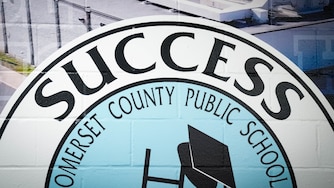
In Somerset County, a small Eastern Shore district where a set of moderate candidates had attempted to unseat members of a MAGA-aligned school board, voters favored candidates who supported the book restrictions and anti-DEI policies the board had passed.
Two 1776 Project-endorsed candidates, Ronald Purnell and Samantha Windsor, were leading, but Windsor led by just one vote as of midday Wednesday, with outstanding votes left to count.
In Somerset’s District 1, Sharyn Yuloff, a more liberal candidate, was losing to Valentina Downing, who is also registered to vote as a Democrat.
The board is made up of five members. Two of the most conservative members’ seats were not up for election in the midterms. Up to two conservatives could join the board, leaving it with a conservative majority.
That could change, however, if county board chair Matthew Lankford is removed by the Maryland State Board of Education. Lankford faces a removal effort launched by the Somerset Education Association after he dressed down a teachers union president during a school board meeting in August. The state board recently took the first steps in a lengthy process that could end with his ouster, saying that it found credible evidence “alleging inappropriate and unprofessional conduct during a local board meeting, as well as an ongoing pattern of improper behavior.”
In Talbot County, a divisive campaign between moderate candidates and a slate of hard-right candidates left the county sheriff asking for civility in this wealthy enclave known for being one of the purpler Eastern Shore counties.
School board chair Emily Jackson was losing to the 1776 Project candidate, Mike Butler, who had 69% of the vote by midday Wednesday. A second conservative candidate, Lisa Hayes, had 55% of the vote, leading Kate Taylor Logan. The number of votes in the election for school board was small, with just 2,116 cast in the Hayes-Logan matchup.
Talbot’s school board vice chair, Amy Dodson, was beating Anne Rosen, the 1776 Project-endorsed candidate.
Talbot’s school board has seven members, so it is unclear what effect the election of three more conservative members would have on the school system’s policies.
Frederick County residents, on the other hand, mostly said no to the slate of conservative candidates who called themselves the “orange ballot,” a contrast to the teachers union-backed “apple ballot.”
Frederick County school board candidates are elected to at-large positions, so the four candidates with the most votes will win. Teachers union-supported candidate Casey Day led the pack with about 43,000 votes, or 14%. Two other apple ballot candidates, Rae Gallagher and Dean Rose, were in second and third, respectively.
1776 Project-backed Heather Fletcher, who protested in front of the school board in 2025 against a policy that protected transgender students from harassment, was in fourth place. She had walked onto the platform with school board members in the middle of a meeting, wearing cat ears and saying she identified as a school board member, according to The Frederick News-Post. She was escorted away by a sheriff’s deputy.
About the Education Hub
This reporting is part of The Banner’s Education Hub, community-funded journalism that provides parents with resources they need to make decisions about how their children learn. Read more.


Comments
Welcome to The Banner's subscriber-only commenting community. Please review our community guidelines.