
Nearly 34,000 residents across Maryland, D.C. and Virginia could lose their access to the Supplemental Nutrition Assistance Program because of a proposed federal rule change, according to the Capital Area Food Bank.
The U.S. Department of Agriculture, which administers SNAP, also known as food stamps, proposed on Nov. 10 a change that would curtail portions of its broad-based categorical eligibility policy, or BBCE. The policy allows states to extend benefits to some households that do not meet federal eligibility requirements through participation in state-run programs.
The nonprofit estimates that 7,400 households in Prince George’s County and 5,000 in Montgomery County would be affected. A Capital Area Food Bank spokesperson said the organization uses data from the Center on Budget and Policy Priorities that estimates 99,000 individuals across Maryland, as of fiscal year 2023, live in households that are assisted by BBCE.
One complicating factor in measuring the impact of such a change, according to the food bank, is that some SNAP participants may not know they only qualify for benefits through state programs by way of BBCE.
Radha Muthiah, president and CEO of the Capital Area Food Bank, said in a Tuesday video call with The Banner that she has heard from clients who receive SNAP and say the current administration of benefits is inconsistent and sometimes less than what they expected.
“There’s just an element of surprise that can hit them,” Muthiah said.
Read More
This change comes atop the growing list of concerns about food insecurity and access in the region.
Prince George’s County residents face the highest rate of food insecurity in the capital region, at 56%, according to a September report from the Capital Area Food Bank. The capital region as a whole faces a five-year high mark of food insecurity.
The USDA defines food insecurity as “a lack of consistent access to enough food for an active, healthy life.”
The agency’s proposed rule change to change SNAP eligibility requirements has a 30-day comment period that runs through Dec. 10. It will then review those comments and formulate a plan for how to implement and proceed with the changes.
Around 6.3 million people nationwide could lose their benefits as a result of this change, according to the USDA’s estimate.
Previous Trump administration’s policies have targeted SNAP, including 2025’s H.R. 1, better known as the One Big Beautiful Bill Act. The law cut federal funding for the food assistance program by $200 billion over the next decade. The latest eligibility rules also expanded work requirements, restricted noncitizens and shifted some costs to states.
Nearly 50,000 Maryland households have lost their food benefits since November 2025 because of the law, according to data from the Maryland Department of Human Services. More than 12,000 of those come from Prince George’s and Montgomery counties.
Muthiah said the implications of reducing these benefits go beyond the monthly stipend. Children are automatically certified for free school meals through their household’s participation in SNAP.
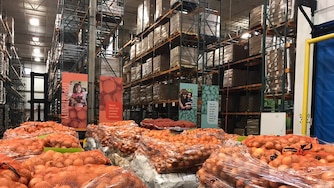
The Capital Area Food Bank is already anticipating serving around 70 million meals this year, an increase from previous years that averaged around 50 million, according to Muthiah.
“We are certainly hearing from partners that they used to have neighbors come and stand in their line once in two weeks,” Muthiah said. “We’re hearing now that they have people coming every week at the distribution that they have.”
First-time users of social services, such as food banks or pantries, in Prince George’s jumped to 23%, the highest mark across the region, according to a September report from the Greater Washington Community Foundation and Gallup.
Many food pantries around Prince George’s County are trying to absorb these spikes.
Michaeline Gandolph, executive director of Bowie Food Pantry, told The Banner on a Tuesday visit that in October her organization had its record-high numbers of client visits, both in a single month and day.
“For the most part, we give out the same items, same quantity, same value, month after month,” Gandolph said. “There are many pantries where it’s first come, first served, and we are hearing that there was a distribution over the weekend that people went to and they’re sold out of everything in 30 minutes.”
She said the pantry has seen a marked rise in visits — and diminished donations — since the sweeping job cuts in the federal government and concerns over the rise in everyday expenses.
Muthiah is optimistic that this month’s midterm election results will usher in lawmakers who are more open to pushing back against federal agencies. She hopes that the new Congress could even consider an expansion of SNAP benefits and other federal emergency food assistance programs.
“We know that cost of living is what has driven a lot of the food insecurity in our area,” Muthiah said. “All of these things are still things that are in the mix that we could affect that would, in turn, make life a lot easier for a lot of these same families.”
Have a tip for our Prince George’s County reporters? Tell us here.




Comments
Welcome to The Banner's subscriber-only commenting community. Please review our community guidelines.