
Maryland health officials announced the first case of measles in the state this year in a Baltimore-area resident who recently traveled internationally.
The Maryland Department of Health issued a warning Sunday that people may have been exposed to the patient at the following places and times:
- Baltimore-Washington Thurgood Marshall International Airport: At the customs inspection station in the international arrivals area and in lower-level international baggage claim, April 12 from 7:50-10:30 p.m.
- FastMed Urgent Care, 2827 Smith Ave. in Pikesville: Tuesday from 5-8 p.m. and Friday from noon-3:30 p.m.
- Sinai Hospital in Northwest Baltimore: Emergency department waiting area and pediatric emergency department, Friday from 3:30-7:30 p.m.
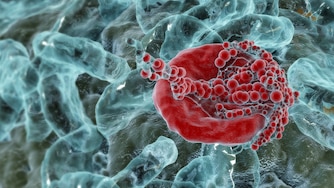
Measles is a highly contagious virus that spreads when an infected person coughs, sneezes or breathes and through touching infected surfaces. The virus can remain in the air for up to two hours after the person leaves an area, according to state health officials.
Those most at risk of contracting measles are unvaccinated children, said Dr. Scott D. Krugman, a pediatrician at the Herman & Walter Samuelson Children’s Hospital at Sinai.
“The measles virus causes really severe fever, headaches, rash, cough and general fussiness in kids, and breaks out a rash that lasts five days or so and goes from the head to the toes,” Krugman said.
Children with measles often eat less and can become dehydrated. They’re at risk of developing secondary pneumonia and swelling around the brain known as encephalitis, Krugman said.
Read More
Anyone up to date with two doses of a measles-containing vaccine or born before 1957 is “generally considered protected,” according to state health officials. Children typically receive the measles-mumps-rubella vaccine at age 12 months and again at 4 years old, Krugman said.
Those who are not vaccinated and who may have been exposed should watch for symptoms for three weeks. Those who develop a fever or other symptoms should stay home and contact their doctor. Post-exposure treatments are also an option for some people.
A person with measles is contagious from four days before the rash appears through four days after it appears.
Measles cases have soared in the United States in recent years as vaccination rates have slipped.
Measles was officially eliminated from the U.S. in 2020, but this year there have been 1,748 cases reported, according to the U.S. Centers for Disease Control and Prevention. Hot spots for the virus include South Carolina, Utah, Texas and Florida. In 2025, there were 2,288 cases.
At least 95% of people need to be vaccinated to achieve community immunity, also known as “herd immunity,” according to the CDC.
Maryland maintained a 96.4% vaccination rate among kindergarteners as measured for the 2024-25 school year, better than the national rate of 92.5%. As recently as 2019, the national kindergarten vaccination rate for measles was 95.2%.
The federal government’s health leaders have given mixed messages on measles and vaccines. U.S. Health and Human Services Secretary Robert F. Kennedy Jr. has long cast doubt on the safety and effectiveness of vaccines. But Dr. Mehmet Oz, administrator of the Centers for Medicare and Medicaid Services, has urged people to get vaccinated against measles. “Take the vaccine, please,” Oz said on CNN in February.
Although this is the first case of measles diagnosed in Maryland this year, residents of other states potentially exposed people here while visiting. They include a Virginia resident with measles who visited a Montgomery County office building in February and a person who traveled on an Amtrak train to BWI in January.
The state identified three cases of measles in 2025 and one each in 2024 and 2023.
This article has been updated.



Comments
Welcome to The Banner's subscriber-only commenting community. Please review our community guidelines.