
Police in Maryland can no longer stop and search someone solely based on their suspicion that the person is carrying a gun, the state’s full appeals court ruled in a sweeping opinion that some law enforcement agencies worry could curtail police practices statewide.
The ruling Thursday by the Appellate Court of Maryland was prompted by a case involving Baltimore Police officers who stopped a man only because they believed he had a gun. Attorneys for the suspect, Steven Hicks, argued successfully that officers shouldn’t have done that because of a 2022 U.S. Supreme Court opinion saying people had the right to carry a gun outside of their home for self-defense.
Maryland’s appellate court agreed with Hicks‘ legal team, finding that the Supreme Court decision has now essentially limited a previously allowable scope of police searches under the Fourth Amendment.
“Although the Maryland appellate courts have, for decades, upheld police stops based on reasonable suspicion that a person is in possession of a gun ... carrying a handgun publicly for self-defense is presumptively lawful, and therefore, mere possession of a concealed firearm, by itself, is not indicative of criminal activity,” Judge Kathryn Graeff wrote for the entire 15-judge bench.
The court acknowledged that its ruling could hamper police officers’ ability to fight crime.
“To be sure, this holding is a big change in the law. Arguably, it is not a positive change, to the extent that it limits the ability of the police to thwart danger to the public,” Graeff wrote.
The decision, legal experts say, means police can no longer stop someone solely because they notice a bulge in their waistband or an L-shape protruding from the fabric of their backpack.
University of Baltimore law professor David Jaros called the ruling significant.
Jaros, the faculty director at the university’s Center for Criminal Justice Reform, said the decision could be seen as akin to the prohibition on police stopping a motorist solely because they believe the driver may not have a license.
“This is a pretty straightforward application of the law, even if some people believe it has pretty significant implications for public safety if you’re concerned about handguns and gun violence,” he said.
Andrew Jezic, a defense attorney based in Montgomery County, said previous interpretations of the law held that police could presume the illegality of a suspected gun in someone’s possession.
The ruling does not prevent police from searching a person for a weapon if they have another justification to stop them, Jezic said. “The thing this case really changes is the stop, not so much the frisk.”
“Once you got somebody stopped, legally, it appears the police can frisk when they have the reasonable suspicion of a gun irrespective of whether they think the gun is legally or illegally possessed,” Jezic said.
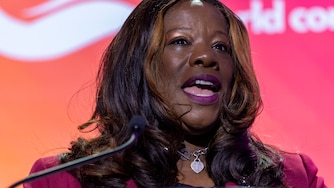
Maryland Public Defender Natasha Dartigue celebrated the impact of the court’s first “en banc,” or full bench, decision in 14 years.
“This court decision protects all Marylanders, but it matters most to communities of color that have long borne the weight of over-policing,” Dartigue said. “Constitutional rights do not depend on where you live, who you are, or how heavily your community is policed.”
It’s unclear if the ruling will be appealed to the Supreme Court of Maryland. Kelsey Hartman, a spokesperson for Maryland Attorney General Anthony Brown, whose office handles all appeals for the state, wrote in an email that attorneys were reviewing the opinion.
Law enforcement agencies across the state were also analyzing the impact of the ruling, said Darren Popkin, executive director of the Maryland Chiefs of Police Association and Maryland Sheriffs’ Association.
Popkin said the decision will likely require some new training. But he said it does not stop law enforcement from stopping people and searching them for weapons as a safety precaution.
“There’s going to have to be some further education on whether or not someone is allowed to carry a gun publicly, and whether or not it’s a crime or not to be charged,” he said.
Baltimore Police Spokesperson Lindsey Eldridge said the agency was consulting with city lawyers on the implications of the ruling.
The city’s top prosecutor, Ivan Bates, who is also head of the Maryland State’s Attorneys’ Association, said the ruling will produce a “substantial change in the legal framework governing police interactions involving firearms.”
“This ruling will necessitate additional effort by law enforcement, and we are prepared to do the hard work,” Bates said, noting that Baltimore Police have already been training officers “to rely on as many factors as possible when establishing reasonable articulable suspicion.”
Bates said he would also encourage state legislators to “examine how other states address the issue and adopt statutes that would allow officers to request to see a permit.”
Attorneys who’ve long practiced in Baltimore expect the new legal interpretation to have a more acute effect on police in the city.
Debbie Katz Levi, a civil rights and criminal defense lawyer who recently left the Baltimore Office of the Public Defender, said city police frequently cited characteristics of an armed person as the sole justification for stopping people during her 12 years as a public defender here.
“I would say anecdotally it’s one of the most common stops in Baltimore,” Levi said.
In concurring opinions, judges Douglas Nazarian and Dan Friedman debated the implications of the ruling. While Friedman argued that the opinion could lead law enforcement to resort to more ambiguous reasons for stopping a person, Nazarian said it would strip from police a questionable reason for a stop.
Jaros added that the ruling could eventually lead to more racial profiling. Levi shares those concerns.
“There are always generated reasons to engage in stops and I think the L-shaped protrusion became the replacement for the odor of marijuana,” Levi said, referring to a justification that officers are no longer allowed to use. “That’s the concern: What are they going to come up with next?”


Comments
Welcome to The Banner's subscriber-only commenting community. Please review our community guidelines.