
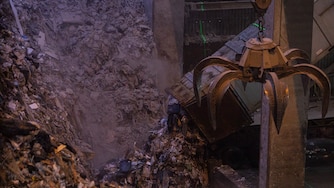
The Montgomery County Council voted 6-5 Tuesday to keep the county’s aging incinerator in Dickerson running, ending years of debate over whether to close it.
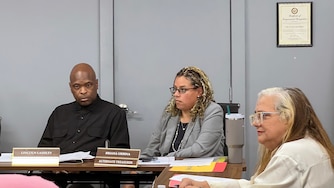
Council President Natali Fani-González and council members Shebra Evans, Evan Glass, Sidney Katz, Dawn Luedtke and Kate Stewart voted to refurbish and modernize the existing incinerator.
Council Vice President Marilyn Balcombe and council members Andrew Friedson, Will Jawando, Kristin Mink and Laurie-Anne Sayles voted against keeping the facility open.
The decision disappointed County Executive Marc Elrich, who promised nearly a decade ago to shutter the facility.
Evans said that by keeping the facility open, “we’re able to manage our trash, we’re able to recover energy, and we’re reducing the amount of waste that we’re putting in the landfill.”
“It is a very, very tough decision, but I can live with it,” she said.
Read More
Environmentalists have argued that the incinerator, which converts waste to ash and has racked up toxic emissions violations, is harmful to the environment and residents’ health.
But most council members doubted the alternative was better. The county’s current contract with Reworld, the company that operates the incinerator, ends in 2031.
The vote fulfills Fani-González’s promise to resolve the controversy surrounding the incinerator before Thanksgiving.
In an interview Monday in anticipation of Tuesday’s vote, Elrich told The Banner he was frustrated with her decision to take a vote before the end of the year.
“To make a decision without knowing what the costs are, or to know what the costs are from the alternative is absurd,” said Elrich, who is term-limited but will take an at-large seat on the council next month.
Elrich wrote a letter to the council last week urging it to vote to close the incinerator or wait to decide on its future.
“In effect, we would be committing hundreds of millions of future taxpayer dollars to preserve a system whose economic viability depends on continuing to generate the very waste we should be working to eliminate,” Elrich said of the proposal to modernize the existing facility.
Fani-González said Tuesday that she and other council members have worked hard, consulting with residents and scientists, to make an informed decision.
“We have been having this conversation for years,” Fani-González said.
She said that composting and alternative waste disposal methods will be prioritized as part of the decision.
Earlier this year, Elrich presented options for closing the incinerator as the council hammered out a budget. But Fani-González decided the council should deal with the issue separately and consider options other than those presented by Elrich.
The resolutions
Council members were faced with two resolutions Tuesday. One would modernize the incinerator and keep it running “for the long term.” The other would close it and have the county’s trash trucked to an out-of-county landfill. Both resolutions express the council’s desire for an in-county food-waste composting facility.
The resolution to refurbish the incinerator doesn’t indicate when those improvements will happen. The council will have to make additional decisions about the timeline, Fani-González said.
One of the key aspects of this decision is selecting an out-of-county landfill for the county’s waste. The county has faced scrutiny for hauling incinerator ash to a landfill in a low-income, minority neighborhood in Henrico County, Virginia. County officials have said they would look at an alternative landfill location but have not shared specifics.
While most council members supported keeping the incinerator open, many acknowledged that they were less than enthusiastic about either option.
Stewart said she voted to support keeping the incinerator open because she feels the county will have better control over its own trash.
“I just can’t shift the burden of our trash to other communities,” Stewart said. “Once our trash leaves the county, oversight rests with another state’s regulations.”
Balcombe, who represents District 2, which includes the area where the incinerator is located, voiced frustration with the decision and called it “one of the most impactful votes” the council will make.
“I understand that the incinerator is in a sparsely populated area of the county,” Balcombe said. “But the health of those individuals is being negatively impacted by this facility.”
Lauren Greenberger, a member of the Sugarloaf Citizen Association, which represents residents of the Dickerson neighborhood and has spearheaded the campaign to close the incinerator, told The Banner Monday that closing the incinerator was the best option for both the health of the community and for the county.
“People have talked about noise and smell and diesel emissions, and those are all so small compared to the pollution that’s coming out of our incinerators,” Greenberger said.
But other community members, including those who spoke at town halls hosted by council members, voiced concerns that a shift away from the incinerator will require more reliance on landfills and lead to more noise, odors and garbage truck traffic through neighborhoods.
This is a developing story.



Comments
Welcome to The Banner's subscriber-only commenting community. Please review our community guidelines.