
Baltimore’s most tapped-in future voters didn’t come to play.
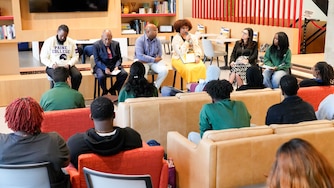
About a dozen members of the citywide student government, known as the Associated Student Congress of Baltimore City, greeted the school board candidates warmly. Some students and candidates knew one another by name, exchanged hugs and took selfies. But when the time came, the kids grilled the four adults running for two elected seats on the Baltimore City Board of School Commissioners.
At a candidate forum hosted by The Banner and the student congress, the teens spoke candidly about where they think the district falls short. They pushed office seekers to take policy positions and explain why they were the best people to govern their schools.
Here are five things Baltimore students want their elected leaders to prioritize.
(Maybe) getting their cellphones back
Nobody moved when Jamar Day asked the room of teens to raise their hands if they felt the district’s cellphone ban was “totally unfair and it has done nothing to help your education.”
Read More
Giggles spread as the students admitted putting their phones away had helped them concentrate in class. But they still wanted to know how candidates would take their opinions into account about this policy and others that restrict what they can do in school.
Chair of the policy committee and incumbent member Ashley “Ash” Esposito said she’s heard from students who were previously using their phones as translation devices or in lieu of the Chromebooks their schools don’t have for them. Fellow incumbent Kwame’ Jamal Kenyatta-Bey said students need to learn to manage the future they’re walking into, which includes cellphones and AI. Candidate Domonique Flowers said he’d be open to letting students use phones between classes. Day said he’d like to review the policy alongside students and teachers and standardize how schools collect cellphones at each grade level.
“A policy is never permanent,” Esposito said. “Once a policy is passed, it can always be amended.”
Their rights to free expression
Benjamin Grimaldi, a sophomore at Baltimore Polytechnic Institute, told candidates that a board policy that is supposed to prevent disruptive protests could stifle student voices, particularly through restrictions on signs. He asked each candidate if they supported repealing the policy.
Three of the four — Day, Esposito and Flowers — said they would. Each said they’d been community organizers and recognized the value of free speech, even when it makes people uncomfortable.
Kenyatta-Bey spoke about attending protests in the 1960s and said he felt the policy was too vague, but he did not commit to reversing it.
“When we talk about disruptive, what does that mean?” said Kenyatta-Bey. “Students have a lot to say; adults are the more disruptive ones sometimes. And so we need to be careful about how we define what that is.”


Safe and reliable rides to school
The city’s unreliable public transit system often fails to get middle and high schoolers to class on time. Baltimore City College senior Zion Parran, who co-moderated the forum, asked candidates how they’d fix the problem.
Both Kenyatta-Bey and Day said they rely on transit to navigate Baltimore, too. Day pitched stationing administrators along the long and sometimes dangerous routes kids take to school to make sure students see familiar faces shepherding them to class safely.
Flowers and Esposito, who both said they moved to Baltimore from areas where students have reliable rides to school, described their shock at the transportation challenges city students face. Esposito said she’d like to tap into federal funding for more electric buses and called on people who live in the counties but commute into Baltimore for work or Orioles and Ravens games to become advocates for Baltimore’s transit needs.

Preparing for life beyond high school
Getting to graduation is one thing. But students want to know how the school board will help them manage their options beyond the classrooms they grew up in.
Every candidate said they want to see schools position careers in the trades as desirable, rather than a last resort when college doesn’t work out.
Esposito said she’s heard from labor unions that the math curriculum in schools is often misaligned with what students need to get apprenticeships, which is an area she wants to improve. While Day wore a Paine College sweater and wants students to consider a degree, he said that “Baltimore is a very working-class city and there’s nothing wrong with that.” Kenyatta-Bey said he picked up tech design when he was young and used to teach career and technical education; he wants to break down entry barriers for Black and brown students.
“If you go through a trade, you have less debt, you have more skills, you make more money,” said Flowers, who wants to bring real-life lessons back to the classroom. “Most of our students have no idea how to balance a checkbook or anything regarding financial literacy.”
Hiring teachers who understand them
Taylor Fraling-Taylor, a Western High School senior and student member of the school board, asked the candidates how they’d recruit adults who care about students’ well-being, productivity and school climate.
Esposito said the district needs to stop looking so desperate to hire teachers. The state struggles with teacher vacancies, but a person needs more qualifications than a bachelor’s degree to teach, Esposito argued. They need to love kids, learning and “people-ing,” she added.

Flowers agreed, pushing back on Gov. Wes Moore’s plan to welcome laid-off federal workers into public school classrooms, noting that the teaching profession isn’t right for everyone. All of the candidates, including former teachers Kenyatta-Bey and Day, emphasized that teaching is a passion rather than just a job.
Day proposed recruiting more certified teachers from the state’s historically Black colleges and universities.
“Most students benefit best from a Black teacher, no matter what their race, nationality is. When there’s diversity in the classroom, everyone wins,” said Day.
About the Education Hub
This reporting is part of The Banner’s Education Hub, community-funded journalism that provides parents with resources they need to make decisions about how their children learn. Read more.




Comments
Welcome to The Banner's subscriber-only commenting community. Please review our community guidelines.