
A former CEO of a Maryland bank, who was barred from banking by federal regulators, is being sued after his new company brokered a $3.3 million loan for a man who was impersonating an Atlanta Falcons player.
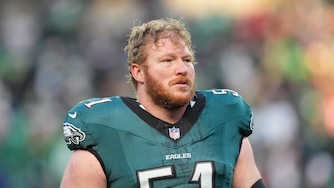
In July 2024, James Plack, who runs Crownsville-based South River Capital, secured the multimillion-dollar loan as a contract advance for someone he thought was Michael Penix Jr., a quarterback who was drafted eighth overall that year out of the University of Washington, according to the suit filed in the U.S. District Court for Maryland.
But, after the New Jersey-based lender that Plack brought in to provide the funds closed the transaction, the man impersonating Penix Jr. disappeared with the money. Neither Plack nor his company have responded to requests for reimbursement, according to the lawsuit filed by All Pro Capital Funding, alleging negligence, unjust enrichment and breach of contract.
Neither Plack nor Charles “Chaz” Foster, the president of All Pro Capital Funding, responded to requests for comment. An attorney for All Pro Capital also did not respond to a request for comment.
Federal banking regulators barred Plack from the banking industry in 2015 and fined him $100,000, around the same time his more-than-a-decade-long tenure ended at Rockville-based American Bank, where he was the president and CEO.
The Office of the Comptroller of the Currency accused him of violations of banking law and regulations, unsafe or unsound banking practices, and breaches of his fiduciary duty, citing a number of Plack’s actions.
About two months after the fine, Plack started a new boutique lending service called Democracy Capital Corp., with professional athlete clients looking to use cars, boats or other pricey items as collateral for loans that they might not qualify for at a traditional bank.
“There is a value to being able to move quickly on an opportunity,” Plack said in a 2016 interview with the Washington Business Journal, where he described his company as able to do in a few weeks what banks need several months to process.
In recent years, South River Capital has been tied to the bankruptcies of several high-profile athletes, including hockey players Evander Kane and Robin Lehner, basketball player Malik Beasley and football player Buster Skrine of the Chicago Bears.
On July 19, 2024, Plack introduced Penix to All Pro Capital’s Foster in an email, in which he explained that the player couldn’t get financing from a bank because he needed the money within the week, before training camp started, according to the lawsuit. Plack said his company would get a $66,000 origination fee from the transaction and that All Pro Capital would put up the $3.3 million principal and earn $390,364 in interest payments for the nine-month loan, the lawsuit said.
That works out to an annual interest rate above 27.5%.

To confirm Penix’s identity, Plack sent over a personal financial statement along with copies of the player’s NFL contract and bank account statements, the suit said. Both Penix’s NFL contract and a death, disability and disgrace insurance policy were to be used as collateral.
All Pro Capital relied on “the repeated assurances” by Plack and his company before closing the loan virtually on July 26, 2024, according to the lawsuit petition.
The company wired the money to a Chase Bank account called MTP Global Ventures, believing it was Penix’s. A short time after that, Plack’s company told All Pro Capital that the money was wired to an imposter and that the transaction was not, in fact, secured by Penix’s contract.
Plack’s company had the opportunity to question the person presenting himself as Penix “but failed to do so,” All Pro Capital’s petition said, leaving the lender with $3.6 million in damages from the loan and related fees.
While Plack’s company said they would reimburse All Pro Capital, in part by making a claim through South River Capital’s liability insurance, the lender has yet to receive any money.
Meanwhile, the imposters were caught by the FBI and prosecuted.
In late April, two men, Luther Davis and CJ Evins, pleaded guilty to the wire fraud and aggravated identity theft related to the scheme, according to a news release from the U.S. Attorney’s Office for the Northern District of Georgia. Davis played as a defensive lineman on the University of Alabama team that won the national championship in 2010.
“Using fake documents, bogus corporations, wigs, and makeup, Davis and Evins convinced lenders they were NFL players, obtained millions of dollars in fraudulent loans, and used the proceeds of their crimes to purchase real estate and luxury items,” U.S. Attorney Theodore Hertzberg said in a statement.


Comments
Welcome to The Banner's subscriber-only commenting community. Please review our community guidelines.