
Join the dugout. Sign up here for Orioles updates in your inbox.
LAS VEGAS — The message from one American League front office executive as he departed the GM meetings in Nevada this week was clear.
“Keep your phone handy at Thanksgiving,” he said.
The public messaging from many executives was that teams are operating as they normally do. That is, with the offseason just getting underway, they are doing their usual due diligence — meeting with agencies, analyzing the fit of almost every player on the open market and calling other teams to see what trades might become possible.
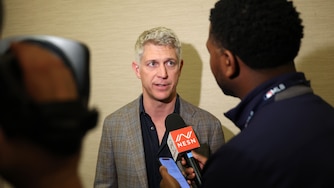
“I’m totally business as usual, normal November,” Orioles president of baseball operations Mike Elias said.
But, with the collective bargaining agreement between the players and Major League Baseball’s owners set to expire at 11:59 p.m. on Dec. 1, multiple industry sources predict a surge of activity in the next few weeks, be it in trades or free-agent signings.
Read More
One agent who represents several players on the market this winter said some teams are using the impending lockout as a deadline of sorts to encourage players to make an early decision. Of course, an American League executive said some agents are expressing their willingness to hold out past Dec. 1 because they don’t want to signal any panic — which would potentially lower the value of a contract for their client.
And then there are those at the top of the market. Agent Scott Boras said he expects left-hander Tarik Skubal to sign before the lockout begins, which only increases what could be a heavyweight battle for the ace among interested teams.
This appears to be setting up as a busy month of transactions. Once the lockout begins, teams can’t even talk to their own players, let alone free agents.
So, although the GM meetings were relatively quiet, the expected cancellation of the winter meetings in December made this half-week in Las Vegas the final gathering place of the baseball world in one city before uncertainty strikes. And, once the owners lock the players out, it’s hard to know how the economic landscape of the sport will look upon its resolution.
“I think this year the frequency of communication, the cadence has been accelerated a bit,” Boston president of baseball operations Craig Breslow said. “But, as we sit here, there haven’t really been these major trades just yet.”
The battle over a salary cap
A key aspect of the proposals from ownership is to introduce a salary cap and salary floor that they say will help competitive balance. The league launched a campaign called “Level the Playing Field” arguing the gap between the lowest-spending team and the highest-spending team — which reached $446 million in 2025 — had grown too large. They claimed fans support a cap-and-floor system because it “represents a fair fight.”
Boras argued a salary cap doesn’t introduce balance; the Brewers showed “intellect” is involved in winning a World Series. Milwaukee earned its first title not through record-breaking spending but analytical creativity, strong defense and superior pitching, among other factors.
“That’s the freedom of having a system that allows you to portray your levels of success, your reasons for success, your equations for success,” Boras said. “In the NBA, when you have a great team, they’re going to win 80% of the time. In Major League Baseball, it’s 58% to 60%. So our game has a wonderful mystery to it.”
That mystery is emblematic of the competitive balance already present in MLB, the union argues, which renders a salary cap unnecessary.
And because of the uncertainty that will come from a labor battle that may drag on for months — Boras said players are willing to stand strong at the risk of missing games to avoid certain MLB proposals — there may be an incentive for teams to make deals now, before any changes come into effect regarding payrolls.
“Teams are going to operate within the abilities and freedoms because they don’t want to lose to their competitors,” Boras said. “They want the market to be what it is for them, and they’re utilizing their rights to compete. I think they’re very concerned about losing the opportunity to sign select key players, and they’re pursuing it aggressively.”
Preparing for a winter of uncertainty
For team executives, however, there was less of a public admission that anything is out of the ordinary.
“For us, it’s irrelevant,” Elias said when asked if the labor uncertainty changes his practices. “It’s over our heads, those discussions. I expect both sides are going to work on it really hard. I don’t think it’s going to impact Baltimore or our decision-making in any way.”
Chicago White Sox general manager Chris Getz, whose team figures to be active in the free-agent market, is trying to maintain a similar approach to previous offseasons.
“It’s tough to tell,” Getz said. “Everyone’s going to operate differently. Right now it does seem like business as usual. That might change, but there just hasn’t been that much activity at this moment.”
Seattle Mariners president of baseball operations Jerry Dipoto, one of the sport’s most active wheelers and dealers, said he doesn’t know whether trades will be more difficult to complete this month. Teams must ponder whether they want to risk losing out on team control, should rules change.
For instance, if a team wants to trade for a player on an expiring contract, how much prospect capital does it part with when that rental player might play in a heavily shortened 2027 season? And, if the new collective bargaining agreement lowers the barrier of entry for players to reach free agency (currently, they must accrue six years of service time), that could be a rude awakening that results in a player leaving sooner than anticipated.
At the very least, trade conversations have picked up earlier than usual, according to agents and league sources, but nothing concrete has happened.
“We’re operating as if it’s business as usual, and that’s the best way I can put it,” Dipoto said. ”We’re going to be the most aggressive team talking about the players we can acquire and, whether other teams have reservations, I can’t say.”
But it likely won’t be normal for long. Teams won’t have typical communication with their players once a lockout begins. For a team like the Nationals, who had a surprising 2026 season built on strong teaching and diligent, detailed meetings, that could be a challenge. Knowing the likely scenario of a lockout, president of baseball operations Paul Toboni said he and his staff met with players in August about offseason planning.
“You know they’ll have plans for the whole offseason, regardless of what it’s going to look like,” Toboni said. “There’s a level of trust with the whole player group, with the coaching staff, all of them, that we’ll all do our roles to deliver on what we need to deliver on so we can be successful.”
The only overarching certainty is the uncertainty. As media members and baseball officials left The Aria in Las Vegas, the familiar refrain was, “I’ll see you when I see you.” Is that in 2027? Is the whole season at risk, or will there be a more expeditious resolution?
“There’re a lot of rumors swirling about how different things are going to be,” Orioles general manager Jared Banner said. “I’m not sure. I think we’re ready to read and react, depending on how things shake out, but we’re ready for anything.”


Comments
Welcome to The Banner's subscriber-only commenting community. Please review our community guidelines.