
Traffic stops have become an increasingly popular strategy for immigration enforcement during the second Trump administration, and a Banner review of court documents found that approach is playing out across Maryland.
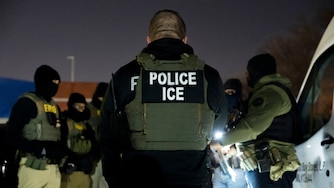
Federal immigration agents have in some cases ordered or dragged passengers out of vehicles and arrested them without explanation, the documents show.
“We’re not talking about a traffic stop. We’re really talking about an ambush,” said Shana Khader, legal director of We Are CASA, an immigrant rights group in Maryland.
The way U.S. Immigration and Customs Enforcement uses traffic stops gained national attention this summer after agents fatally shot two men during stops in Texas and Maine over the course of six days in July. The agency suspended the use of vehicle stops after the killings, but President Donald Trump quickly reversed course, writing in a social media post, “we CANNOT give up one of I.C.E.’s most important and effective Crime Fighting tools, THE TRAFFIC STOP!”
To get a fuller picture of how ICE operates in Maryland, The Banner analyzed more than 500 habeas corpus petitions filed in federal court between November 2025 and August 2026. Habeas corpus is a foundational legal concept that allows anyone to challenge their detention in court, even if they are not citizens.
The Banner’s review of habeas petitions found repeated allegations of people being chased and surrounded by unmarked vehicles even though they hadn’t committed any traffic violations. The petitions said that officers sometimes yanked open car doors, struck windows, or forcibly pulled people out of their vehicles before asking for identification.
Read More
Habeas petitions offer only the detained person’s perspective of an immigration arrest, but they are filed under penalty of perjury. They also don’t cover every arrest in Maryland — only those in which the detained person was able to hire a lawyer — but they point toward trends. Among the 500 petitions:
- More than one-third of those arrested were driving at the time.
- Roughly one in four were driving to or from work.
- More than a dozen were parents transporting their children to and from school.
- In traffic stop cases where a country of origin was specified, all but one driver was from a Latin American country.
The Department of Homeland Security, which oversees ICE, didn’t answer questions from The Banner about its use of traffic stop arrests and reports of aggressive behavior in Maryland.
Immigration attorneys and law enforcement experts say aggressive traffic stops are dangerous for everyone involved and, if made without probable cause, may not hold up in court.
In one such case, a Glen Burnie man named Jose was driving with his wife and daughter on a muggy August morning when he noticed an SUV tailing his car.
He decided to turn off his route to see if the SUV followed. Suddenly, police lights started flashing and four vehicles swooped in to block the car, he told The Banner through a translator.

The Banner agreed not to use Jose’s full name because he feared retaliation for talking about his case.
An officer approached the car and told Jose he was a police officer doing a “routine stop.” But when the officer turned around, Jose saw “ICE” emblazoned across his back.
The officers ordered Jose out of the car and handcuffed him. Jose turned to his distraught daughter, sitting in the back seat.
“Don’t worry, my love,” he said. “These things will happen, and today it’s come for me.”
Jose spent three weeks in ICE detention before a judge found that his arrest was unlawful and ordered him released. Originally from El Salvador, Jose entered the U.S. without authorization in 2002 and had never been arrested, according to his habeas petition. People who entered the country illegally have rights, including protection against improper warrantless arrests and illegal detention.
Chief U.S. District Judge George L. Russell III wrote on Aug. 28 that the ICE officers who pulled Jose over did not meet the “probable cause” standard required to arrest him without a warrant and conducted an “unlawful warrantless arrest.”

Cases like Jose’s and hundreds of others detailed in court records are at the center of a federal class action lawsuit over warrantless arrests in Maryland. The lawsuit, brought in September by We Are CASA and four Maryland residents, alleges “a sweeping pattern of warrantless arrests targeting Brown and Black Marylanders” dating to January 2025.
Officers use “‘reasonable suspicion’ to investigate immigration status and probable cause to make arrests consistent with the Fourth Amendment to the U.S. Constitution,” an unnamed DHS spokesperson said in an email responding to questions about the lawsuit. “The Supreme Court has already vindicated us on these practices.”
The lawsuit includes firsthand accounts of ICE traffic stops.
David Aguirre, a 25-year-old Howard County man, was driving to work with his cousin in January when the car traveling ahead of them suddenly braked on the highway, he said. Another car then slammed into his rear bumper. A third car came alongside them, leaving him no choice but to stop on the road.
Officers jumped out of their cars and started yelling. When Aguirre and his cousin didn’t immediately respond, agents smashed the car windows, opened doors and dragged them out, according to his declaration. Aguirre said the agents did not tell them why they were stopped or why they were being arrested. Only after agents drove Aguirre behind a nearby school to put cuffs on his legs did they ask to see his driver’s license, he said.
Aguirre’s lawyers declined to disclose his immigration status, but court documents show his cousin is a U.S. citizen.
The agents then drove around with him in the car and looked for more people to arrest, searching license plates on a computer and pulling over only those who appeared to be Latino, Aguirre said in his declaration.
Jose said something similar: After the ICE agents arrested him in Glen Burnie, they drove around looking for other people to stop.
“Any person that looked Hispanic, they would stop and ask for papers,” Jose said.
A DHS spokesperson wrote in an email that “what makes someone a target for immigration enforcement is if they are illegally in the U.S. —NOT their skin color, race, or ethnicity.”

In another case from the CASA lawsuit, a 40-year-old construction worker from Silver Spring said he was driving his boss’s Toyota Tacoma to work when agents in three unmarked vehicles surrounded the truck, pulled him out by his arms, forced him to the ground and put a leg on his head.
Partially handcuffed and in pain, J.M.R., as he is described in court documents, attempted to stand up. According to his account in the lawsuit, agents tased him and drove him to a fire station because he needed medical attention, and eventually to a hospital to remove a taser barb still stuck in his chest.
These traffic stop tactics can quickly escalate, said Emily Gunston, a former deputy chief in the U.S. Department of Justice’s special litigation section, which conducted civil investigations of police departments. Drivers could think they’re being abducted or robbed, escalating a traffic stop.
Ramming and blocking cars can also be hazardous to both officers and bystanders, Gunston said, so most local police departments have policies on when officers can initiate these maneuvers and allow them only in response to serious crimes.
Eric Balliet, who served as the head of ICE’s Integrity Investigations Division and retired in August 2024, said that under certain circumstances, and often as a last resort, there’s a place for aggressive traffic maneuvers. But officers are supposed to take steps to mitigate public safety risks.
Balliet said some of what he’s seeing from ICE street enforcement is now “unrecognizable” compared with what he was taught and flouts general policing principles, like identifying oneself or asking a subject for identification.
“You have people wearing masks, driving unmarked vehicles, in a non-uniformed presence with aggressive tactics,” he said. “The recipe for disaster ... It goes through the roof.”
Madeleine O’Neill is a freelance reporter based in Baltimore.



Comments
Welcome to The Banner's subscriber-only commenting community. Please review our community guidelines.