
The Prince George’s County Council on Tuesday unanimously passed legislation that criminalizes attendance at street car rallies, bolstering existing state laws that already penalize organizing and participating in the events.
The bill was championed by council member Wanika Fisher, chair of the public safety, health and human services committee. It passed 10-0 and will go into effect June 19.
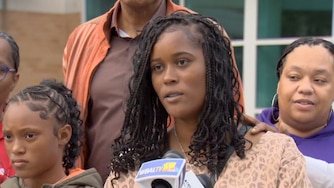
At a morning press conference before the vote, Fisher said she had introduced the legislation to prevent and “deescalate” car meetups, also known as “street takeovers.”
County police said there have been more than 40 so far this year, leading to 20 arrests, 100 traffic citations and the recovery of 16 illegal guns. Fisher said the takeovers can draw hundreds of people who gather to watch drivers perform stunts or race on public roads at speeds of more than 100 miles per hour.
“These crowds create a huge risk and make it hard for us to use our roadways,” Fisher said. “Guns and drugs have been found and confiscated at many of these takeovers.”
Last year, a driver hit a woman during a street takeover and “broke almost every bone in her body,” according to Brian Fischer, communications director for the Prince George’s County Police Department.
“She was airlifted out, but she will never, ever recover to the point of where she was before the car meetup,” Fischer said.
The legislation, which received wide support from County Council members and police, enacts penalties of up to 60 days in jail and a $1,000 fine for the first offense under the “attendance” section of the law. Fines jump to $2,000 for a second offense and $3,000 for a third. The bill also has penalties for participating in supporting roles such as “timekeeper, flagger, or starter.”
In reviewing Fisher’s bill, the county law office said in a letter that it was within the county’s authority and “legally supportable in concept,” but flagged potential hurdles, including its overlap with state law and “vagueness concerns.”
“Laws must provide sufficient clarity to give individuals notice of prohibited conduct and to prevent arbitrary enforcement,” associate county attorney Dinora Hernandez wrote.
Hernandez appeared to reference a Supreme Court precedent in the case of Chicago v. Morales, a 1999 decision in which the court held that a city ordinance preventing “criminal street gang members” from loitering in public was unconstitutionally vague and gave law enforcement too much discretion to determine which activities constitute loitering.

David Jaros, a criminal law professor at the University of Baltimore, also referenced that case, telling The Banner that, in his view, the ordinance passed by the council fails to meet that standard.
“Its breadth predictably sweeps in passive bystanders — residents, shoppers, rideshare drivers, and journalists lawfully observing or recording — thus burdening a substantial amount of protected activity relative to the council’s legitimate safety aims,” Jaros said in a text message.
At the press conference, Fisher addressed legal concerns by drawing the comparison of yelling “fire” in a movie theater.
“The difference between the right to free assembly and this is when you cause harm in the community,” Fisher said.



Comments
Welcome to The Banner's subscriber-only commenting community. Please review our community guidelines.