
John Bolton surprised me.
I didn’t plan to see the former U.S. ambassador to the United Nations talk. Who cares about the excuses of a neocon from another era, right?
Then a friend messaged me with a last-minute invitation. So I drove to the International Club of Annapolis, an April thunderstorm lighting up the night sky as I walked into the hotel ballroom.
And there, like a $20 bill dropped on the sidewalk, was a fragment of truth that defined this moment, a time when everything feels like it’s on the precipice.
“It hangs by a thread at this point,” Bolton said, “whether we’re going to come out of this better after it’s over than we were before we went in.”
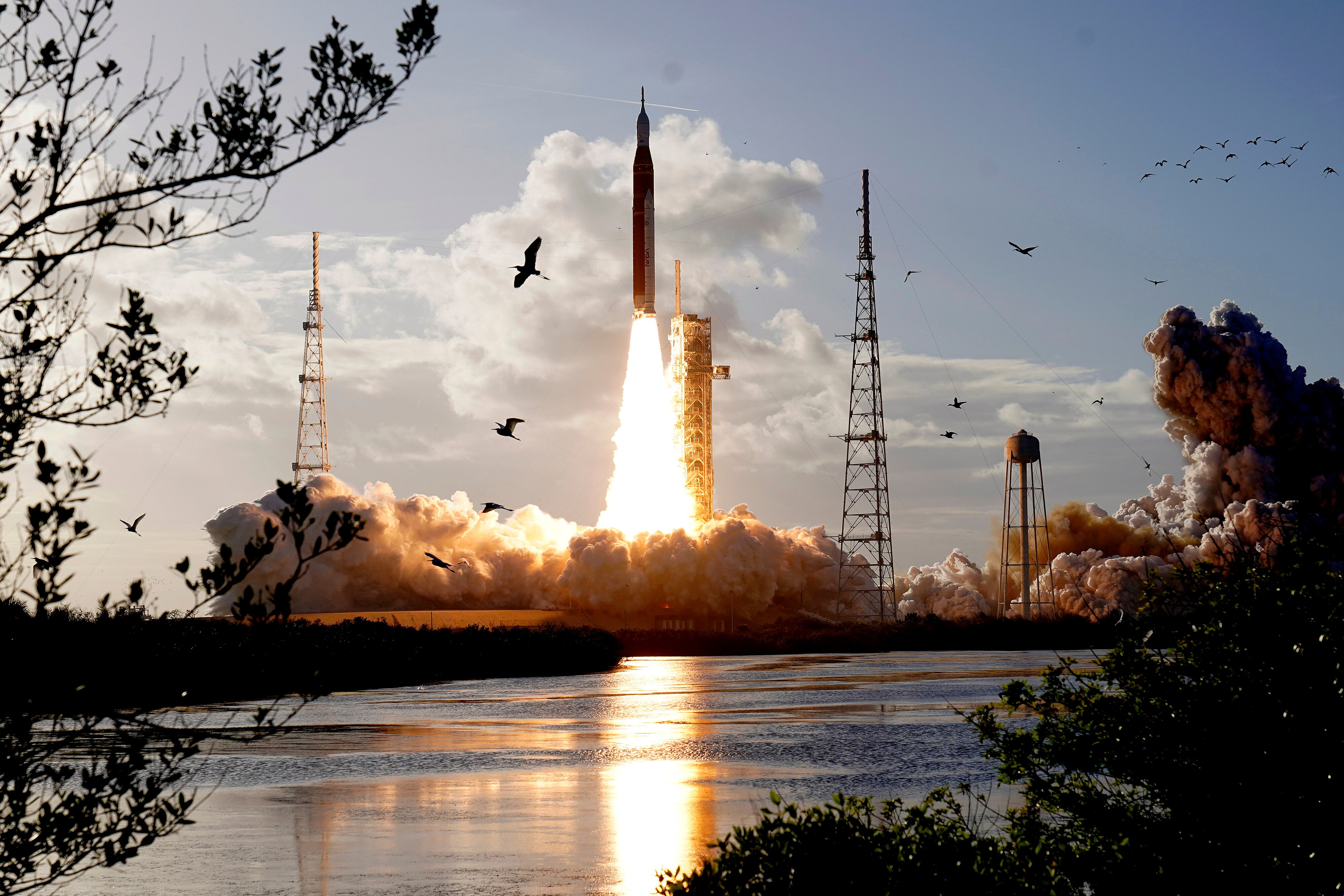
It was an hour after the launch of Artemis II, NASA’s first journey to the moon since 1972, when I was a high school freshman on the Eastern Shore. It was an hour before President Donald Trump offered the nation an explanation of his month-old war in Iran.

Bolton was talking about the war, of course. He’s never met a regime change he couldn’t like.
“If we had done what we should have done in preparation beforehand, I would feel a lot more comfortable,” Bolton said.
But he might as well have been talking about the economy. Or democracy. The American experiment, home of the free and land of the possible. Everything.
An hour earlier, my wife and I held hands, joining 50 friends for an impromptu countdown to the launch of Artemis II.
“Ten, nine, eight ...”
It was on all the TV screens at our social club, poised to leap into space atop a flame of power, unexpectedly carrying all our hopes of feeling united for a change.
This wasn’t a billionaire’s ego project, not Elon Musk’s SpaceX or Jeff Bezos’ Blue Origin. It was NASA proving once again that government — we, the people — are more than a broken disappointment.
No one came to the club expecting to cheer that feeling. I didn’t, anyway.
Singer Dan Haas and his trio were the draw. He’s a clever cover artist and jumped into “Fly Me to the Moon” as Artemis lifted into a televised Florida sky.
We can be more than a collection of warring tribes, the moment said, if only we have the right achievements to get behind.

My wife danced a step or two of happiness with me. I wanted to stay.
But a promise is a promise, so I left to hear Bolton.
I expected most of what he said. He defended every U.S.-backed regime-change adventure since World War II. Not always the results, or even the execution, but Bolton is a believer in might-makes-right.
Once Trump’s national security advisor, he’s on the legal outs with his old boss. But he gave him the benefit of the doubt, at least, for another hour.
“It is a little confusing what our objectives are,” Bolton said. “Maybe we’ll hear more at nine o’clock tonight. You can leave, leave here and watch, watch the president speak from the Oval Office. He’ll tell us what the objectives are.
“I’m very worried about how things have proceeded.”

Trump is not worried.
I listened to the president’s rambling, self-centered explanation while I was at a drive-thru, waiting for a late-night taco on the way home.
“Never in the history of warfare has an enemy suffered such clear and devastating large-scale losses in a matter of weeks,” he said. “Our enemies are losing, and America, as it has been for five years under my presidency, is winning, and now winning bigger than ever before.”
This was the April Fools’ Day presidential address, all bombast and bull.
Iran had missiles capable of reaching the U.S. The attacks have changed the regime in Tehran. When the economic pain passes, the greatest economic boom the nation has ever seen will resume, created by him alone.
False. False. False. Oh God, not that again.
Iran is a sponsor of terrorism and destabilization. Maybe any president would have taken the opportunity to give it a shove into oblivion at a moment when it was crushing internal dissent.
But trying it without consulting allies in Europe, Asia and the Middle East — then saying they’ll have to clean up the Strait of Hormuz when the bombs stop — will make us weaker, not stronger.
Even Bolton sees that.
“When we tell people, ‘We don’t care what you think, and by the way, go do it yourself,’ you better watch out,” he said.
Watch out close to home, too.
Gas could cost $5 a gallon by Memorial Day in Maryland, part of an inflationary war spiral driven by higher global energy costs. It’s already at $4.19 for regular at my neighborhood station.
Diesel is over $5. Food will cost more. Air conditioning will cost more. A weekend in Ocean City or a Saturday boat trip on the Chesapeake Bay will cost more.
Lenders will grow more cautious, making it harder to buy a home, a car or build a data center. If that last domino falls, it will hurt the most.

The promise of AI, both real and exaggerated, has been holding up Trump’s otherwise mediocre economy.
Tacos in a bag, I drove home wondering if this is what’s ahead. I wondered how the Artemis II crew was doing above.
Did they hear the president’s address? We’ll never know what they thought.
He was thinking of them.
“Let me begin by congratulating the team at NASA and our brave astronauts on the successful launch of Artemis II. It was quite something,” Trump said. “It will be traveling further than any manned rocket has ever flown and will very substantially pass the moon, go around it and come back home from a distance that has never been done before. It’s amazing.”
For once on Wednesday, a spring night when everything felt on the edge, I agreed with our president.
United. It was truly amazing.




Comments
Welcome to The Banner's subscriber-only commenting community. Please review our community guidelines.