
As a Baltimore City Public Schools kid, I learned more about Black history and the people who made it, especially locals like Harriet Tubman and Frederick Douglass, than most of my friends raised elsewhere. That’s always been a point of pride.
Maybe because I was young, there was a disconnect between those famous names and the sense of them as real, breathing humans, because I had not really understood that they lived and existed not very far from me. I did not always appreciate their real-life struggles. Their pain. Their righteous rage that makes me want to make sure we move forward as a people, not backward. I believe that if you know your history, you’re going to fight very hard not to repeat it.
A local historian and explorer has created a vibrant Instagram page that he hopes helps Baltimoreans feel the importance of this often-maligned but very special place. The account’s cleverly edited videos document locations’ history and significance in a way that makes you go, “I see that all the time, and I had no clue.”
“I love the grittiness of the city,” said Evan Woodard, a Baltimore-based historian, explorer and content creator who is the inquisitive mind behind the page Salvage Arc. “The buildings are old and the history is hiding in plain sight, something people take for granted every day.”
Once the head of cybersecurity for the Baltimore Ravens, the Prince George’s County native found himself sent home during COVID and eventually left his position to explore topics he’d always loved, including history. His page is full of bright, colorful videos that tell the stories of places you’ve probably walked by for years, like the FedEx Office Print & Ship Center at 11 N. Charles St., once the Hansa Haus, an official German government building where the Nazi flag actually flew for years.
This isn’t exactly Black history, but it certainly is racial, and it probably felt like intimidation if you were a Black or Jewish person walking by it. That, I’m sure, was on purpose.
He said that racism is also, in a way, one of the reasons that so many of Baltimore’s historic sites, particularly older buildings, still exist. It’s white flight. When the tax base started to leave the city, “money was not reinvested to change things over,” Woodard said. Swaths of downtown and Fells Point avoided demolition, and those buildings have instead been restored. “Thankfully and sadly, the economic status of the city has helped.”
Black people have existed in Baltimore for centuries, but Woodard said it’s hard to find those sites from the 1800s “because of discrimination. We were not regarded as important. These places were not as preserved as well as others.”
But if you look around, some of those places exist, either intact or in locations you can identify. Woodard cites the archives of the Baltimore Afro-American as “a godsend” in identifying places and stories that might have been forgotten.
He told me stories, some familiar, some not, that filled in the blanks of names and dates into something palpable, that made me sad, angry and proud at the same time.
On his Instagram site, he talks of Douglass, who famously escaped from slavery in Maryland and later returned to Fells Point and built several houses on Strawberry Alley, calling them Douglass Place. That, I knew.
What I didn’t know is that the street is now South Dallas Street, not that far from where I live. The proximity of it was startling to me. This great man was right there. I’ve literally walked his footsteps, and that makes me wonder what he’d think about the state of his people, in this city, now.
One story I did not know was of the 1900 arrest, conviction and eventual hanging of John Butler, a Black man accused of murdering his wife with a cobblestone on Bayard Street. You’ve probably been close by, as it’s just southwest of M&T Bank Stadium. Butler maintained his innocence, but, in a way that is sadly familiar, he wasn’t believed.
“The guy was railroaded,” Woodard, who has researched the case, told me.
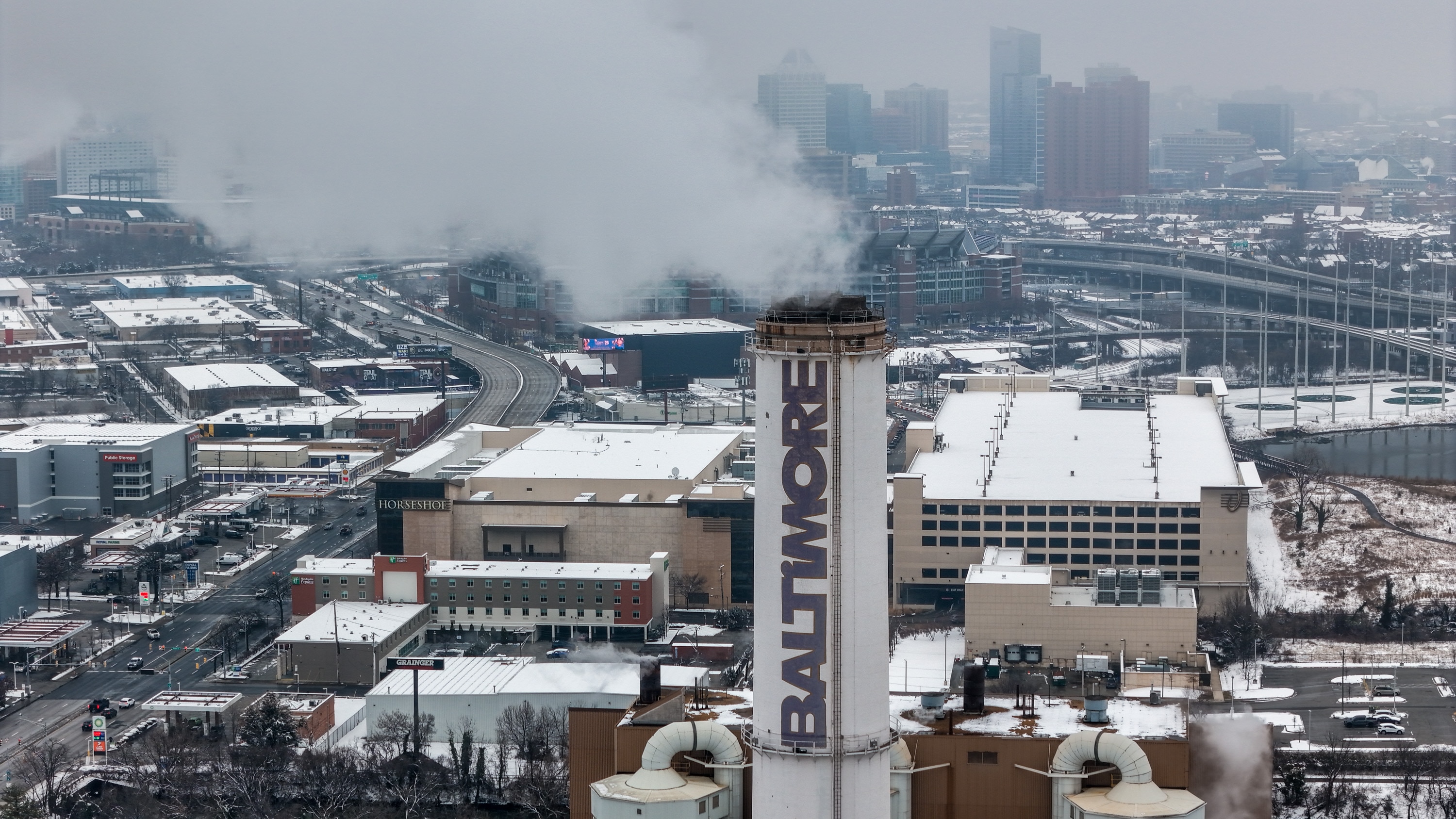
Not far from the scene of the murder is another former site not only important to Black history, but made necessary by racism and discrimination. You know that giant smokestack with “Baltimore” painted on the side that rises over I-95? Now, it’s WIN Waste Baltimore, also known as the Wheelabrator trash incinerator, but on that land once stood Maryland Park, the former home of the Baltimore Black Sox of the Negro Leagues.
“They were one of the larger and more prominent teams,” Woodard said, but they didn’t have their own stadium for years. The place went on to host the Negro League World Series twice before it fell into disrepair and the team moved to Bugle Field, at Federal Street and North Highland Avenue, which was renovated using pieces of Maryland Park.
Why is this important now? The Negro Leagues, of course, were a function of segregation, because Black players weren’t allowed to play with white ones. This happened, right down the street, in a place you probably drive by all the time. We have to make the connection in our physical space of these moments in time, or we’re going to either forget them or have them erased, like the names of the people enslaved by President George Washington were erased from his Philadelphia home.
A judge has ordered the panels bearing those names restored, but the point is that the erasure is deliberate. Baltimore is a place uniquely equipped with the pride to not let that happen if we can help it.
“A lot of people grew up here, have generations of family active here,” Woodard said. “You don’t have that in other cities. There are families who have a long history. There is a vested interest in this place.”




Comments
Welcome to The Banner's subscriber-only commenting community. Please review our community guidelines.