
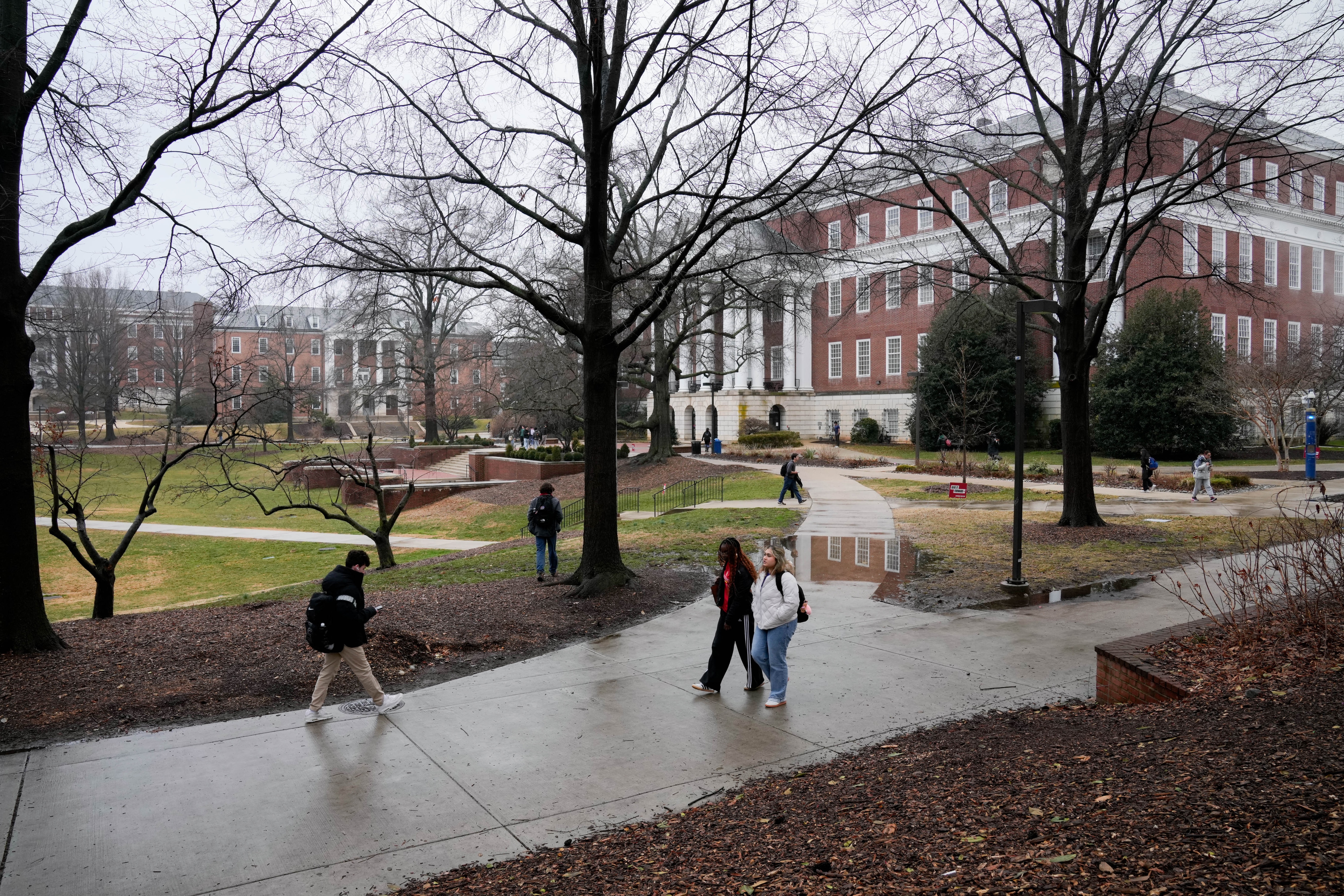
The Maryland General Assembly passed legislation this week to give thousands of non-tenure track faculty the right to form recognized unions at public universities.
If Gov. Wes Moore signs the bill into law, these educators will be the first granted collective bargaining rights at Maryland’s four-year public colleges. Currently, only the state’s community college faculty can unionize.
Non-tenure track faculty, usually known as lecturers or adjunct professors, often earn significantly less money than their tenure track and tenured coworkers. If a professor is tenured, it’s nearly impossible to fire them, while adjuncts work on yearly contracts. They also usually do not have health insurance benefits through the college.
Faculty members have spent years lobbying lawmakers in Annapolis to earn the right to unionize; graduate students are locked in a similar fight that is also making progress. Sen. Ben Kramer and Del. Linda Foley, both Montgomery County Democrats, sponsored the bills for faculty and graduate-student union rights.
Karin Rosemblatt, a professor at the University of Maryland, College Park, who is leading the unionization effort, said faculty members backed a bill to grant collective bargaining rights only to non-tenure track educators as part of a larger strategy.
“We heard in past years that the General Assembly thought our bill covered too many people and that was scary to them,” she said. “We decided this time around to just ask for collective bargaining rights for the most exploited faculty members.”
Read More
Rosemblatt added that the faculty are planning to introduce a bill next year to grant collective bargaining rights to tenured and tenure track employees.
She thinks the bill picked up momentum because faculty members have been persistent and because many state lawmakers are up for reelection in a year when the Trump administration has been attacking higher education.
If the bill becomes law, non-tenure track faculty will use collective bargaining rights to strengthen grievance procedures and advocate for higher wages, Rosemblatt said.
“Faculty are concerned about the well-being of their institutions, and they want their institutions to be as strong as possible,” she said. “They would love to be able to work with the administration, and they would hope the administration would be less hostile.”
The unions would be under the American Federation of Teachers, which represents K-12 educators, higher education faculty and staff, state employees, nurses and health care professionals. The Maryland chapter represents over 18,000 workers.
Kenya Campbell, president of AFT Maryland, said she expects Moore to sign the bill this year but said the work isn’t over.
“We’re going to continue to fight until all faculty across the state of Maryland have the right to collectively bargain,” she said.
The bill has advanced despite opposition from the University System of Maryland, the parent organization overseeing most of the public universities in the state.
In a letter submitted to lawmakers, system administrators wrote that “the imposition of such costly policy changes at this time would be more than challenging for all our campuses and, in fact, devastating for some.”
David Wilson, the president of Morgan State University, also testified against the bill. Morgan State is a public university but not part of the system.
“Including nontenured track faculty among the public workers eligible for collective bargaining will impose considerable strain on the university’s administrative resources, financial resources and academic independence,” Wilson wrote in a letter to lawmakers, adding that “expanding collective bargaining could hinder academic freedom, thereby jeopardizing the university’s mission.”
University system officials were not immediately available for comment Thursday.
Faculty unions are relatively common, and more than half of U.S. states legally allow collective bargaining. Pennsylvania, Delaware and New York are among them.
About the Education Hub
This reporting is part of The Banner’s Education Hub, community-funded journalism that provides parents with resources they need to make decisions about how their children learn. Read more.


Comments
Welcome to The Banner's subscriber-only commenting community. Please review our community guidelines.