
Sonja Santelises has had enough.
The CEO of Baltimore City Public Schools and mom of three knows parents are busy. But kids raised with iPads are showing up to kindergarten struggling to focus and regulate their emotions.
She’s decided it’s time to start taking screens out of classrooms.
“We have to prioritize protecting the attention span and the brain development of our children,” Santelises said. “To ignore this is akin to neglect.”
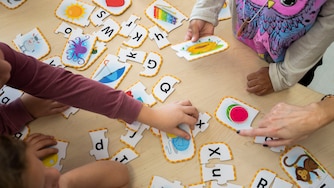
Starting next school year, Baltimore students in kindergarten through second grade have screen time limits of 15 to 20 minutes per day in class — a first for Central Maryland school districts. They’ll also have to share laptops and tablets, rather than getting assigned their own. Santelises said City Schools wants its youngest learners to have more in-person, hands-on experiences without distractions.
Across the country, most students are using computers and tablets in school by kindergarten, and far more of them are doing so on their personal devices than before the pandemic. At least five states are considering scaling back on technology in the classroom, from in-class screen time limits in Virginia to a complete ban on digital devices through fifth grade in Tennessee.
Read More
In Baltimore, the amount of time students spend in front of screens varies from school to school and class to class. Some use computer programs for extra help getting caught up on reading and math.
“We will continue to be far more restrictive in what technology is allowed and approved,” Santelises said at a February school board meeting.
She said the moves have been a long time coming.
Santelises said she’s watched entire countries prioritize physical textbooks over laptops to fix literacy rates and noticed how parents who got rich on tech limit their kids’ interaction with it. She said the district has also been taking an in-depth look at technology use since the COVID-19 pandemic, when city schools went from having one device for every eight or so students to a 1-to-1 ratio “almost overnight.”
As kids had to start using tablets and laptops for virtual school, some of their younger siblings spent years watching short — and often overstimulating — YouTube videos rather than socializing with real kids. They’re entering school more reliant on screens for instruction, entertainment and self-soothing, said Crystal Francis, the district’s executive director of early learning.
Pre-K is built on face-to-face interactions and play, and kids can’t learn to take turns or mitigate conflict from behind a screen, Francis said.
According to the Pew Research Center, more parents are turning to tech anyway — 62% of children younger than 2 watch YouTube, 68% of kids 12 or younger use tablets, and the poorer a child is, the more likely they are to have a smartphone. Experts say increased screen time can rewire kids’ brains in potentially dangerous ways, degrade attention spans and harm development.
Maryland has already tried to work on the problem with older kids by enacting strict cellphone bans. Early evidence suggests it’s been good for their grades and concentration, even though many students initially resisted.
Santelises said she hasn’t gotten pushback on the new rules for Baltimore elementary students, but it’s still early; she announced them just weeks ago.
Starting off screen-free benefits the district’s tiniest students, City Schools Chief Academic Officer Joan Dabrowski said at the February meeting. Going device-free in pre-K contributed to the district’s kindergarten readiness scores that showed “students who attend City Schools pre-K are better prepared for kindergarten than those who attend other prior care settings,” Dabrowski said.
Santelises acknowledged that technology can be beneficial, especially when teachers are involved and students aren’t just watching videos. But she wants educators to be cautious in pursuing new technology.
“The neuroscience supports what my grandmother would have told you,” said Santelises, who writes her meeting notes by hand in a journal. “The brain retains information differently when you have pencil to paper.” She added that city schools have reintroduced handwriting into its early literacy curriculum.
But rather than spending money on tablets, Santelises wants to invest more in toys, like pretend food for playtime, student trips to D.C. and the Eastern Shore, and outdoor equipment such as volleyballs and jump ropes.
All third graders will continue to get their own personal devices because they must complete computer-based state assessments, she said, and she didn’t want city kids to be at a disadvantage.
She thinks the state should consider stepping back from digital tests for those kids, because it’s “absolutely absurd” to have “8- and 9-year-olds with earphones on, sitting and plugging into a computer to be able to tell whether they read or not.”
In a written statement, the Maryland State Department of Education said technology is the “most effective and efficient” way to get timely test results and that going analog would drive up costs. Spokesperson Cherie Duvall-Jones added that the federally required National Assessment of Educational Progress, known as the Nation’s Report Card, is also done digitally.
Local school systems can set their own screen time and device-use guidelines, the department said, but the state limits preschoolers’ “passive viewing” of technology to about 30 minutes a week.
Though Santelises is leaving her post as CEO at the end of the school year, she’s glad she could get the ball rolling on limiting technology use for the district’s youngest kids, an initiative she called a no-brainer.
“Technology eats executive functioning for breakfast,” Santelises said, “but we’re giving it to kids every day.”
About the Education Hub
This reporting is part of The Banner’s Education Hub, community-funded journalism that provides parents with resources they need to make decisions about how their children learn. Read more.




Comments
Welcome to The Banner's subscriber-only commenting community. Please review our community guidelines.