
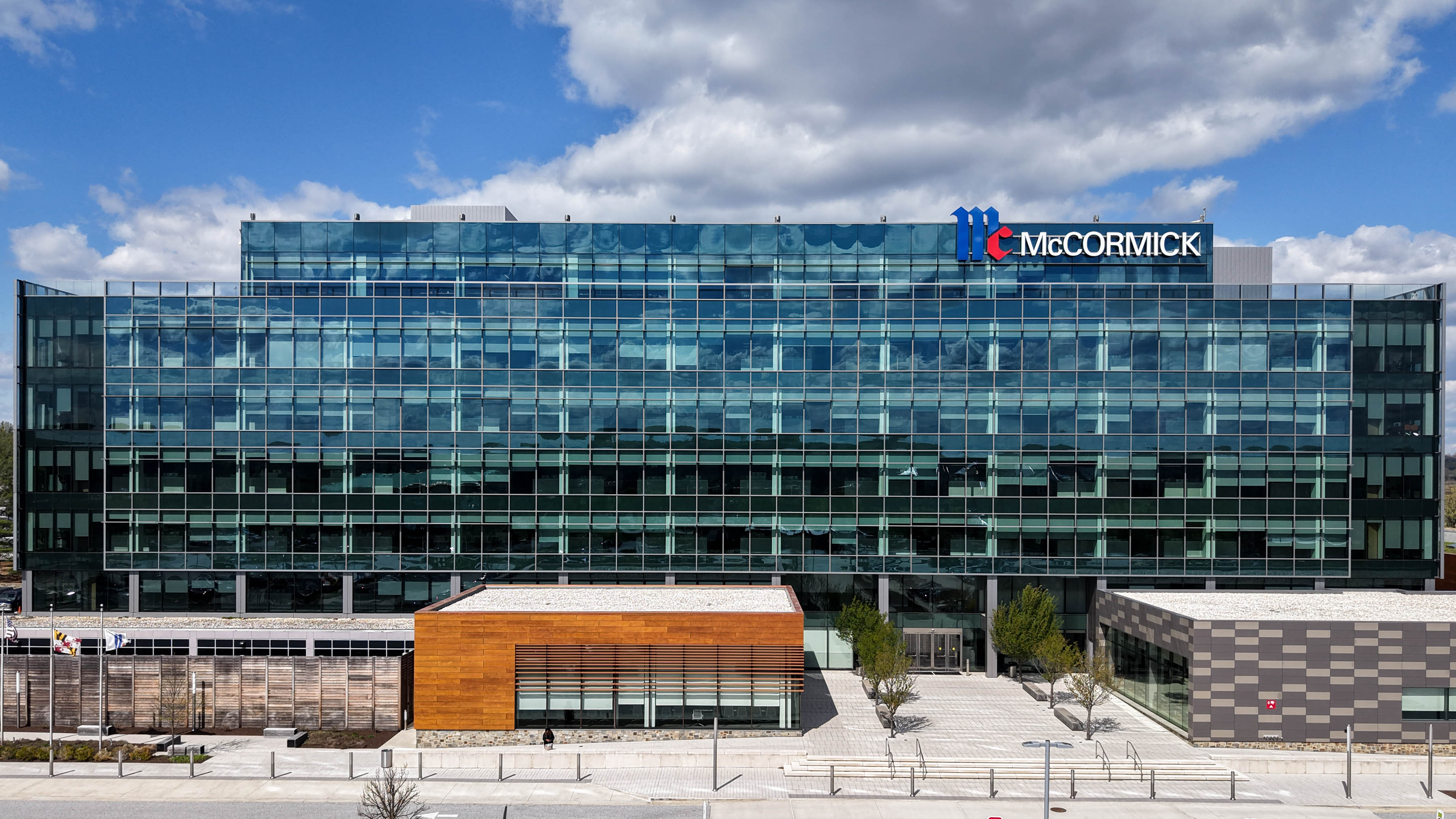
What started in a Baltimore basement in the 1800s has grown into a bona fide global empire of spices, seasonings and sauces.
McCormick & Co. announced Tuesday it is acquiring a huge chunk of the British conglomerate Unilever — the second-largest deal ever struck between food companies.
When the papers are signed and the dust is settled, over a year from now, Unilever will be focused on its personal care and beauty products, while McCormick will have expanded its pantry to include Hellmann’s Mayonnaise, Marmite and dozens of other brands.
McCormick — famous for its red lids, blue-and-red “Mc” branding and, locally, its Old Bay seasoning — will keep control of the combined company’s leadership and remain headquartered in Hunt Valley. But it will also deepen the global footprint of a largely North American brand and add an international base in the Netherlands, where Unilever has a strong presence.
With the agreement, McCormick will triple its annual revenue. As Barclays analyst Andrew Lazar said on McCormick’s earnings call Tuesday, it’s a “big swing.”
What it means for McCormick and its hometown, however, will depend on how the company approaches a new era.
“This move shows how companies can grow globally while staying rooted in our community,” Dakarai Turner, a spokesperson for Baltimore County Executive Kathy Klausmeier, said in a statement.
McCormick employs 14,100 people as of its most recent annual filing to the federal government, but it’s unclear how many are in Maryland. The company declines to publicly break down its workforce by region.
Baltimore County counts McCormick as one of its largest employers, with about 2,500 employees there, according to county data.
In addition to its headquarters — a glassy $170 million renovated office building that opened in 2018 — McCormick’s Maryland footprint includes a 1.8 million-square-foot warehouse at the Tradepoint Atlantic logistics hub in Sparrows Point and a 368,000-square-foot distribution center in Harford County.
It’s unclear whether the Unilever deal will lead to more or fewer McCormick employees in Hunt Valley. Executives told analysts the combination will result in $600 million in annual “synergies.” That money could come from savings on distribution and manufacturing — but also from salaries.
A publicly posted Employee FAQs includes a question regarding whether layoffs are expected. The company said there will be no immediate changes, but, beyond that, simply assured employees they would be kept updated.
Until the deal is complete, “it is business as usual,” the document stated.
Some area residents, with fresh scars from Black & Decker’s 2010 merger with The Stanley Works and subsequent headquarters move to Connecticut, might be concerned that McCormick will eventually relocate.
But David Kass, a professor at the University of Maryland Robert H. Smith School of Business, didn’t view it that way. McCormick is the company in charge, he said, and while it will expand internationally, he doesn’t see it necessarily cutting back in Hunt Valley.
The company’s chief financial officer, Marcos Gabriel, offered some assurance Tuesday.
“McCormick will remain globally headquartered in Hunt Valley, Maryland, reinforcing our commitment to our heritage,” he said on the earnings call.
That heritage dates to 1889. Willoughby McCormick started the company and began selling fruit syrups and extracts door to door. It was a small operation. (He was fined $100 in 1891 for misrepresenting a shipment of bitters as water to get a lower freight rate, according to a contemporary article in The Baltimore Sun.)
The company expanded across the country by the mid-20th century and has long been synonymous with the Baltimore area. Years ago, the company gave out coveted spice freebies at its annual shareholders meetings and briefly had a spice museum and retail venture at Harborplace.
Overall, the company is less visible in the city than other major employers, but it sells perhaps Baltimore’s most beloved product: Old Bay, another native company that it acquired in 1990.
In recent years, McCormick has expanded its portfolio. Karyl Leggio, a professor at Loyola University Maryland’s Sellinger School of Business and Management, said McCormick has been “highly successful” in acquiring brands with strong followings and letting ”them do their thing.”
“I think McCormick saw a deal that’s very much in their wheelhouse,” she said of the Unilever agreement.
McCormick had been thinking about a deal with Unilever for a “number of years,” McCormick President and CEO Brendan Foley said.
Now, apparently, was the right time, given Unilever’s desire to streamline its business. The company spun off its ice cream brands last year and previously discussed a food deal with Kraft Heinz, the Financial Times reported, though it was never finalized.
Healthy eating trends, paired with the rise of GLP-1 weight loss drugs, have hurt a lot of consumer packaged good companies, but McCormick has positioned itself as a company that can healthfully “flavor” calories.
TD Cowen analysts wrote Wednesday that the company’s portfolio is a “good hedge against the GLP and [Make America Healthy Again] risk.”
Still, investors weren’t wowed with McCormick’s big move.
Its stock value has dropped more than 10% since the deal was announced Tuesday morning, due in part to caution over large acquisitions and mergers involving consumer packaged goods.
Kraft combining with Heinz in 2015, the largest food merger ever, fell short of market expectations.
Banner reporter Giacomo Bologna contributed to this article.





Comments
Welcome to The Banner's subscriber-only commenting community. Please review our community guidelines.