
Fearing a further hollowing-out of the city’s business district, city lawmakers are backing a bill in Annapolis to make it easier for Mayor Brandon Scott’s administration to offer tax break to downtown developers.
Known as payment in lieu of taxes, or PILOT, the tax breaks are a mechanism where property owners pay an annual fee to the city that is usually far less than their expected property tax bill. Baltimore has the highest property tax rate in Maryland.
A year ago, Downtown Partnership of Baltimore President Shelonda Stokes compared the city’s central business district to a girl on the cusp of a glow-up.
“Remember that girl in school that had the pigtails and the glasses and would sit in the back unnoticed? And then one day, boom! She comes out and everybody starts to notice her at that moment. They cannot believe they overlooked her. That’s downtown Baltimore right now,” Stokes said at a breakfast summit that doubled as a pep rally.
Today, downtown is more unseemly than ever. The neighborhood’s properties collectively lost $326 million in assessed value last year, Scott said last week.
It’s the latest bad turn in a series of down years for the neighborhood where properties are selling for pennies on the dollar and hotels are struggling.

“It’s triage,” Otis Rolley, president and CEO of the Baltimore Development Corporation, said of downtown’s health. “We have to stop the bleeding and start the healing.”
The bill would allow for PILOTs lasting as long as 25 years and would set the payment at a property’s current tax bill. To be eligible, an owner or developer would have to make substantial renovations or do new construction. The city Board of Estimates, which the mayor’s office controls, approves all PILOT agreements.
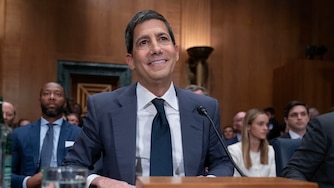
“In recent years, we’ve heard directly from folks who own vacant lots and properties who say as it stands today, it is not worth it for them to redevelop those spaces for the health of the entire city,” Scott said during a Senate committee hearing. “We have to make it worth it.”
The bill has met no opposition in state House and Senate hearings, but has yet to come up for a vote. If it passes, it could have a major impact on already planned projects.
Developer P. David Bramble’s plan to replace the Harborplace pavilions with luxury high-rise apartment towers would qualify for PILOTs under the new law. The pavilions are jointly assessed at about $25 million, records show, far less than what they will be valued once redeveloped.
The Baltimore Development Corporation plays a role in negotiating tax breaks for developers, and Rolley said that project would be a good candidate to receive a PILOT.
“I think it would be an ideal one,” Rolley said.
A representative for Bramble declined to comment.
Pro-PILOT advocates say developer incentives are a necessary tool to attract capital investment to beleaguered business districts. The coronavirus pandemic devastated downtowns, which are traditionally reliant on office workers.
Other cities, like Pittsburgh and Detroit, have enacted similar programs to the one proposed for Baltimore.
But PILOT agreements have a controversial past in Charm City. Harbor East, a luxury enclave turned downtown rival, benefited from opaque PILOT agreements that later became the subject of intense scrutiny.
And last year, a coalition of community activists, neighborhood groups and labor unions fought unsuccessfully to force the city to negotiate in public with a collection of universities and medical facilities to secure greater payments under those agreements.
Unlike for-profit developers in downtown commercial spaces, universities and nonprofit hospitals are exempt from property taxes. The amount they collectively pay — $6 million in 2026 — is drastically less than if they were subject to property taxes.
Still, getting flexibility from the legislature to more easily enter into PILOTs is a clear message that Baltimore is open for business.
“The city, in doing this, is making a big splashy statement to the private capital market that downtown is a place to invest,” said Mac McComas, a researcher focused on urban revitalization in Baltimore and postindustrial cities at Johns Hopkins 21st Century Cities Initiative.
Because the legislation leaves PILOTs individualized, McComas said Baltimore will retain some flexibility in the terms it can reach to protect itself. Of critical importance will be how the agreements are structured and for how long.
“If this is as successful as the city would hope, are they giving away more in tax revenue than they could otherwise?” McComas said. “It’s an unknown future there, but it’s a question worth asking.”



Comments
Welcome to The Banner's subscriber-only commenting community. Please review our community guidelines.