
Cargo ships are big. So big, in fact, that a parking miscue on a gusty day can deliver over $1 million in damage.
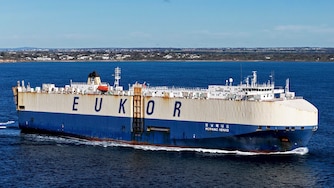
That’s what happened in December 2024 when a 577-foot vessel trying to ease into a berth within the Port of Baltimore failed to properly turn and knocked into a terminal, according to a recently released federal report.
Harbor pilots, who are local navigational experts, did not adequately adjust plans given the extreme gales, the National Transportation Safety Board found. The pilots adhered to the original approach to berth the ship in a certain spot, rather than pivoting to one that might have been more manageable. The NTSB does not assign fault.
The Morning Menad ship, carrying 4,212 automobiles, scraped into the Dundalk Marine Terminal and caused about $1.2 million in damage to a concrete wall, bollards, signs and a video surveillance system. The vessel itself also required about $200,000 in repairs.
Shipping is a longstanding and crucial part of Baltimore’s economy, and the port ranks No. 2 in the country for handling automobiles. More than 2,000 cargo ships, carrying all sorts of goods, come and go from the city annually — usually without incident.
But this instance, eight months after the Francis Scott Key Bridge collapse, demonstrates the sheer size of modern, ocean-going vessels and how a relatively small mishap in the ever-beating supply chain can result in significant financial damage.
Read More
Dec. 5, 2024 was expected to be a windy morning, and a landside superintendent with Wilhelmsen Ship Management, the Morning Menad’s operator, emailed the ship’s captain a “gentle reminder” regarding the forecast. But the wind proved to be nearly twice as strong as projected. It blew off crew members’ hard hats, one later told investigators.
Gusts reached 50 knots, or 58 mph. Wind is typically a little stronger over water than land, but, for context, gusts touch 50 knots only about once per year at Baltimore’s airport, according to the National Oceanic and Atmospheric Administration.
Paul “Tad” Whitin, one of two pilots guiding the ship as it docked, saw waterspouts developing and dirt blowing around on land. “It was howling,” he told NTSB investigators.
Bryan Vagts, the other local pilot, described running “out of room” as they tried to berth.
“The wind kicked up at such a high amount, you know, that it just — we were passengers at that point,” he said in the days after the incident.

Just before berthing, the ship’s live-aboard captain, Hi Man Park, had suggested to the pilots that they instead dock in a spot that would require less maneuvering. The pilots seemed receptive, a transcript of their conversation showed, but said the captain should check with the ship’s agent, a liaison on land who makes administrative decisions.
Park twice unsuccessfully tried to call the agent, and the pilots proceeded with the original plan.
The vessel needed to turn 150 degrees counterclockwise and reverse into the berth, but it was “blown sideways” in the process. As it became clear the ship would hit the terminal, there was audible “groaning or yelling,” according to an NTSB summary. As a last-ditch effort, crew members deployed an anchor, but the ship bumped into the concrete and grounded, meaning it wedged into the seabed and came to a stop.
“It happened really, really, really fast,” Vagts told the NTSB.
Later, crew members commiserated about the extreme wind and offered lunch to the pilots, which Whitin said he didn’t feel like he deserved.
“I just bonked their ship into the pier, like, you know, a s--t job in the end,” he said.

As is customary, two tugboats had been assisting the ship as it berthed, but they could not “protect us” because of the wind’s strength, Park told investigators. Afterward, two more tugboats were called to help. The four boats then freed the ship about 90 minutes after it grounded and it moored elsewhere.
The NTSB said the pilots’ decision to stick with the initial docking spot was consistent with “continuation bias,” which it defined as an “unconscious cognitive bias” to follow a plan even when conditions change.
“Despite the weather warning, the [captain’s] request to moor elsewhere, and the challenge of maneuvering a vessel with a known large sail area in significant wind, the pilots attempted to turn the ship around and moor the ship as planned,” the NTSB wrote.

It’s unclear if the pilots faced any disciplinary action. The Association of Maryland Pilots declined to comment.
The Morning Menad underwent temporary fixes in Baltimore before receiving permanent repairs at a shipyard in Tampa, according to Wilhelmsen.
Nearly two years later, the terminal itself has still not been repaired, although the Maryland Port Administration said the damage did not prevent the affected berths from being used since that day.
Spokesperson Richard Scher said in a statement Monday that the administration is “in discussions with the involved parties on finalizing an agreed-upon cost and repair plan for the berths.”



Comments
Welcome to The Banner's subscriber-only commenting community. Please review our community guidelines.