
Baltimore Gas and Electric Company expects to spend more than half a billion dollars constructing electrical infrastructure in South Baltimore, a “supplemental cost update” shows.
The Banner reported last summer that BGE planned to spend at least $130 million building substations and other infrastructure to prepare for the redevelopment of Baltimore Peninsula ― even as the proposed mega-development appeared to be stalling out. That was the cost of electricity distribution infrastructure.
But there is also electricity transmission infrastructure associated with the project. According to the supplemental cost update from BGE’s parent company, Exelon, those construction costs are estimated to be $407 million. That means the combined infrastructure costs are expected to top $537 million.
Once those projects are in service, their costs would be passed onto BGE’s customers for decades, plus interest and a rate of return for the private utility company. Exelon posted its latest earnings report on Feb. 12, which showed that BGE made $578 million in profit last year.
BGE spokesperson Nick Alexopulos said the transmission spending will benefit customers beyond Baltimore Peninsula. The new transmission lines will connect the new substation at Baltimore Peninsula to one in Westport and another on Greene Street near downtown, he said, giving “other Baltimore City communities the opportunity to develop and further electrify.”
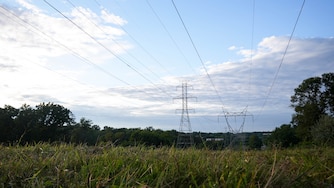
Transmission and distribution might sound similar, but they refer to different parts of the electrical system. Think of transmission lines as the superhighways that stretch across cities and states. Distribution lines are like local roads. The two systems handle different levels of electricity, use different infrastructure and are regulated differently. But both show up on your electric bills — which have escalated noticeably in recent years.
To power Baltimore Peninsula, formerly known as Port Covington, BGE wants to build a new substation to handle distribution. But the utility also wants to connect to that substation using an underground transmission line that would snake through South Baltimore and cause temporary traffic disruptions.
When BGE invests in new infrastructure, like a substation, the utility earns a rate of return on that substation for as long as it’s in service. Those rates of return are scrutinized and approved by the Maryland Public Service Commission, but critics say private utilities are incentivized to overbuild.
BGE did not respond to a question last month about the estimated cost of that transmission project. But on Feb. 3, a document created by Exelon was posted on the website of regional grid operator PJM Interconnection. (PJM oversees the flow of electricity across a power grid spanning several states.)
The document revealed the $407 million price tag and showed that this cost estimate has quadrupled since 2019, when a projection was first made. The escalation is partly because the costs of labor and materials have increased about 27% and 50%, respectively, Exelon says.
“To meet the forecasted loading of the area, execution schedules have been compressed, requiring overlapping design, permitting, procurement, and construction activities,” the document said. “Early procurement of long lead equipment, added contractor crews, and extended work windows have also contributed to increased costs.”
The earliest documents related to Baltimore Peninsula on PJM’s website are from 2016. Those documents attribute the infrastructure build-out to the plans of Sagamore Development, a company owned by Under Armour founder and CEO Kevin Plank, which had proposed the construction of 14 million square feet of new buildings.
Since then, about a tenth of that proposed space has been built, and there are no active plans to build more. In December, Plank said he was stepping back from future development at the site, and he left the remainder of the project in the hands of an Arkansas bank. The bank has said it is in talks with a potential buyer, but their identity is not publicly known.
Despite the uncertain future of Baltimore Peninsula, Alexopulos said BGE remains confident the area will still need more power in the future.
“Our plans have not changed as our customers’ energy needs in South Baltimore have not changed,” Alexopulos said. “We would reassess our project scope if customer needs change.”
David Lapp, who leads the Maryland Office of People’s Counsel, the state’s ratepayer advocate, has questioned the proposed spending at Baltimore Peninsula for years. He said there’s no public evidence that this transmission spending is warranted, and that it needs more scrutiny.
State regulators primarily oversee distribution projects. This means the transmission spending for Baltimore Peninsula is not subject to BGE’s multiyear rate plan with Maryland’s Public Service Commission.
Lapp said these local transmission projects “fall into a regulatory gap,” where federal regulators are in charge and there is relatively little pushback.
“This is spending that should be limited or at least delayed because it is driving up customer rates and driving unaffordable utility bills,” Lapp said in a statement.
Maryland lawmakers are currently working on legislation that would lower the monthly bill for an average residential BGE customer by 80 cents.




Comments
Welcome to The Banner's subscriber-only commenting community. Please review our community guidelines.