
A video posted to Blue Agave Mexican Food’s social media account last month opened with an employee clutching vegetables and cilantro in her arms.
“People are asking why chips and salsa aren’t free anymore,” she said, before a montage that included the slicing and sautéing of onions for salsa and tortillas being lowered in the deep fryer.
The post announcing that Blue Agave would start charging for chips and salsa after more than 20 years in business received more than 700 comments ranging from supportive to outraged to snarky.
“Next thing we know Texas Roadhouse is gonna start charging for the rolls,” someone speculated sarcastically. Another said that businesses “raise prices or nickel and dime people” when they’re losing money.
It’s a conversation that rarely goes well when customers learn they’ll have to pay for a product that used to cost them nothing. But as restaurants face their own rising food, labor and other costs, all of which have soared since the pandemic, more and more places are doing away with freebies.
Two years ago, when chef Corey Laub prepared to open his Old Line Kitchen and Wine Bar, he calculated that offering free bread before meals would cost the business $45,000 per year, including labor. Not worth it, he believed, for a project he and his wife were investing their life savings into — particularly as they were facing escalating prices for everything from trash pickup to permitting.
Read More
Today, diners at their Columbia restaurant pay $6 for house-made focaccia and whipped butter. “I think it creates a better experience for the guests and for us,” Laub said, because the carbs are of higher quality than what he would be able to offer for free.
Similarly, at Blue Agave, the decision to start charging for chips and salsa as part of an overall menu upgrade was less about controlling costs than offering something better, said general manager Tess Miller. “People want to be experiencing a bounty,” Miller said, particularly in the social media age. “We wanted this to look big, to be big,” she said.
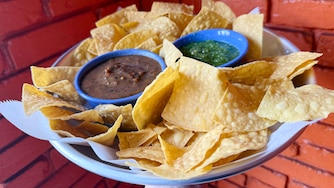
Diners will pay $7 for a bowl of chips that’s twice as large as before and comes with two 7-ounce containers of salsa. Customers previously received three 3-ounce ramekins of salsa.
Charging money also helps cut down on waste. When the snack was free, Miller said, customers didn’t always eat what was in front of them.
Despite the backlash on Instagram, Miller says customers have been largely understanding of the change. Among longtime regulars, “Almost the only reaction I ever get is, ‘Good, nothing is free in this world.’”
Yet restaurateurs are navigating a tightrope. In a tough economy, many other customers are turned off by high prices. In an effort to save money, some may simply dine out less often.

“The math is very difficult for restaurants,” said Chad Moutray, chief economist for the National Restaurant Association. While costs are rising, foot traffic to eateries has dropped amid economic worries.
Among Columbia diners, Old Line Kitchen has built a reputation as a special occasion spot, Laub said, making it harder to cultivate a base of regulars. He’s been trying to change that by offering weekly discounts like all-day happy hours on Mondays or discounted burgers on Tuesdays. But the restaurant is struggling. He and his wife have been exploring alternate revenue streams, including creating their own line of jams and jellies called Old Line Provisions to bring in additional income.
Many operators are reluctant to pass on their high costs to consumers and instead see their own profits decline. “The median profit margin for a full-service restaurant is 2.8%,” Moutray said, down from 4% pre-pandemic. This summer, the National Restaurant Association conducted a survey of restaurant operators; around one-third said they weren’t profitable for the first half of 2026.
Still, people are going out to eat. Moutray’s advice to operators who want to stay competitive: “Hospitality is the name of the game right now,” he said. Customers are more likely to return to places where they’re “feeling like they’re getting a great value for their dollar,” Moutray said.
For some established restaurateurs, that means giving away food. At Papi’s Tacos, which has branches in Hampden, Fells Point, Towson and Ocean City, customers get one free basket of chips with salsa, though refills cost money. “You sit down and right away, bang. You’re getting something,” said co-owner Charlie Gjerde. It sets a positive tone for the rest of the meal.
Of course, Gjerde, like almost everyone in the industry, said he’s wrestling with the restaurants’ bottom line, including climbing prices for food, labor, gas and electricity. “I’ve been doing this since 1991 and never stressed about costs like I’m stressing now,” he said.
He and his partners are constantly meeting to discuss ways to keep their margins under control, including closely tracking portions of meat and other proteins to limit over-serving. “Everyone’s using scales now,” Gjerde said.
The free chips and salsa topic regularly comes up. “We’ve had that battle every year. Do we start charging for chips and salsa?” he said.
Each time, they decide against it. “We’re sticking with free chips,” he said.



Comments
Welcome to The Banner's subscriber-only commenting community. Please review our community guidelines.