
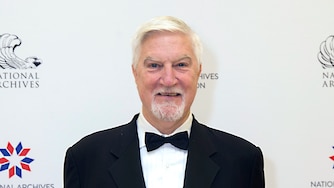
Bill Wiseman had one goal as cancer took a growing toll on his health.
The 83-year-old Cockeysville resident is the father of NASA astronaut Reid Wiseman, who’s commanding Artemis II, the first crewed mission to the moon since the Apollo program more than 50 years ago.
“I wanted to stay alive to see it,” Bill Wiseman said.
He may get that chance Wednesday, with NASA targeting a launch from Florida’s Kennedy Space Center as early as 6:24 p.m. If Artemis II can’t lift off then, other windows are available each day through next Monday.
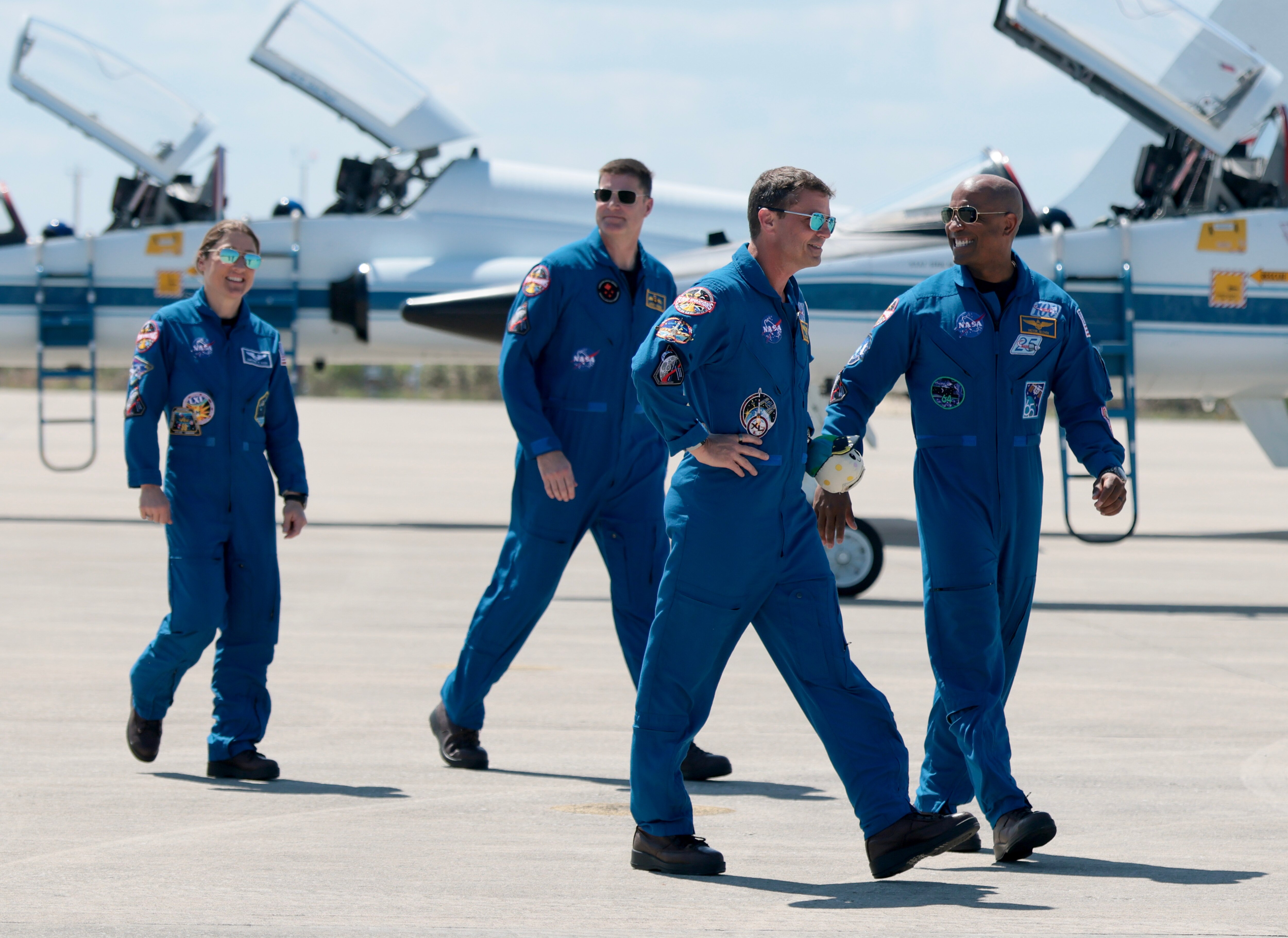
During their 10-day trip, Reid Wiseman and three other astronauts won’t land on the moon, but they will fly around it. In doing so, they could travel farther from Earth than any humans before and capture unprecedented views of the moon’s far side. NASA hopes the mission paves the way for the next lunar landing and eventually human exploration of Mars.
Reid Wiseman, 50, leads a history-making crew. Pilot Victor Glover is poised to become the first person of color to travel to the moon. Mission specialist Christina Koch will be the first woman to make the journey, while mission specialist Jeremy Hansen, a Canadian, will be the first non-American.

For astronauts’ families, launch day brings a swirl of emotions. Immense pride in their loved ones’ accomplishments can be tinged with pangs of terror, given the mission’s enormous risks.
Such emotions feel even bigger this time for Reid Wiseman’s family, after a trying few years. His mother died after a long battle with Alzheimer’s disease. His wife died of cancer. Now, his father’s health is faltering.
It’s left Bill and Reid Wiseman grappling with their own mortality as the launch approaches.
Doctors diagnosed Bill Wiseman with metastatic prostate cancer in 2020 and told him it had spread to his back and hip. In the years since, the disease and treatments have weakened his body and depleted his energy. He’s no longer able to play golf or walk along trails near his Baltimore County home.

Despite his failing health, Bill Wiseman is determined to witness the Artemis II launch in person. He flew to Florida this week to see his son off and celebrate everything he’s achieved.
“This is what he is living for,” said Bill Wiseman’s travel companion and oldest son, also named Bill. “The whole concept of going to Cape Canaveral, watching the rocket take off and seeing Reid be the national hero, is just going to be amazing for him.”
The elder Bill Wiseman once worked in Baltimore County government, first as an attorney and later as zoning commissioner. His wife, Judy, was an administrative assistant for an insurance company. Together, they raised their two boys in Cockeysville’s leafy Springdale neighborhood.
Their youngest, Reid, seemed destined for a life in the skies. At around 10 years old, he started bringing home model rockets from a local hobby shop, loading them with engines and launching them over Loch Raven Reservoir. After his brother enrolled at the Naval Academy, Reid Wiseman would visit to watch the Blue Angels fly overhead.
He graduated from Timonium’s Dulaney High School in 1993, commissioned as an officer through Rensselaer Polytechnic Institute’s ROTC program and became a Navy pilot. After two deployments during the Iraq War, he returned to Maryland to train and serve as a test pilot at Naval Air Station Patuxent River.
Reid Wiseman was deployed on an aircraft carrier in the Persian Gulf when NASA announced that he was one of nine people, chosen from out of 3,500 applicants, selected for its astronaut program. Before he reported for training at Houston’s Johnson Space Center in 2009, friends and family back home threw him a celebratory crab feast.


Five years later, Reid Wiseman embarked on his first space flight: a 165-day mission to the International Space Station, where he completed two spacewalks and hundreds of scientific experiments. His parents, brother, wife and two young daughters all traveled to the launch site in Kazakhstan and anxiously watched him soar into orbit on a Russian rocket.
Soon after Reid Wiseman returned home, his family life changed dramatically.
His wife, Carroll, was diagnosed with cancer and battled the disease for five years. She died in May 2020 — just a month after Reid’s mother, Judy, died from Alzheimer’s disease. Reid was left to raise their two daughters on his own.
While Carroll was sick, Reid stepped back from active flight duty to serve in the astronaut office, first as a deputy, then as chief. But he returned to the flight rotation in November 2022, and soon after, NASA invited him on a bold new mission: a crewed voyage to the moon.

The offer led to hard discussions with his family. The risks of returning to space felt different after Reid became a widower and a single father.
Ultimately, the chance to fly to the moon — to join the company of the Apollo mission’s Neil Armstrong and Buzz Aldrin and usher in a new era of human exploration — was too great to pass up. But it did require preparing his daughters, now 20 and 17, for the worst-case scenario.
“I went on a walk with my kids, and I told them, ‘Here’s where the will is, here’s where the trust documents are, and if anything happens to me, here’s what’s going to happen to you,’” Reid Wiseman said at a NASA news conference in January. “That’s just a part of this life.”
NASA declined to make him available for an interview with The Banner.
Final preparations for Artemis II are underway. The 322-foot rocket arrived over a week ago at the launchpad. The astronauts are isolated in a medical quarantine. The 49-hour countdown clock started ticking Monday.
On launch day, Bill Wiseman plans to join his son’s family, childhood friends, college classmates and military buddies at a viewing site less than 4 miles from the launchpad — close enough, some say, to feel the rocket’s heat.
“I’ll be very proud, but I’ll also be very terrified,” Bill Wiseman said.
“When you get to be 83, you know you can’t control the world like you thought when you were a younger person,” he said. “And so you just pray, and you keep your fingers crossed, and you watch.”



Comments
Welcome to The Banner's subscriber-only commenting community. Please review our community guidelines.