
They traveled from Baltimore, Randallstown, Salisbury, and New York City to the small country church in Fork Neck where they worshipped once upon a time with their grandparents. They addressed each other by childhood nicknames that had stuck over the decades: Bumpy, Little Helen, J-Boy, Little Pop. And when the wooden pews filled up, just before the 3 p.m. start, the ushers brought out more chairs from the adjacent banquet hall.
More than 100 Cephas family members had gathered for one of Dorchester County’s largest family reunions. Together, heirs of Josiah and Hattie Cephas own 800 acres of prime farmland in Dorchester County — more than any other Black family, and also more than many white ones. That they have been able to keep the land in soybeans and corn when so many neighbors have lost their farms is a testament, they say, to their family legacy.
Cephases do not give up, they say; Cephases do not give in; and Cephases draw strength from their faith, their history, and each other.
“It is a legacy of pride and accomplishment,” said Wavie Gibson III, whose mother, Alice Cephus, insisted he spend some time on the Eastern Shore after he moved to Baltimore. Eventually, he taught chemistry and coached wrestling at Baltimore Polytechnic Institute. “There are not many folks of any color who have had as much property and success as our grandfather Josiah did.”
Cephas family patriarch Gilbert Cephas traces his lineage and landowning acumen on his mother’s side to Jacob Jackson, a free Black farmer and veterinarian who received coded communications from Harriet Tubman and conveyed her messages to those who sought to escape via the Underground Railroad.
Jackson and his wife owned 140 acres in the White Marsh area, where he would have interacted with Tubman’s father, Ben Ross, and her husband, John Tubman. Jackson’s land is now part of the Harriet Tubman Underground Railroad Historical Park in Church Creek.
Josiah Cephas married into the Jackson family, but did not inherit any of that land. He was a sharecropper; unable to purchase the land himself, he asked a white family, the Sewards, to buy it for him. Tubman did the same with her property in Auburn, N.Y. The family of William Seward, who was Secretary of State under Abraham Lincoln, allowed Tubman to build her home for the aged on their family land.

Black families owning land after the Civil War wasn’t unusual in Dorchester County. Many bought land that had been timbered, wasn’t suitable for growing tobacco, or was becoming waterlogged. What’s unusual, said longtime realtor Ronald Molock, is to find a Black family still holding on to that much acreage. The Cephases rent out their land to mostly white farmers.
Driving around the back roads of Fork Neck and Aireys, Molock pointed to land that friends and family used to own and houses that are falling down or gone altogether. In their place are trailers or modular homes, on land that white families often pick up for hundreds by paying only the back taxes — often just hundreds of dollars — that Black heirs have not paid.
Some of those taxes go unpaid because people don’t realize they owe them; some are unpaid because the families can’t afford them. Often, the white families use that land for hunting retreats, visiting just a few times a year.
“Look around here. This used to be Black land. Now, it’s all white land. I sell it for a Black family, and a white family buys it,” said Molock, 84. His family owned almost as much land as the Cephases but lost it to settle unpaid debts.
That ownership and those tight ties earned the family their neighbors’ admiration.
Asked how his family held on to their land, Gilbert Cephas doesn’t hesitate:
“Cuz we big dogs,” he said with a smile.


Decades ago, Dorchester County commissioners asked if they could buy the property to build the county airport. Josiah was willing; Hattie said no, Gilbert Cephas recalls, because a friend of hers had her leg sheared off when a small plane landed on her property. A billionaire hedge fund operator who owns an estate nearby also inquired, but Gilbert Cephas said the family was not interested in selling.
Josiah Cephas began the Cephas Day tradition about a century ago to honor the family bonds and the entrepreneurial spirit, and to bring back family members who had left the Shore. Gilbert Cephas believes last weekend was the centennial celebration.
The Cephas name is all over the Shore: on buildings and also in politics.
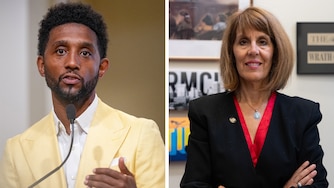
Gilbert Cephas was president of the Cambridge City Council; he left office in 2008. Today, a Cephas is again in that job – Sputty Cephas. His sister, Lajan Cephas, is the second Black mayor of Cambridge. Their cousin, Brandy James, became the first of two Black women elected to the Federalsburg City Council after the town settled a discrimination lawsuit that the ACLU filed regarding unfair representation. Until recently, James’ father, Charles Cephas, was mayor of the town of Hurlock.
The name “Cephus” is also ubiquitous in Baltimore and in census records; the “Cephas Day” Cephases traded the “u” for an “a” decades ago.

Though Gilbert Cephas says those officeholders are a different branch and he knows of no relation, they share some roots. All Cephases, he said, recognize the importance of involving the younger generation in passing on the family history. (Baltimore County Councilman Julian Jones is related to the Cephas family by marriage; Bumpy is his cousin.)
Over plates of chicken and mashed potatoes at the reunion, the cousins and uncles and aunts swapped stories as the grandkids tried to stay awake. And Gilbert Cephas, the impresario of the day’s events, couldn’t stop smiling.
Over a hundred years of Cephus Days, turnout had ebbed and flowed. But on Sunday, the church overflowed with family and fellowship.
Josiah would have been proud.
A previous version of this story stated Josiah Cephas and Jacob Jackson were related. Gilbert Cephas is related to Jacob Jackson through his mother's side.




Comments
Welcome to The Banner's subscriber-only commenting community. Please review our community guidelines.