
Stranded in Baltimore, the Dali crewmembers say they have nothing but time.
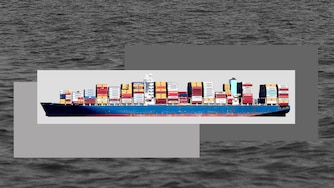
Of the 21 seafarers aboard the cargo ship when it slammed into the Francis Scott Key Bridge on March 26, 2024, eight still live in an extended-stay hotel in the city. No charges have materialized against them, and their ship returned to international seas last year, but they remain indefinitely tethered here by an agreement between their employer and federal authorities.
The Indian and Sri Lankan nationals have now been grounded in Baltimore for two years. Synergy Marine Group, their employer, has declined to make the crewmembers, who range in age from 20s to 50s, available for interviews.
The Marylanders looking after them — Josh Messick, director of the Baltimore International Seafarers’ Center in Locust Point, and Andrew Middleton, director of the Apostleship of the Sea in Dundalk — have done their best to entertain the men. They filled the first year with livestreamed cricket matches and outings to historic destinations like Gettysburg, Pennsylvania, and the National Mall in Washington.
The second year was quieter, Messick and Middleton said. They still regularly check in on the men, who pass the time by watching YouTube videos or going on long walks, sometimes alone.
“Their emotional state is fragile,” Messick said. ”They have really turned inward.”
Even as a group, some are prone to isolation. Messick has paid special attention to the Dali’s second officer, who grew up in northern India speaking Hindi. The other seven, from southern India and Sri Lanka, speak Tamil. The only common language between them is English, the language of the seas.
The Key Bridge collapse: 2 years later
- Untold stories of the Key Bridge disaster: Down in that metal nightmare
- The investigation: New transcript reveals frantic scene aboard Dali before Key Bridge collapse
- Rebuilding the bridge: A 145-ton hammer is installing the Key Bridge foundation
- The economic impact: 2 years after Key Bridge collapse, Port of Baltimore still eyeing return to top 10
Over the summer, Middleton arranged to take the crew to a few Orioles games, but he acknowledged the outings have been less frequent in the second year. Last fall, he invited them to his home to watch a Ravens game, but was forced to cancel when a member of his household got sick. The event was never rescheduled.
Middleton catches his mind wandering to the Dali crew around the end of the day when things slow down. He fires off a text to those he hasn’t heard from in a while.
“There are times I feel really bad,” Middleton said. “What else can I come up with to get out with them and see something different?”
All of the crewmembers have seen their family at least once, which Middleton called “a blessing.” Over the winter, four were granted permission to travel home, leaving just the captain, chief engineer, electrician and second officer in Baltimore.

They hoped they wouldn’t need to go back to the U.S., but had to return in February, Messick said. Some had tried to find work, but felt demoralized when they couldn’t get contracts that should have been easy to secure. Messick suspects that’s because of the bridge collapse and their unresolved matters in the United States.
After the Dali’s power failed, the ship coasted in the darkness before striking the 47-year-old bridge, which collapsed into the Patapsco River in seconds. Six construction workers died.
Shortly afterward, the Department of Justice opened a criminal investigation, but the status of that investigation is unclear. Representatives for the department haven’t said why the Dali crewmembers are being required to stay or when they will be permitted to leave.
Kevin Nash, a DOJ spokesperson, declined to comment.
Grace Ocean Private Ltd., which owns the Dali, and operator Synergy settled a lawsuit with the Department of Justice in 2024, paying out $102 million. However, the companies still have billions at stake in federal lawsuits brought by the state of Maryland, families of the victims, city government, Baltimore Gas and Electric, and local businesses, among dozens of others. A federal civil trial is scheduled for June.

The Dali crew cannot work while they remain in Baltimore, though they continue to be compensated by Synergy for their time here. The second officer is sending money home to his elderly mother in India, but told Messick he’s worried he won’t be able to support her once he’s home.
“There’s a real sense of hopelessness that’s outside of their control,” Messick said.
In December, the Baltimore International Seafarers’ Center hosted a second annual holiday party to lift the crew’s spirits. The event featured Indian food, which they seemed to enjoy, and a game of bingo, which they didn’t.
Messick asks when they want to get together again. The answer is always the same — anytime.
“They say, ‘My life is not going anywhere.’”
Banner reporter Hayes Gardner contributed to this story.
The Key Bridge collapse: 2 years later
- Untold stories of the Key Bridge disaster: Down in that metal nightmare
- The investigation: New transcript reveals frantic scene aboard Dali before Key Bridge collapse
- Rebuilding the bridge: A 145-ton hammer is installing the Key Bridge foundation
- The economic impact: 2 years after Key Bridge collapse, Port of Baltimore still eyeing return to top 10


Comments
Welcome to The Banner's subscriber-only commenting community. Please review our community guidelines.