
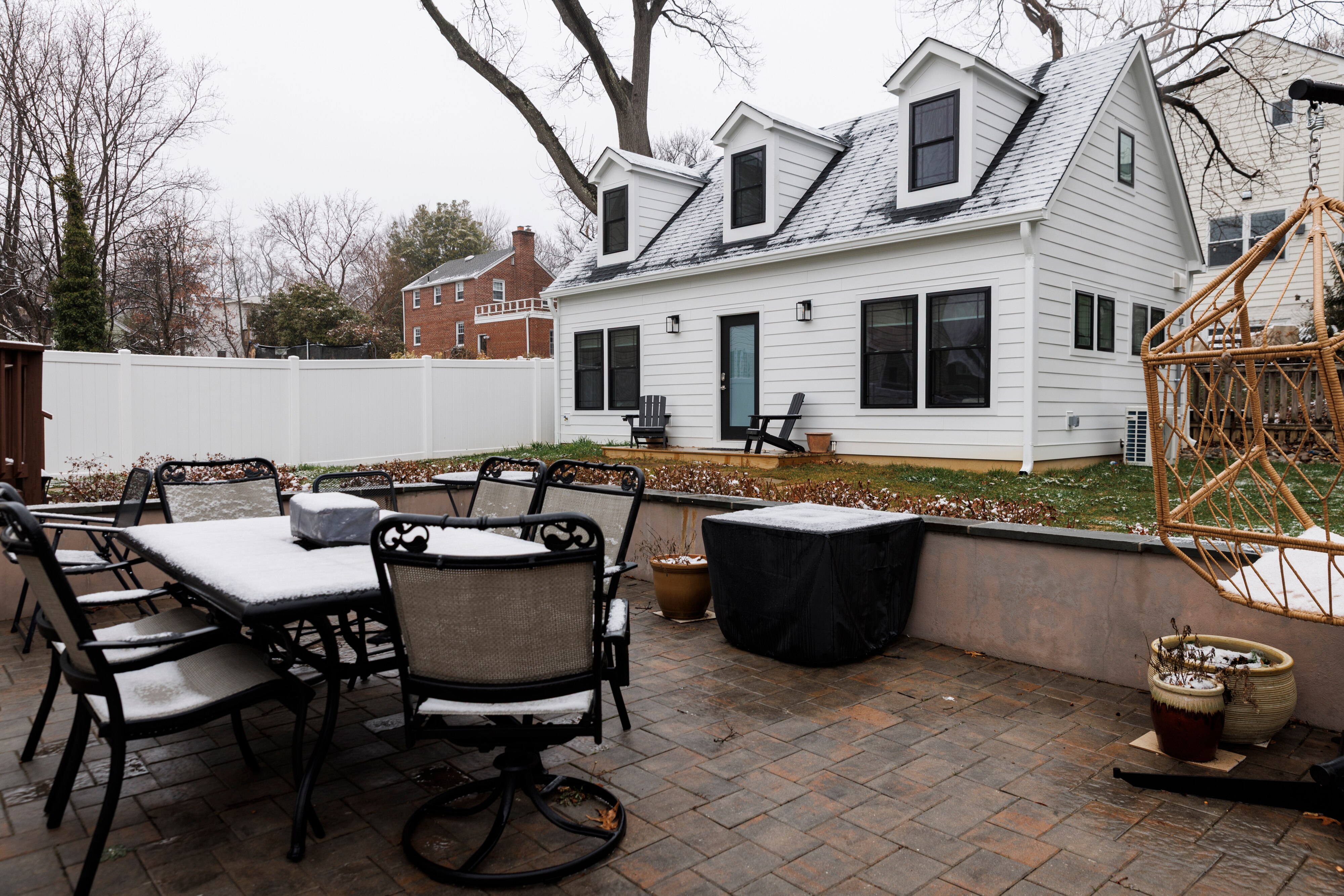
They go by a few different names: granny flats, in-law apartments, secondary suites. Housing wonks call them accessory dwelling units, or ADUs: small residences that share land with another, larger home.
In Northern Virginia and Montgomery County, ADUs are already a viable housing alternative for some residents as costs of living soar. Maryland lawmakers and housing advocates have embraced them as housing prices push young people to flee the state and first-time homelessness to rise.
A new Maryland law requires all counties and Baltimore City to have ADU regulations drafted no later than Oct. 1, and some, including Howard County, have already made them law. They’re required to be no more than 75% of the size of the main house and have “complete” provisions for “sanitation, cooking, eating, and sleeping,” according to the 2025 state law.
As the deadline nears, builders say they’ve been busy fielding calls from local legislators, community members and prospective buyers looking for ADU guidance.
Accessory dwellings, which are less expensive to build than most single-family homes, may also fulfill a dual function as Maryland’s population ages without enough “middle market” homes.
“Most clients are aging,” said Jason Goozh, manager of Gaithersburg-based Makara Builders, which specializes in ADUs. “They’re scared, and they don’t know what to do. To go to a nursing home or senior living facility, it’s a ridiculous amount of money.”
Accessory dwellings aren’t new: They’ve grown in popularity for communities with limited land and in-demand job markets, especially on the West Coast. Maryland’s adoption has been slower.
Some communities have balked at the idea of adding more homes, fearing they would lead to increased congestion, school overcrowding and just plain ugliness. And others took issue with the loss of local veto powers.
As the statewide bill advanced last year, lawmakers made some concessions to quell the opposition — including by limiting ADUs to single-family neighborhoods only.

Eric Saul, a Takoma Park-based architect who has designed several accessory dwellings in Montgomery County, said that although ADUs aren’t for everyone, they haven’t been nearly as disruptive as the critics projected.
“They thought everybody was going to build one, tomorrow,” Saul said. “All this sort of doom and gloom and fear was obviously not true.”
By the same token, ADUs also haven’t made much of a dent — yet — in the housing shortfall, Saul added.
Maryland’s 2025 state law took a swing at making them easier to build: It permitted ADUs “by right” in single-family neighborhoods. That means they don’t require pre-approval from zoning boards, though they still must go through permitting and comply with other local guidelines.
Removing zoning restrictions, builders say, saves them time and money.
But that doesn’t mean the ADUs come cheap.
On a rainy morning, Goozh showed off an ADU in Northern Virginia that one client built for her father, who died before he could move in. All told, it’s no more than 560 feet.
Goozh built the ADU as he would any other house: It has a foundation, insulated walls, drywall, and plumbing, heating and cooling systems.


He estimates being able to complete an ADU in about three to four months, pending smooth sailing during the permitting process. The cost of building one usually ranges from about $150,000 to $350,000, Goozh said, depending on size, finishes and amenities.
One benefit of building an ADU is that homeowners don’t have to factor in the cost of land, said Mark Lancaster, another builder who helped bring the product to Frederick County starting in 2017 and has built about a dozen there since.
Without land costs, customers have more freedom to design the ADU to their specifications, he said. Often, households request accessibility features, such as bathroom and shower grab bars.
Some homeowners are also hoping to create housing for rent-paying tenants as a way to generate more income once they hit retirement age. And some are designing a space they would be comfortable living in one day, too.

In Silver Spring, Matthew Dalbey turned his backyard garage into a 380-square-foot ADU in 2022.
Dalbey, a former policy executive at the U.S. Environmental Protection Agency who specializes in sustainability, caught wind of ADUs several years ago and views them as a creative housing solution, especially for middle-class, older adults.
“Part of the reason I wanted to do this was to get out of talking about better land use policy,” he said, “and show people I was also doing it.”
It took around 18 months to complete, but Dalbey said he enjoyed the process of curating something to his precise specifications, with high-end appliances, electrification systems and custom granite counters.
For now, he rents the space out for around $1,400 a month, which helps him afford the mortgage. With his children now grown, Dalbey might move in himself eventually and rent out the main house to another family.
All told, Dalbey said he spent about $255,000 on the home, plus an additional $40,000 to $50,000 for solar panels, landscaping and other related costs.


The experience, Dalbey said, was not as straightforward as he would have liked; the project required four different variances, which requires permission from the county, as well as multiple inspections to meet standards he found excessive. For example, even though Dalbey built the ADU detached from the main house, he needed to have the original property inspected for lead hazards.
Dalbey, 60, said he hopes Maryland develops an office or ombudsman specifically for ADUs to make the process run better.
“If more people knew they could do it efficiently and quickly,” he said, “maybe then we would have an impact on housing supply.”
Some renters, meanwhile, have also jumped onto the ADU bandwagon as an affordable housing solution.
Beth Pellowitz, a teacher who will start renting a 700-square-foot ADU in Bethesda from friends, said the arrangement will allow her to live closer to work in a neighborhood she otherwise couldn’t afford — with just the right amount of space to accommodate her.
“It’s a great place that will stand the test of time,” she said. “It’s a well-built house in the backyard. Not some small, little thing.”





Comments
Welcome to The Banner's subscriber-only commenting community. Please review our community guidelines.