
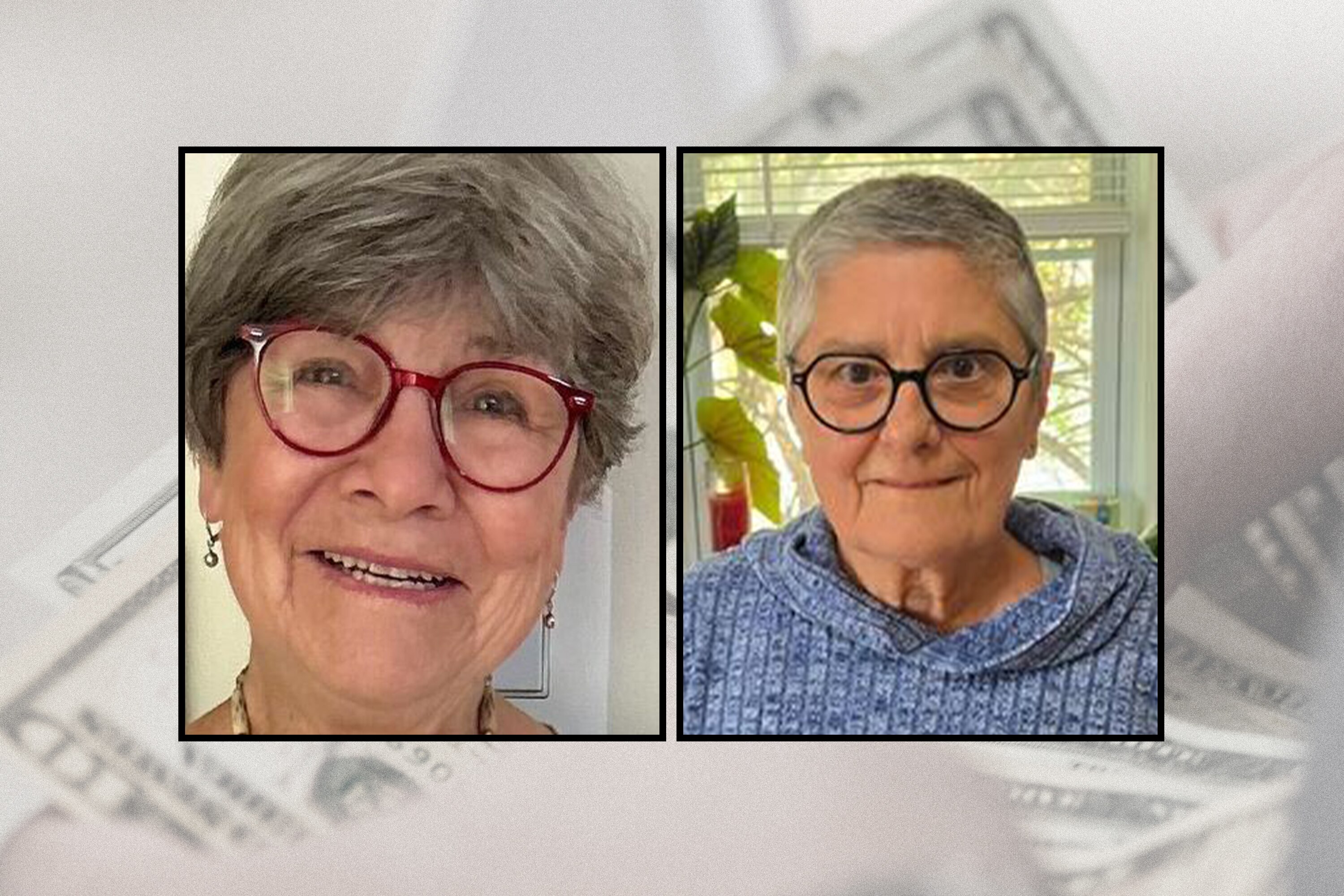
At first, the former nurse from Rockville mistrusted the scammers on the phone who would eventually take most of her life savings — nearly $600,000.
That first phone call, in the fall of 2023, appeared to be coming from Rockville’s police chief, claiming that Judith Boivin was under investigation for fraud and money laundering.
It was not the chief, but a scammer who told her someone had opened several bank accounts using her Social Security number.
Suspicious, she went online and found that the Rockville police chief’s name matched that given by the caller. The scammer then transferred her to a person impersonating a local FBI agent.
Boivin, now 81, spent months talking to the scammers, withdrawing large portions of her savings and dropping the sums off at a designated locker at a Washington, D.C., courthouse. She believed she was helping to take down a fraud ring and that she would ultimately get her money back.
A few months after the scammer’s first call, in January 2024, the Maryland Attorney General’s Office informed Boivin that she had been the victim of fraud.
“I thought I was going to do a higher good by helping the FBI take down a fentanyl ring that was money laundering, supposedly with my Social Security number,” Boivin said on Wednesday.
She said she “grew up in a culture that had respect for government officials and law enforcement.”
Boivin, who does not expect to get her money back, decided to help other seniors guard against scammers.
One of a trio of Montgomery County women who met through an AARP fraud survivors support group, Boivin and her new colleagues now devote hours volunteering for a Montgomery County Police program called “Keeping Seniors Safe.”
The women have been called “anti-fraud crusaders” by the American Association of Retired Persons, which released new research this week that shows how frequently Americans get scammed.
Almost 4 in 10 U.S. adults — about 103 million people — have experienced fraud, the study revealed, and an estimated 159 million worry about falling prey to it.
Scammers tend to target older people. Nationally, adults 60 and over reported more losses from scammers than any age group, according to Montgomery County Police, who cited FBI data.
People in that age cohort, the data show, filed more than 200,000 complaints last year with reported losses totaling $7.7 billion from phone scams, tech support fraud and government impersonations.
Montgomery County Police’s Financial Crimes Section runs the Keeping Seniors Safe program, working with the AARP and the International Association of Financial Crimes Investigators, to send seniors like Boivin to teach other seniors — in assisted living facilities and elsewhere — how to protect themselves from scams.
While many people assume it’s their age that makes seniors particularly vulnerable, Karen Morgan, who sits on Maryland’s AARP executive council, points to another factor — that older adults have had years to accumulate wealth.
“They have the money,” Morgan said. “The scammers go where the money is.”
Another victim turned anti-fraud activist
Dolores Miller, 71, of Wheaton, was scammed out of $10,000 in 2024.
A scammer called and told her there was a warrant for her arrest tied to a murder case because she had failed to respond to subpoenas.
The hoaxer said she had to prove she had money for bond and that if she told anyone, the killer might go free.
Miller received a picture of the arrest warrant. She was then ordered to deposit cash into an account via a cryptocurrency kiosk.
The scam made her doubt almost everything she thought she knew about herself.
“I felt like a big, heavy ball of nothingness,” she said. “My character, my person, was all gone in a blur.”
Like Boivin, she decided to fight back.
“The one thing I did know is that I had to talk to other people that experienced it,” she said, “because that was the only way that I was going to be assured that there was life after scamming.”
Boivin and Miller tell other seniors to look for scammers’ red flags. Among them: calls from people not on your contacts list. Don’t click on pop-up links that hit your phone or computer, they advise. And if someone tells you to keep information secret or urgently demands money, hang up. If you suspect a con, Boivin said, call police, the FBI or an AARP hotline.
Both Miller and Boivin said they went to the police, but no arrests have been made in their cases. In February, local officials, including county police, held a news conference about fraud schemes totaling more than $6 million in losses, largely to elderly residents across Maryland.
Morgan said the AARP hopes to change the way people talk about scammers and their crimes. Rather than describe them as “clever” or “sophisticated,” she said, call them what they are: “scumbags.”
And victims never deserve blame, she added.
“I don’t care how smart you are. I don’t care how many degrees you have,” she said. “The victim can be anyone of us at any given time.”




Comments
Welcome to The Banner's subscriber-only commenting community. Please review our community guidelines.