
Nearly three years after a state investigation uncovered rampant environmental violations at a South Baltimore incinerator, its operators have agreed to stop burning medical waste.
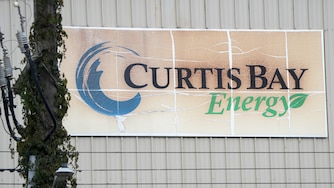
Among the country’s largest medical waste incinerators, the Curtis Bay Energy facility has faced scrutiny in recent years over repeated emissions violations and a state probe that found operators had repeatedly cut corners to process more waste. The facility, located at Hawkins Point at the southern tip of Baltimore, handles tens of thousands of pounds of biohazardous material each year from hospital systems across the country and Canada.
But under a new settlement with state environmental regulators, Curtis Bay Energy will end its waste-burning practice. The agreement, part of a consent decree that state attorneys plan to file before a Baltimore judge on Thursday, stems from a 2024 lawsuit over continued air pollution violations at the plant.
Curtis Bay Energy also will pay a $600,000 penalty to the Maryland Department of the Environment. The facility may continue to operate as a waste transfer facility, although the agreement significantly reduces the site’s capacity limit.
In a statement, MDE Secretary Serena McIlwain called the agreement “a major win for a community overburdened by pollution,” adding, “We won’t accept operations that put public health and safety at risk and leave our most vulnerable communities paying the price.”
Curtis Bay Energy spokesperson Maggie Clemmons said in a statement that the decision reflects a market transition away from incinerating medical waste. The South Baltimore facility is among the oldest waste treatment facilities in the United States, she said, and “at the end of its useful operating life.”
“We are coordinating with local authorities on a safe, orderly wind-down of the facility,” Clemmons said.
In October 2023, Attorney General Anthony Brown and Maryland environmental regulators assembled at the South Baltimore incinerator to announce guilty pleas by the company and its former director of operations to 40 counts of violating state environmental laws.
Officials also assessed a $1.75 million fine against Curtis Bay Energy, among the state’s largest ever for an environmental crime. The company and Curtis Bay’s operations director pleaded guilty to a slew of charges, including knowingly cutting corners during incineration and shipped unburned “raw” medical waste to a Virginia landfill.
A separate case against the plant manager fell short when prosecutors failed to make their case against him last year.
The state’s investigation took place from late 2019 to early 2020, when Curtis Bay Energy was owned by the New York hedge fund Summer Street Capital Partners. Since then, the incinerator business has been purchased by California-based Aurora Capital Partners.
Even after that ownership change, South Baltimore advocates continued to report emissions violations, infractions cited by regulators in the state’s lawsuit. One recent study by Baltimore scientists and advocates found that the medical waste incinerator releases black smoke for over 50 minutes a day — in violation of its permits — while causing roughly $37 million a year in health consequences for the surrounding area.
Since the state probe, advocates have urged hospitals to end their reliance on the medical waste incinerator. Johns Hopkins Hospital began to divert material from the facility two years ago, but the plant continues to receive hazardous waste from other hospitals in Maryland and elsewhere.
Under the consent decree, MDE will issue a new permit removing Curtis Bay Energy’s authorization for incineration and limiting its waste-holding capacity to 20,000 tons — about a third of current levels. Spokesperson Jay Apperson said MDE expects it will take six to eight months to phase out incineration at the site, including time needed for hospitals to find alternative ways to dispose of hazardous waste.
The bulk of Curtis Bay Energy’s $600,000 penalty will help fund MDE’s air regulation enforcement, while $60,000 will go toward clean water regulation.
Council member Phylicia Porter, whose district includes Curtis Bay and the medical waste incinerator, has heard from constituents for years about continued releases of black smoke from the incinerator. The South Baltimore representative said frontline communities don’t often see these kinds of results from their activism.
“When I learned the news, I was stunned,” Porter said. “We did it! We did it!”
This story has been updated to correct the spelling of Maggie Clemmons.




Comments
Welcome to The Banner's subscriber-only commenting community. Please review our community guidelines.