
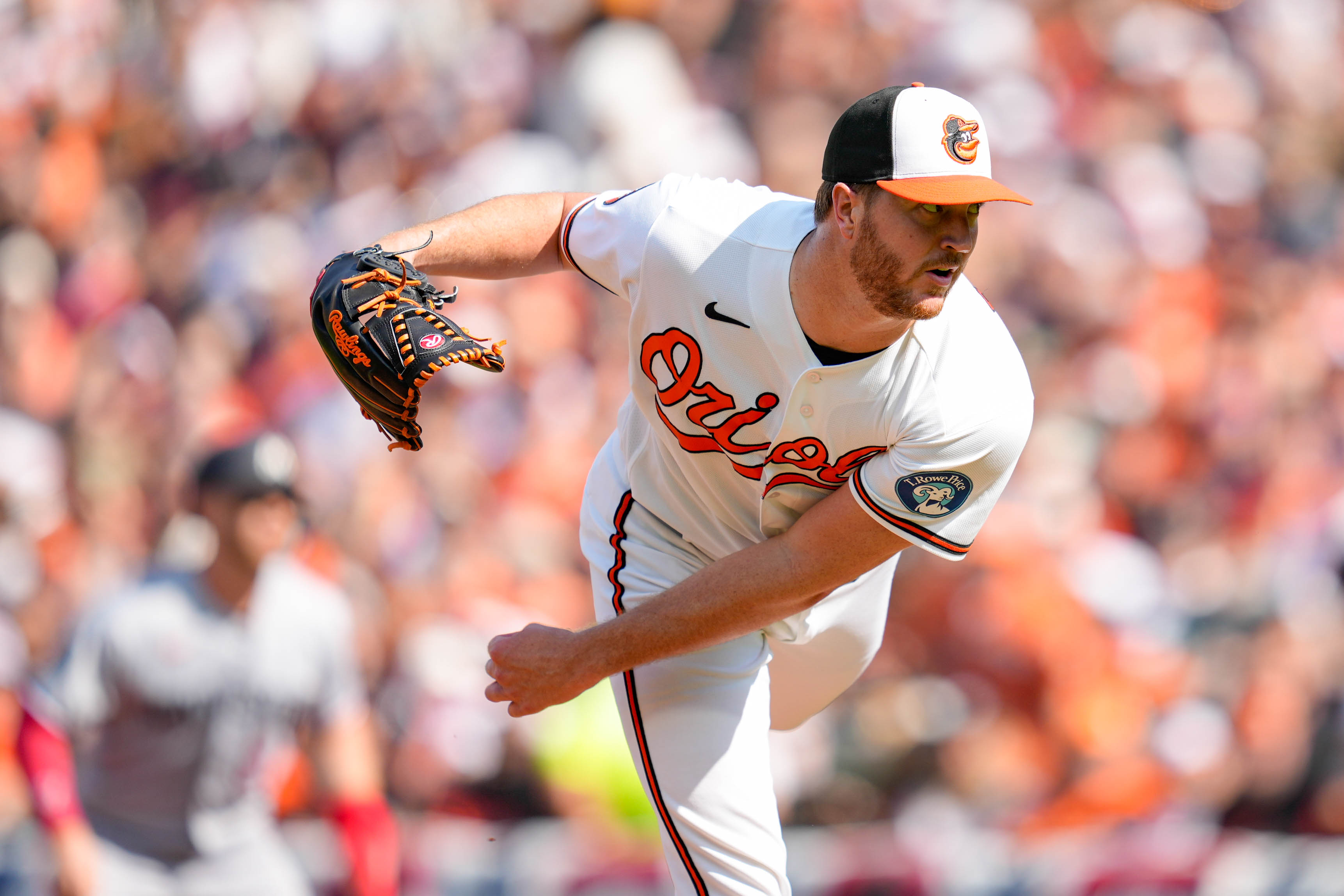
The Orioles finished the first week of the season with three wins and three losses, and their performances were evenly positive and negative.
As Baltimore prepares for its first road trip, stopping in Pittsburgh to play the Pirates before facing the White Sox in Chicago, here are five takeaways from the opening week.
Early success with RISP

There is a reason the Orioles practiced these situations in spring training. Last year, when the Orioles had runners in scoring position, they hit .234 (27th of 30 teams) and produced a .716 on-base-plus-slugging percentage (23rd).
This spring, under the direction of hitting coaches Dustin Lind and Brady North, batters were challenged to come through in the clutch. They had one pitch with which to operate — the bases were loaded with two outs and a full count. Could they succeed?
The early returns of those drills are showing up now. And while Baltimore has played only six games — thus drastic assumptions can hardly be made about anything, especially this — it’s at least encouraging to see the Orioles produce in meaningful moments.
On Thursday’s off day, the Orioles ranked fourth with a .324 batting average and third with a .945 OPS in those situations. They’re striking out at a 16.7% rate (the lowest in the majors) and walking the fourth most frequently, at 14.6%.
The Orioles can’t do much better than that. It is, of course, only a six-game sample. But, if Baltimore produces in those situations more frequently than last year, the lineup has the potential to be among the best in baseball.
An unsteady bullpen

One of the biggest question marks heading into this season was the bullpen, and that question remains unanswered. The bridge to closer Ryan Helsley appears precarious.
At first glance, there is reason for concern. Baltimore’s combined ERA for its relievers is 5.09. But at this point of the season pitching stats can be deceiving. Relievers have pitched so few innings that ERA numbers can leap rapidly.
For the sake of this analysis, we’ll put more stock into fielding independent pitching, which only takes into account outcomes directly related to the pitcher: strikeouts, walks, homers and hit batters. The lower the FIP, the better.
And overall the Orioles’ relievers have more positive FIP numbers. Their mark of 3.82 ranks 14th, and their expected FIP (which uses batted ball data to calculate the expected home run rate) of 3.27 ranks eighth. That’s more palatable and shows there could be improvement among the group.
Helsley, right-hander Rico Garcia and left-hander Grant Wolfram are early FIP heroes. They all have FIPs below zero and xFIPs below one, which means they’re recording far more strikeouts than walks, hit batters and home runs. Over a longer sample, they won’t remain in the outlandish territory of negative FIPs, but their strong starts are evident (and it helps excuse the two runs against Wolfram in 2 1/3 innings).
Right-handers Yennier Cano and Anthony Nunez and left-hander Dietrich Enns have FIPs below 4.00, which also suggest they’re off to a good start. Nunez is the victim of poor luck from a FIP perspective, considering the only run against him was a home run from Corey Seager. Nunez’s expected FIP is 2.12.
There’s more concern regarding right-hander Yaramil Hiraldo. In 1 2/3 innings, he has allowed four runs and four walks with two home runs. His FIP is 23.57. And, with the heavy innings load the Orioles’ relievers dealt with over the first week, players are more susceptible to poor outings.
Defensive questions

When discussing possible weaknesses for the Orioles, most scouts interviewed by The Banner agreed the defense could be an issue. Baltimore is proving them correct so far.
The Orioles rank 30th with negative-5 outs above average, which measures range and how many outs a player has saved, according to Statcast. They’re 28th with a negative-3 fielding run value, which is another Statcast metric that measures all facets of defense, including throwing, range, double plays, and catcher blocking and framing.
This can have tremendous impact on a pitching staff if there are contact-oriented hurlers. The Orioles’ rotation ranks 25th in strikeout rate, which means there is an elevated number of balls in play.
Fielding run value and outs above average are more useful when judging defensive performance than just counting errors, although Baltimore’s five are the seventh most in the majors.
Starting rotation considerations

It took only one turn of the rotation for the Orioles to have a major health concern. Right-hander Zach Eflin landed on the 15-day injured list with elbow discomfort, and an update on his MRI should arrive Friday.
The Orioles have the benefit of improved rotation depth. Right-hander Dean Kremer was optioned to Triple-A Norfolk, and he’s slated to start Friday for the Tides. The earliest Kremer can be promoted as a non-injury replacement is April 9.
Left-hander Cade Povich is in the same situation due to the 15-day option buffer before another call-up. Right-hander Trey Gibson, meanwhile, would need to be added to the 40-man roster, and his limited time in Triple-A makes his imminent debut unlikely.
That means April 7 is up in the air. Baltimore will need a fifth starter that day against the White Sox, although right-hander Albert Suárez — called up to replace Eflin — could feature as the bulk pitcher to begin a bullpen game.
The top of Baltimore’s rotation has begun the season well. Left-hander Trevor Rogers still looks like an ace, with two runs against him in 13 innings. Right-hander Kyle Bradish starts Friday and will aim to build on the two earned runs he allowed in 4 2/3 innings. Right-handers Shane Baz and Chris Bassitt both allowed four runs in their Orioles debuts.
ABS overturns

Ahead of Thursday’s games, the Orioles are third in baseball with an 86% win rate on challenges using the Automated Ball-Strike System while on defense, and their six challenge wins are the most in the majors.
They have eliminated three would-be walks through successful challenges of balls and strikes, the most of any team. They’re tied for second with three strikeouts gained via challenge, including a walk-off challenge Wednesday.
The ABS system is a new wrinkle in the sport, and Baltimore is taking advantage of its catchers’ understanding of the strike zone. Samuel Basallo, particularly, has found success. He has won three defensive challenges in four attempts.
Orioles batters are doing well, too. They have challenged seven strike calls and have overturned six of them.




Comments
Welcome to The Banner's subscriber-only commenting community. Please review our community guidelines.