
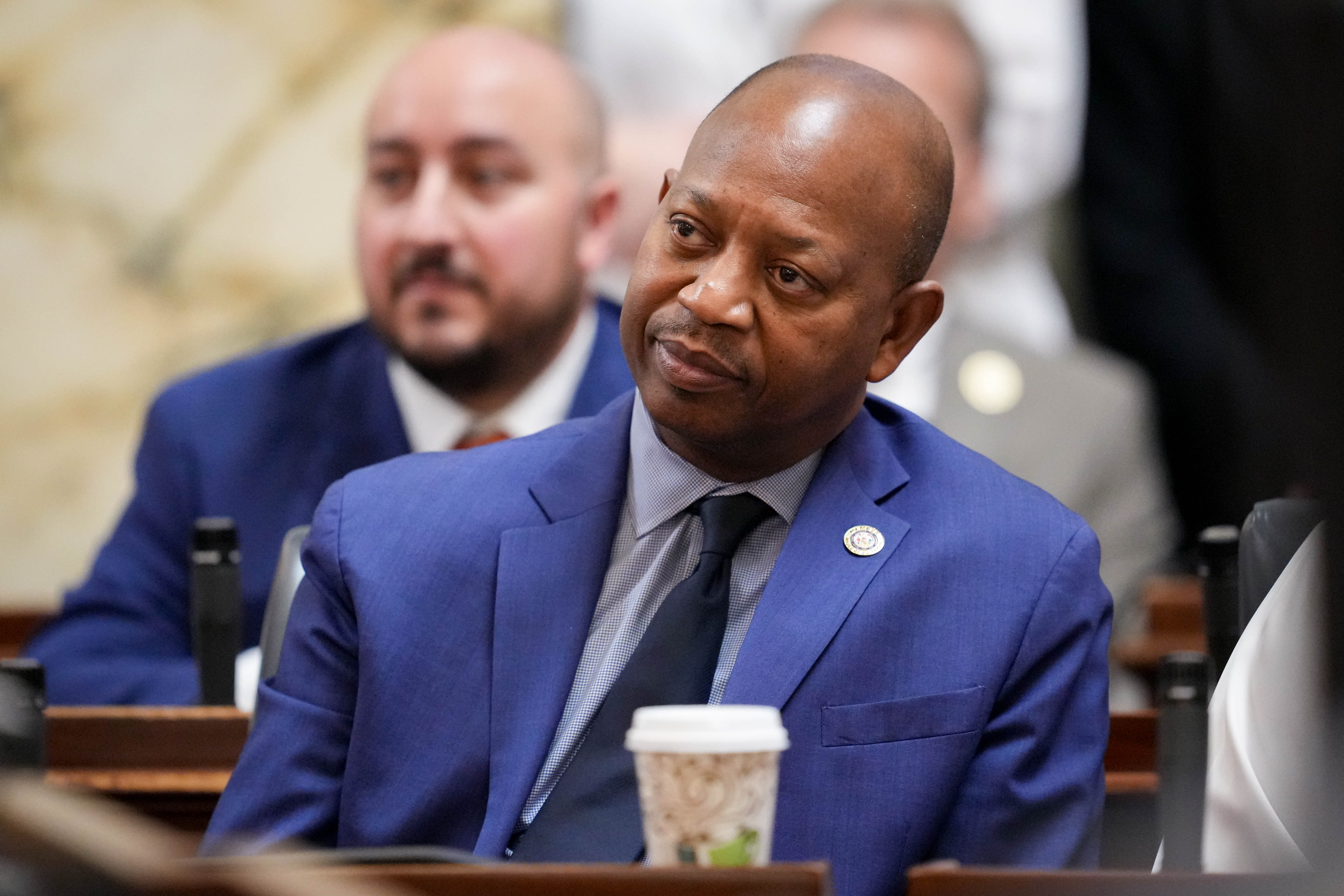
A compromise bill that would reduce the number of crimes that automatically result in adult charges for teenagers passed out of the House of Delegates Monday and is headed to Gov. Wes Moore’s desk
The Youth Charging Reform Act is the result of more than a decade of efforts by criminal justice advocacy groups who have long argued that Maryland’s legal system is one of the most regressive in the country when it comes to youths charged as adults.
The bill would not end the practice entirely, as reformers hoped. It instead would shorten the list of crimes that result in automatic adult charges for kids.
State’s attorneys across Maryland opposed the legislation, arguing that the juvenile justice system is not prepared to take on a new population of youths in need of intensive services.
Del. N. Scott Phillips, the chair of the Legislative Black Caucus of Maryland, said the bill is a product of compromise that left both sides unhappy.
Advocates want to move more offenses to juvenile court “and they are disappointed,” said Phillips, a Baltimore County Democrat. “The state’s attorneys want none of them, and they are disappointed. But at the end of the day, we’ve taken a small step in the right direction.”
Maryland charges more children as adults per capita than all other state but Alabama, according to data the Sentencing Project shared with lawmakers. About 80% of those children are Black, though Black children make up less than one-third of the state’s youth population.
Assault and gun possession, two charges that lead to most adult charges against teenagers, would switch to the juvenile court’s jurisdiction under the bill. Prosecutors will still be able to ask a judge to move the case into adult court.
The most serious crimes, including carjacking, armed robbery and murder, would still go directly to adult court.
Republicans opposed the legislation and said it did little to protect victims of crime.
“When we move these types of crimes and start them as juvenile cases, what we’re saying is that this is not a serious offense,” said Del. Robin Grammer Jr., a Baltimore County Republican.
“We’re moving some of the most egregious crimes in our statute to a system that has proven not to remediate these children,” he said.
Maryland’s Department of Juvenile Services played a key role in shaping the bill debate. The department’s new leader, Betsy Fox Tolentino, testified in favor of the legislation and said that most children charged as adults already end up under the department’s care.
Most cases in which juveniles are charged as adults are either sent back to juvenile court or dismissed outright, according to data the Sentencing Project shared with lawmakers.
Tolentino’s predecessor, veteran criminal justice reformer Vincent Schiraldi, also supported ending auto-charging, but had a strained relationship with lawmakers, which made passing this politically sensitive legislation challenging.
The bill passed this year also requires Juvenile Services to detain young people charged with gun offenses and violent crimes, rather than immediately releasing them, codifying an existing practice. And it prohibits youths charged as adults from being housed in adult jails, though that requirement wouldn’t take effect for three years.
The bill, which originated in the Senate, passed the House of Delegates with a vote of 92 to 39.
Sen. Will Smith, who sponsored the bill this year and chairs the powerful Judicial Proceedings Committee in the Senate, called the vote “historic.”
“This legislation will cover the lion’s share of the youths charged as adults right now, but it will also allow DJS and the state of Maryland to have proof of concept,” the Montgomery County Democrat said. “I think that will solidify and strengthen arguments for further reforms down the line.”
Moore has not said whether he will sign the bill, but the support from his juvenile services secretary signals he is likely to back it.




Comments
Welcome to The Banner's subscriber-only commenting community. Please review our community guidelines.