
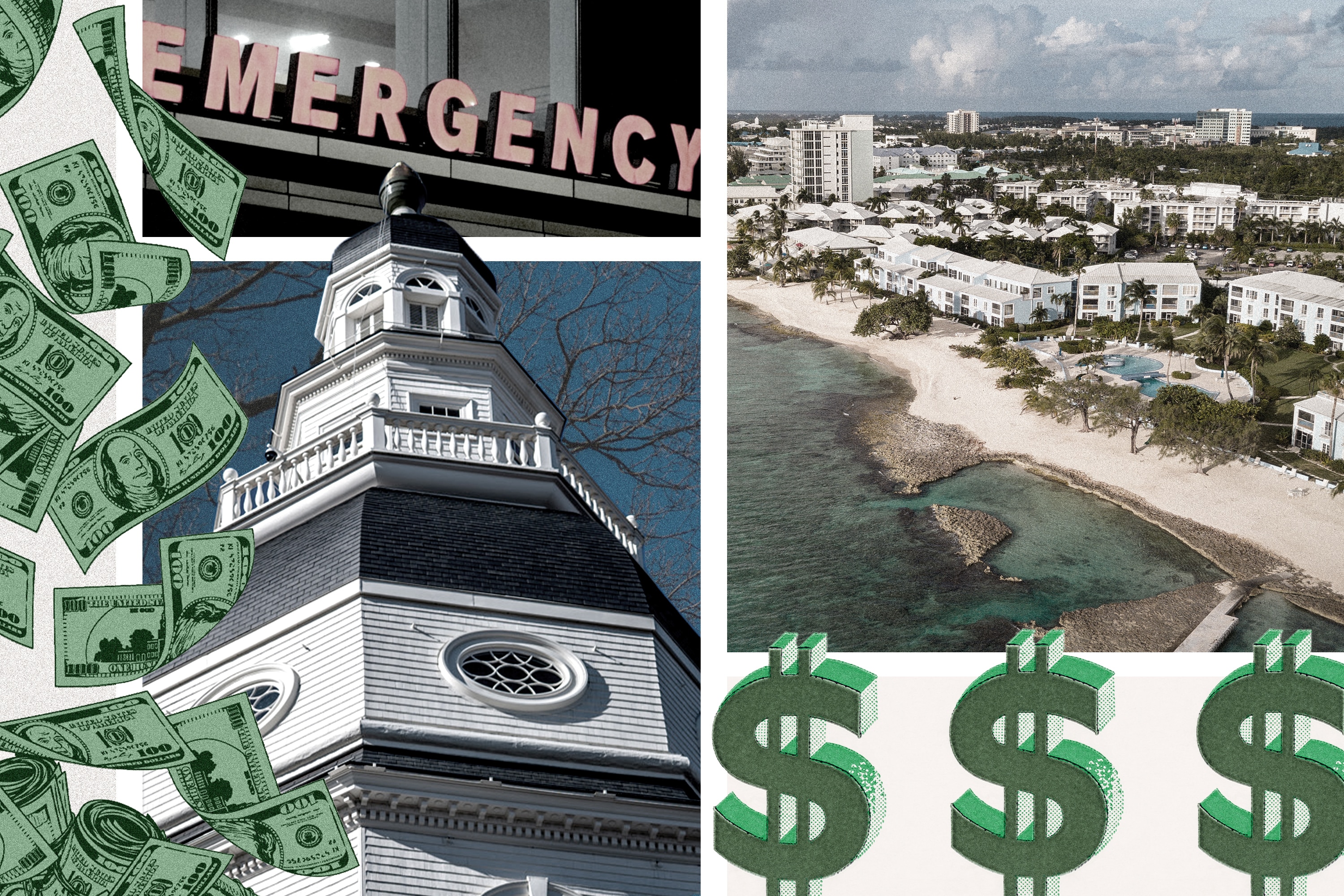
For years, Maryland hospitals avoided paying millions of dollars in state taxes by creating their own insurance companies overseas — and, after being discovered, they asked lawmakers to exempt them from paying taxes.
The insurance is for medical malpractice, cyberattacks and other legal issues the hospitals say can be difficult to buy on the commercial market.
So, instead of buying policies from insurance companies, the nonprofit hospitals created their own for-profit insurance companies, known as “captive” insurers, and set them up in places such as the Cayman Islands. Those captive insurance companies did not pay the state’s 3% premium tax that other insurers did.
A whistleblower alerted the state, which began to investigate, and the Maryland Hospital Association asked lawmakers to absolve the hospitals of the tax, both retroactively and going forward.
The hospital association isn’t getting its way, however, with a bill moving forward in the General Assembly that would only pause the tax and study it for two years. The House has yet to act on the bill.
The debate reveals how hospitals used a little-known maneuver to avoid taxes and raises questions about whether it’s fair to tax nonprofit hospitals.
Lawmakers who sponsored the association’s bill said hospitals operate on thin financial margins and need ways to save money.
“We just have to be sensitive to understand how we can keep them afloat,” said Del. Lily Qi, a Montgomery County Democrat and one of the bill’s sponsors.
The whistleblower, whose identity is protected under state law, reported it to the state under a relatively new law specific to flagging unpaid taxes. They spoke with The Banner on the condition of anonymity.
In testimony to state lawmakers, the whistleblower wrote that the hospitals are getting “a massive tax savings” on their for-profit insurance companies.
“Having been caught red-handed by Maryland’s Whistleblower Rewards Program, these hospitals now shamelessly demand that the legislature retroactively exempt them from a tax they have strategically evaded for years,” the whistleblower wrote.
The hospitals don’t see it that way.
“Nonprofit hospitals operate captives like a savings account or a rainy day fund, where hospitals basically set aside those funds to pay for legal claims against our hospitals,” Jake Whitaker, an assistant vice president of the Maryland Hospital Association, told lawmakers during a hearing.
“It’s our own money that we’re setting aside to pay for, for example, future medical malpractice claims,” Whitaker said.
The fact that the captive insurance companies are located in the Cayman Islands might look “shady or nefarious” to some, but that’s not the case, he said.
Maryland doesn’t have rules for incorporating captive insurance companies, so hospitals had to look elsewhere to run them. The Cayman Islands became a popular place to incorporate the companies, particularly for health care, although several states have since adopted rules for captives.
“It’s nothing more or less than, in essence, a bank where we put money aside,” Larry Smith, vice president of risk management for MedStar Health, told lawmakers in another hearing.
The money is invested and grows, and then is there to pay for legal judgments, Smith said, explaining it as a way hospitals keep costs down.
It’s unclear how much the state could be claiming in taxes from these insurance companies.
The Maryland Insurance Administration estimated a minimum loss of $2 million per year if the hospitals were exempted — but acknowledged the estimate was conservative.
The insurance administration is investigating both nonprofits and for-profit companies regarding tax avoidance on their captive insurance companies. The administration says the General Assembly should decide whether to change if these insurers are taxed.
During bill hearings, some lawmakers appeared skeptical of absolving hospitals from the insurance tax. One of the bill sponsors pushed for the two-year pause instead.
“Overall there’s no picture; that’s why we want to do this moratorium and report back later,” Sen. Dawn Gile, a sponsor of the bill, told her colleagues as they advanced the measure last week. It passed the Senate, 43-0.
“It gives our hospitals some breathing room,” Gile said in an interview.
Qi hopes the two-year pause will pass the House of Delegates as well, though there are fewer than 10 days before lawmakers adjourn their session.
“I think it’s a sensible way to do it,” she said. “Let’s buy ourselves some time to figure out what’s the right way to do it.”
Banner reporter Meredith Cohn contributed to this article.


Comments
Welcome to The Banner's subscriber-only commenting community. Please review our community guidelines.