
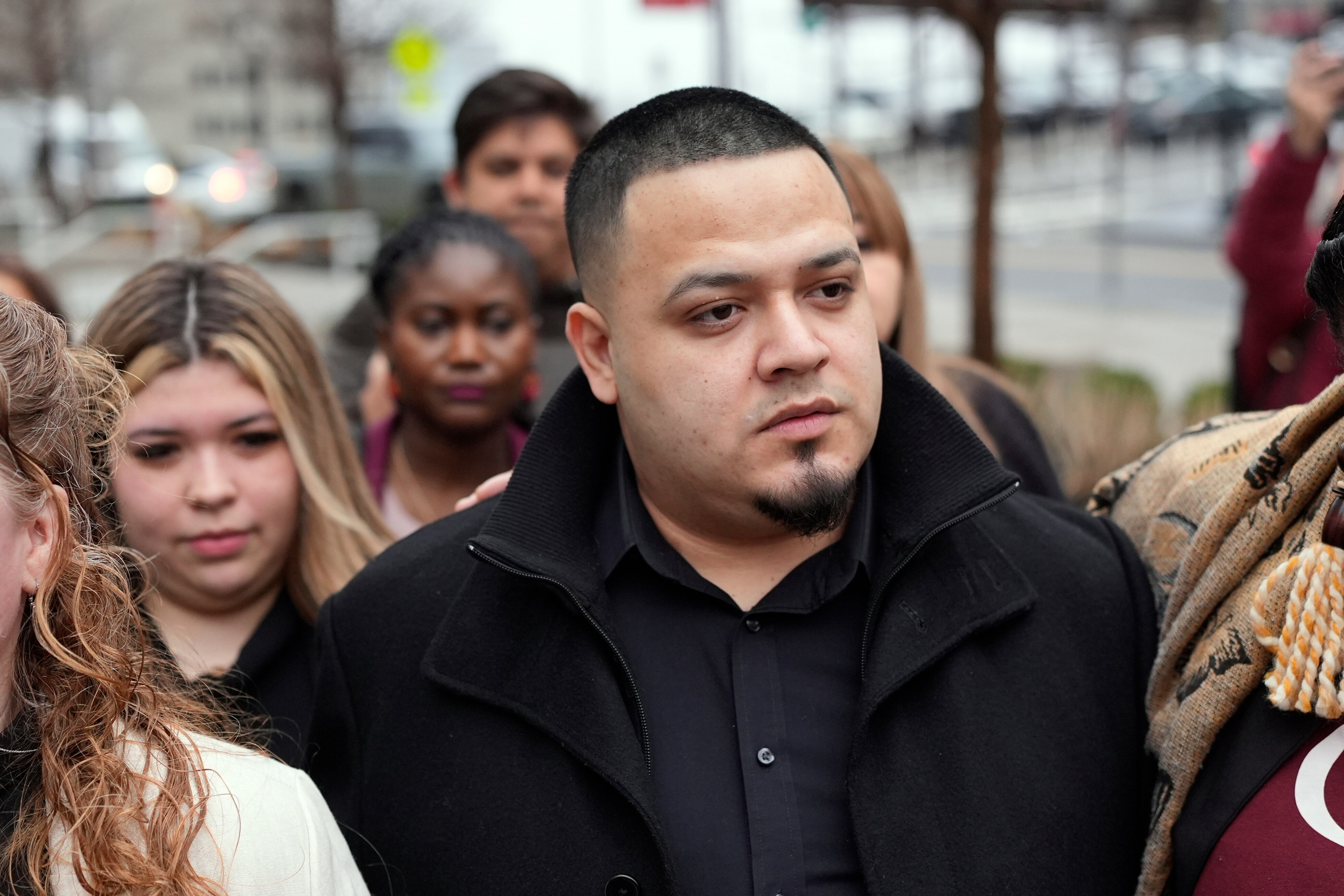
U.S. government attorneys on Tuesday told a federal judge the Department of Homeland Security still intends to deport Kilmar Ábrego García to Liberia, despite a new agreement with Costa Rica to accept deportees who cannot legally be returned to their home countries.
The Salvadoran national’s case has become a focal point in the immigration debate after he was mistakenly deported to El Salvador last year. Since his return, he has been fighting a second deportation to a series of African countries proposed by Homeland Security officials.
U.S. District Judge Paula Xinis, of Maryland, previously barred U.S. Immigration and Customs Enforcement from deporting him or detaining him. She has written that the agency has no viable plan to actually deport Ábrego García, referring in February to “one empty threat after another to remove him to countries in Africa with no real chance of success.”
Ábrego García has argued that if he is going to be deported, it should be to Costa Rica, which previously agreed to accept him. But Todd Lyons, the acting head of U.S. Customs and Immigration Enforcement, said in a March memo that deporting Ábrego García to Costa Rica would be “prejudicial to the United States.” Ábrego García should be sent to Liberia because the U.S. has spent government resources and political capital negotiating with the West African nation to accept third-country nationals, Lyons wrote.
At a Tuesday hearing in Xinis’ court, Ernesto Molina, director of the Department of Justice’s Office of Immigration Litigation, suggested that Ábrego García could “remove himself” to Costa Rica.
Xinis pointed out that the DOJ is prosecuting him in Tennessee on human smuggling charges. She called it a “fantasy” to say that he can remove himself anywhere while the criminal case is pending. Xinis set a schedule for a briefing on the matter and scheduled a new hearing for April 28.
Ábrego García, 30, has an American wife and child and has lived in Maryland for years, but he immigrated to the U.S. illegally as a teenager. In 2019, an immigration judge ruled that he could not be deported to El Salvador because he faced danger there from a gang that had threatened his family. By mistake, he was deported there anyway in last year.
Facing public pressure and a court order, President Donald Trump’s administration brought him back in June, but only after securing an indictment charging him with human smuggling in Tennessee. He has pleaded not guilty and asked the judge to dismiss that case.



Comments
Welcome to The Banner's subscriber-only commenting community. Please review our community guidelines.