
When Shane Henise came out as transgender teen in 2010 he didn’t know any trans adults in Montgomery County who could give him a clue as to what his life might hold.
Now, as the director of the nonprofit Rainbow Youth Alliance in Rockville, where he leads support groups for LGBTQIA+ teenagers and their parents, he hopes to be the role model he didn’t have growing up.
“I didn’t know that I could have a future,” Henise said. “I want to show kids that they can have that. I want to show them resiliency.”
And he wants to remind them that trans people, in the news in recent years, aren’t a new development.
“We’ve been here, we’ll always be here,” he said.
Tuesday marks International Trans Day of Visibility, an annual commemoration to raise awareness for the transgender community. First recognized in 2009, international celebrations have been coordinated by the U.S.-based Trans Student Educational Resources.
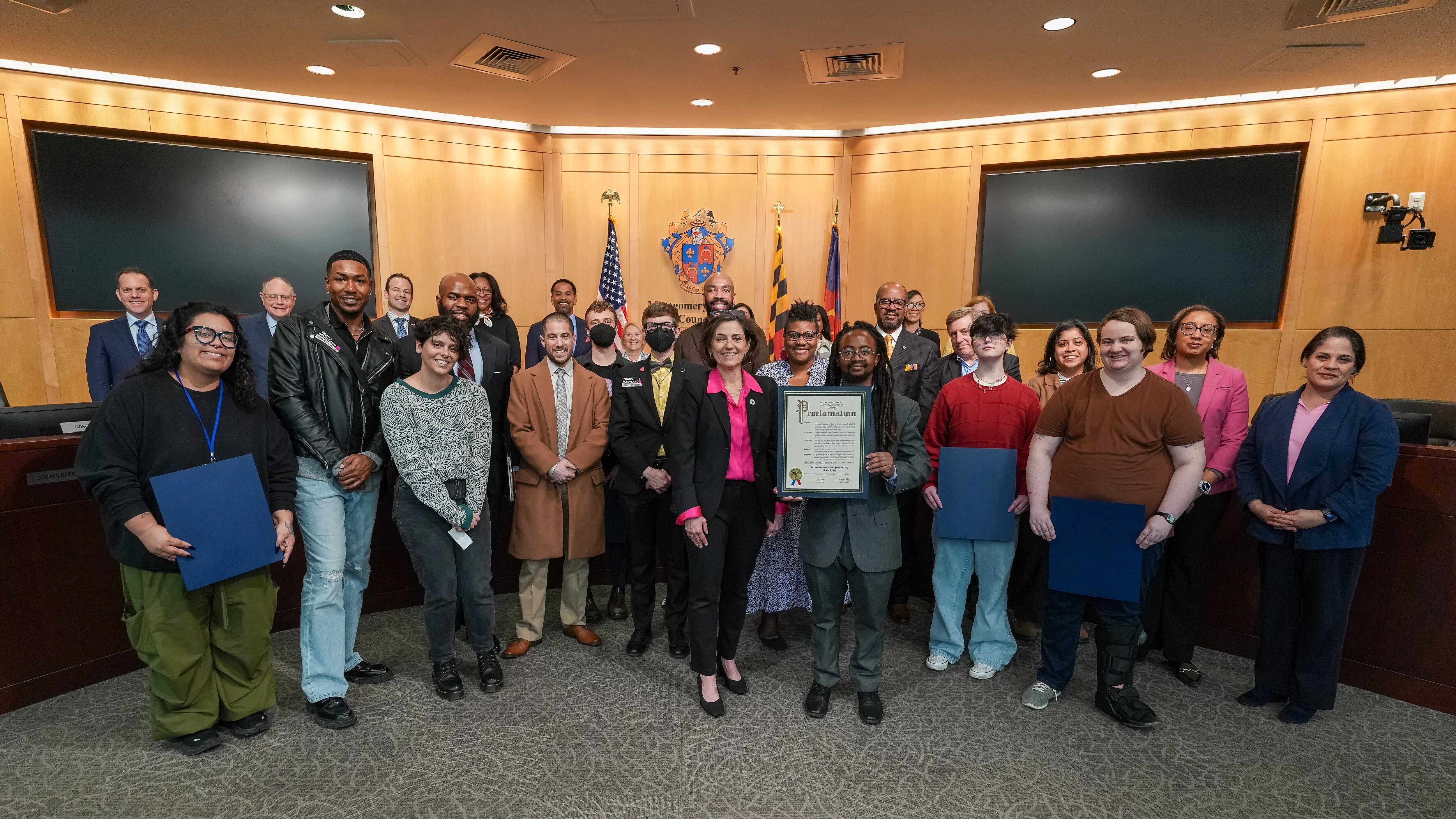
Montgomery County first recognized the day in 2015, with a proclamation led by at-large council member Evan Glass, the council’s first openly LGBTQIA+ member.
This year, council member Kate Stewart — mother of an adult trans son — read this year’s county proclamation of the day.
Life for trans people in the U.S. has grown more challenging in recent years, many in the community say.
The second Donald Trump presidential administration has been marked by an uptick in legal challenges to trans rights and health care. Trump signed an executive order banning trans people from military service, as well as an order to halt federal recognition of nonbinary gender identities. He has also taken action to limit trans people from participating in certain sports.
Stewart said that her son has reminded her to remember, despite these challenges, “of the joy of being who he really was.”
Trans in Montgomery County
Henise, one of several trans community members recognized by the council, said trans youth he works with are aware of the court decisions and legislation proposed and passed to limit trans people’s rights. They also struggle because of a proliferation of anti-trans hate online and in their lives, he said.

The Rainbow Youth Alliance, which meets at Rockville’s Unitarian Universalist Congregation, holds meetings for trans youth and support groups for their parents and caregivers. It also provides educational resources and recreational activities — creating a space where kids can be themselves and take a break from stress, he said.
“It makes me sad that we are demonizing a human experience,” Henise said. “My very existence can be a topic of debate, instead of being considered natural human diversity.”
As Henise helps teens, he also tries to help parents who fear for their children’s safety and whether they’ll be accepted in the workforce.
“I am able to show them that your kid can be happy, your kid can be employed,” he said.
The MoCo Pride Center, an organization that supports the county’s LGBTQIA+ community, is hosting a Trans Day of Visibility celebration on Tuesday at the organization’s Bethesda community space. The annual event will feature musical and drag performances, local trans arts vendors, free sexual health testing and a free catered meal.

“It is a very scary time. But I think that’s also why it’s very important to be visible and to live in your truth,” said Lyric Brown, an event coordinator for the Pride Center. “Being open provides a lot of comfort for others to find community and know they have a safe space.”
As a Black transgender man, Brown said that he is glad to live in Maryland, where policies like the Trans Shield Act and the Trans Health Equity Act offer some protections, including legal shielding of gender-affirming care records and medical providers.
But he said the federal government’s hostility toward trans people still makes it tough to be visibly trans. “If you’re an immigrant, it’s even more scary to be transgender right now,” he added, referencing the Trump administration’s campaign to deport millions of immigrants.
Henise said trans people need far more than a day of visibility to feel safe.
“Visibility is good, but we need to think about how we are protecting the people we are making visible — with policies.”





Comments
Welcome to The Banner's subscriber-only commenting community. Please review our community guidelines.