
Most Montgomery County Council members seem inclined to close the incinerator in Dickerson for environmental reasons.
But they also appear unenthusiastic about alternatives for the county’s trash presented to the council at its Tuesday meeting, the first after its summer break.
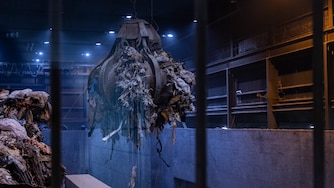
Environmentalists have long argued that the incinerator, which converts waste to ash and has racked up toxic emissions violations, is harmful to the environment and residents’ health.
The council president’s deadline to act is drawing near: Natali Fani-González wants the body to decide the incinerator’s future by Thanksgiving, before a new council takes office in December. A simple majority of six council members is needed to move forward with a proposal.
“I feel very confident that my colleagues do want to get this done,” she told reporters during a media briefing Tuesday.
County Executive Marc Elrich presented options for closing the incinerator during the county’s budget process earlier this year. But Fani-González decided that the council should deal with the issue separately, to include other potential options.
Read More
Department of Environmental Protection officials presented four options to the council Tuesday:
1. Keep the incinerator open and upgrade its facility.
2. Close the incinerator and rely solely on out-of-county landfills.
3. Close the incinerator, implement advanced waste processing and haul any trash that cannot be processed to a landfill.
4. Keep the incinerator open while the county begins advanced waste processing, then close it when the processes are streamlined.
With advanced waste processing, trash is sorted into three groups: recyclables, compostable organic material and other waste. That last category of trash would be trucked to the county’s waste transfer station in Shady Grove and then to a landfill.
All four options include moving some waste to an out-of-county landfill. Currently, the county transports most leftover ash to one in a low-income neighborhood in Henrico County, Virginia. DEP officials said Tuesday that the county is looking for another landfill in a less marginalized community.
“Where would you put a landfill that wouldn’t be in a low-income area?” said Council member Sidney Katz. “You’re not going to put one in Bethesda.”
Council member Kristin Mink said the council needs to consider the price of each plan and avoid a “sunk cost” for a temporary solution.
Council member Kate Stewart asked DEP staff to look into the possibility of using a monofill, a landfill that holds one type of waste. In this case, it would be dedicated to ash.
Stewart also noted that there may be ways to produce products using the ash, as she saw on an economic mission trip to Taiwan with Elrich.
Council members will have biweekly work sessions on the incinerator until they agree on a plan, Fani-González said.
Due to the nature of waste disposal contracts, council members won’t legislate a solution, so a public hearing won’t be required. But Fani-González encouraged residents to share their concerns and said she is looking into hosting a town hall on the issue.
At a recent town hall, attendees seemed displeased with the two options presented by county officials, which were part of Elrich’s proposal earlier this year. Top concerns that community members expressed included increased traffic, noise and smell from trucking trash.



Comments
Welcome to The Banner's subscriber-only commenting community. Please review our community guidelines.