
Baltimore leaders approved a $4.9 billion spending plan Wednesday that adds money for immigrant assistance, locks in city schools and offers modest property tax relief to homeowners.
The Baltimore City Council voted unanimously in favor of the spending plan, which will become effective July 1.
First introduced by Mayor Brandon Scott in April, the final spending plan maintains the mayor’s increased investments in infrastructure — $35 million is set aside for bridges and $22 million for street resurfacing. The budget also increases borrowing for capital projects, such as $12 million to replace the city’s computer-aided dispatch system. The system has failed during key moments.
The plan fills a $12 million structural deficit — the difference between revenues and expenditures. Cost-saving measures such as handling more contracted work in house and eliminating trash collection contracts helped fill the gap.
The biggest change to the spending plan, a reduction in the effective property tax rate, took shape this month. City Council leaders and the administration negotiated a deal to reduce the property tax rate paid by homeowners receiving the Targeted Homeowners Tax Credit by 1 cent. An additional 4 cents of relief is promised for next fiscal year, offset in part by an increase in the cap on the Homestead Property Tax Credit.
The reduction will cost the city $1.7 million in revenue next year, paid for with a fund in the mayor’s office budget.
Read More
Council President Zeke Cohen said the final plan reflects the priorities of the City Council and residents.
“What we ended up with is really reflective of 95% of what we went in there fighting for,” he said.
Wins for the City Council included an additional $1.6 million for the Mayor’s Office of Immigrant Affairs to provide legal assistance and mental health care for the immigrant population. As they did last year, council members lobbied for increased funds amid a federal immigration crackdown.
The final spending plan also includes $500,000 more for Baltimore schools to install locks on internal doors. In response to lobbying from the Baltimore Teachers Union, school officials have agreed to install locks on classroom doors inside high schools. The additional funds will pay for locks on doors to offices and health suites.
The funding will be on top of the $392.4 million Baltimore will give the school system as required by state law.
Final budget deals in Baltimore typically hinge upon discretionary money for council members to use in their districts, and the plan finalized Wednesday was no exception. An additional $4.1 million was directed to the council. That figure includes discretionary money but also fixed allocations such as $300,000 for the Baltimore City Child Care Resource Center to expand its pre-K program.
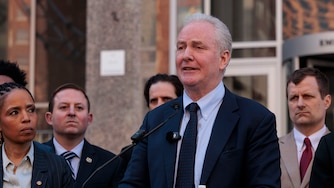
During a lengthy news conference following Wednesday’s vote, representatives from the resource center, along with BUILD and the Baltimore Teachers Union, flanked council members to celebrate the budget’s passage.
Asked how much discretionary money council members received, Cohen said the needs of each of the city’s 14 council districts were considered during discussions.
“I can’t quantify it in any reasonable kind of way, but I know that council members always advocate for their district,” he said.
Some of Scott’s plans to hire new staff members were scaled back to help cover the cost of the council’s additions. The council also cut $500,000 from the budget of the Circuit Court, which has repeatedly had a surplus, and pulled $750,000 from the Enoch Pratt Free Library, which has savings due to vacant positions.
Another $2 million was trimmed from a $20 million allocation for a yet-to-be-designed youth sports complex championed by the mayor. Officials said that spending was deferred, not called off. Costs in the coming year will be focused on planning and design, they said. The proposed location of the complex has not been revealed.
Scott, whose team has negotiated unanimous City Council votes on the majority of his budgets since taking office in 2020, praised his team and members of the council Wednesday for working “in partnership” on the spending plan.
The process was less outwardly contentious than the previous year’s negotiations when then-Chief of Staff Calvin Young had to apologize to Councilwoman Odette Ramos for characterizing her tearful plea for additional immigration funding as a “public spectacle.” This year, Scott’s new chief of staff, J.D. Merrill, was at the table instead.




Comments
Welcome to The Banner's subscriber-only commenting community. Please review our community guidelines.