
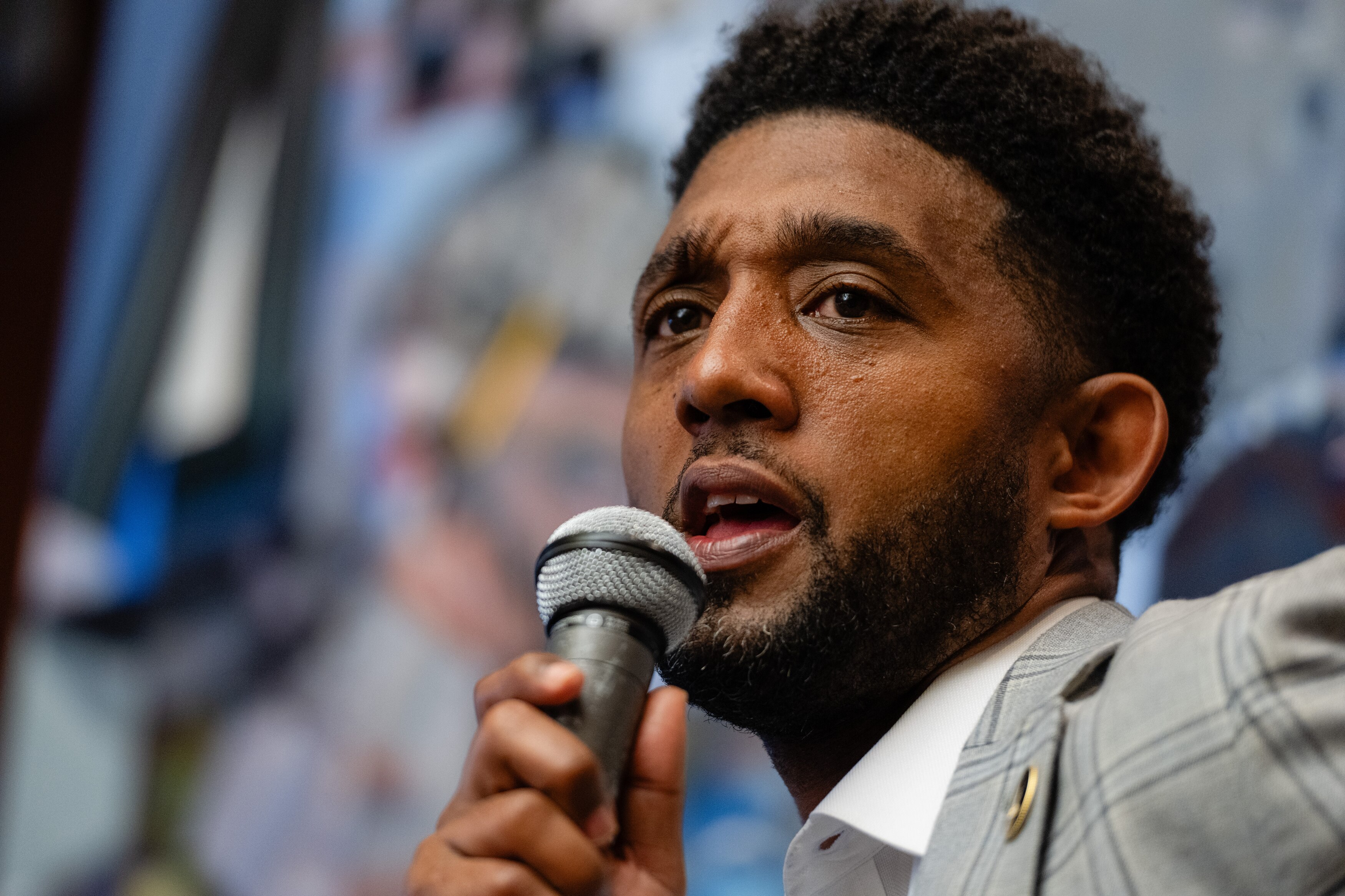
Baltimore Mayor Brandon Scott will introduce a $4.9 billion spending plan Wednesday that focuses on fortifying the city’s aging infrastructure while filling a $12 million structural deficit.
The spending plan, which must still be approved by the City Council, is about $3 million larger than the current fiscal year, which began July 1. The plan includes $1.1 billion in capital spending, a 14.3% increase over the previous year, driven by increased borrowing by the city.
Scott’s capital spending plan includes numerous investments in transportation infrastructure, including $35.8 million allocated for bridges, $22.4 million for street resurfacing, and $15.9 million for traffic signals and traffic calming measures.
Other planned capital investments include $12.7 million to upgrade city solid waste facilities and $12 million for replacement of the city’s computer-aided dispatch system, which has experienced failures during key moments.
Scott’s budget also includes $20 million for a yet-to-be-designed youth sports complex. Officials did not disclose the location of the proposed complex during a budget briefing with reporters.
Baltimore’s charter requires the city’s budget to be balanced. Scott’s budget includes a plan for filling a $12.1 million structural deficit — the difference between revenues and expenditures. Cost-saving measures include handling some contracted work in-house, specifically information technology services. The city would also eliminate trash collection contracts required in the past while the city was short on staff, said interim budget director Bob Cenname.
The administration has also proposed saving money by contributing less to its Rainy Day Fund. The fund, which is available to balance the city’s budget in the event of unexpected expenses, currently has $200 million available. As a result, the city plans to step down what has been a $3 million-to-$4 million annual contribution in the past, Cenname said.
The $12 million structural deficit in the fiscal year 2027 plan is smaller than the $85 million hole the city faced the previous year.
Scott’s spending plan holds the line on property tax rates, although rates would be effectively reduced for some homeowners by a series of tax credit adjustments that are currently being considered by the City Council and will go before the mayor-controlled Board of Estimates.
A 9% increase to the city’s water and sewer rates was approved by the Board of Estimates in 2025 and will begin in July. A 3% increase to the city’s stormwater rate will also take effect.
Revenue collected under the city’s current rate structure was not enough to cover expenses in the city’s wastewater fund in the past, leaving Baltimore with a $42 million shortage for fiscal year 2025. City officials said this week that they will cut 1,800 vacant positions across the wastewater and water utilities to help control costs, and they plan get more aggressive about collecting overdue water bills to increase revenue.
City Administrator Faith Leach said she hopes the plan will stave off the need for additional rate increases.
The fiscal year 2027 budget will be the city’s first to bridge the gap after the expiration of federal American Rescue Plan Act funding, which pumped $641 million into Baltimore’s budget over the last several years. Baltimore is required to spend down the remaining funds by December, which would be halfway through the fiscal year.
Scott’s budget proposal calls for continuing spending on some ARPA-funded programs, including violence prevention work undertaken by the Mayor’s Office of Neighborhood Safety and Engagement. City officials said funding for that work is set to remain steady.
Some ARPA-funded programs will be smaller. Baltimore’s Clean Corps program, which hires city residents to assist with lot and alley cleaning, will receive $3 million, about half the allocation the program had with the federal funding, Cenname said.
A newly proposed economic development fund for the Baltimore Development Corporation is also included in Scott’s spending plan. The $15 million proposed for the fund could be used for a variety of purposes, Cenname said.
“What we’ve seen over the years is that BDC needs some flexibility during the year to either provide an additional incentive to get a deal done, to invest in property acquisition or to invest in companies that are looking to locate in Baltimore,” he said. “By giving them this one-time funding that’ll allow them to kick off that program and have some more flexibility.”
Scott’s proposed budget must be considered by the City Council, which has until June 26 to adopt a final plan. Before then, the budget proposal will first be considered by the Board of Estimates. Residents will be invited to weigh in at two taxpayers’ nights, and budget hearings are expected to start in late May.





Comments
Welcome to The Banner's subscriber-only commenting community. Please review our community guidelines.