
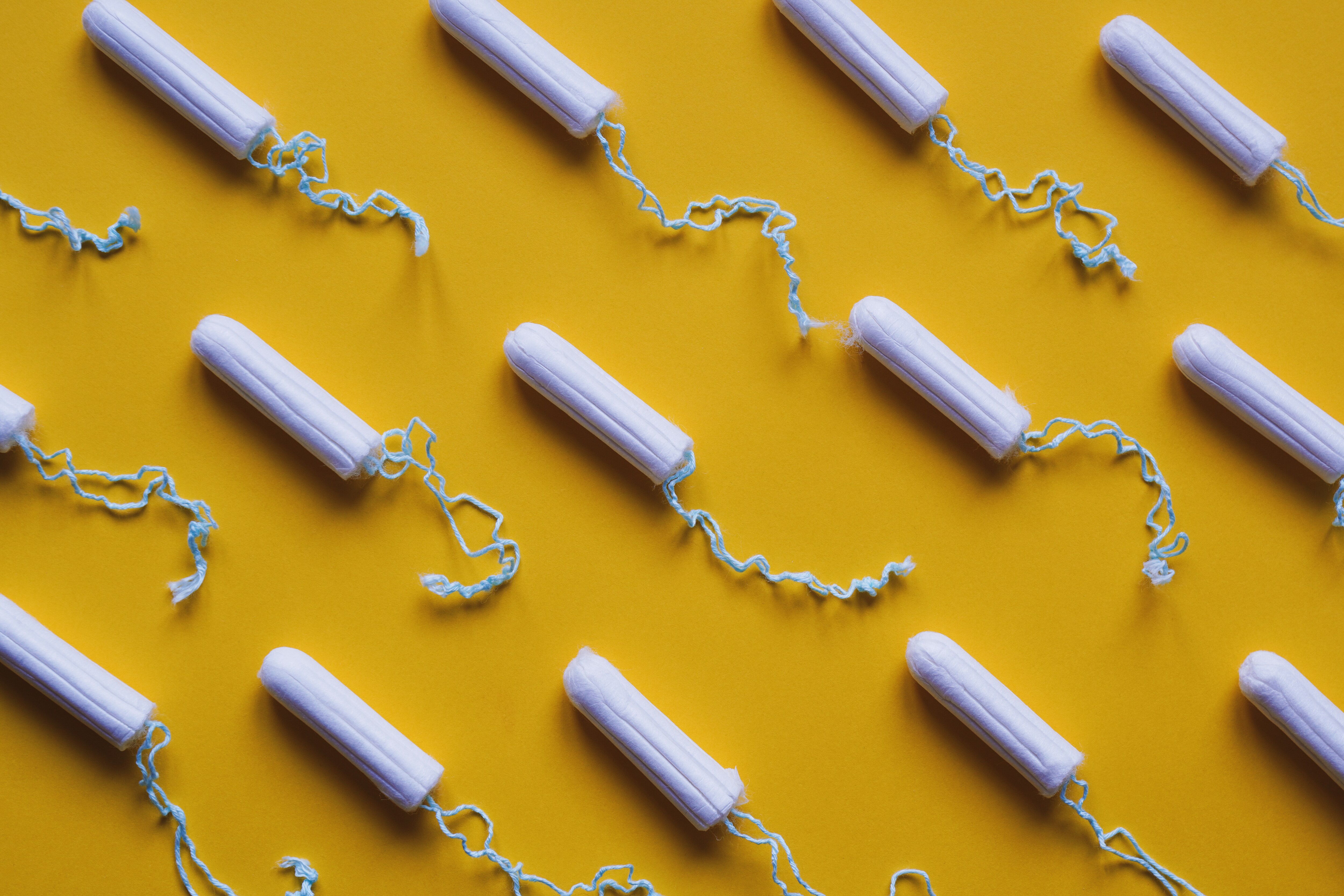
Tampons should not be controversial.
Those absorbent lifesavers, along with pads and menstrual cups, are essential tools for anyone who has a period, which happens for approximately 40 years of your life. If you don’t have these period supplies when you need them, you can’t function. You can’t go to school, work or play sports. You can’t have a life outside of your house.
But according to the United Nations, one in four teens and one in three adults have trouble affording menstrual products, a situation referred to as period poverty. A recently introduced bill would require that public restrooms in Maryland state-run buildings provide free pads and tampons.
This seems like a good thing, right? It should not be controversial. And yet.
Critics of House Bill 941 think it’s a waste of taxpayer money when there is a “looming massive deficit,” said Del. Kathy Szeliga, who represents parts of Baltimore County and Harford County.
On the other hand, Margaret Greer, project manager of the Johns Hopkins-affiliated The Violet Project, which promotes sexual health for youth, thinks anyone who needs a tampon ought to have access to them, however they identify.
“It’s a large expense to have to pay every month for people who menstruate from a young age,” she said. “For a government or company, this means people can still attend their daily lives. That’s a small expense.”
The Northern Arizona University Review estimates that the average woman will spend $18,000 on her period over a lifetime. I’ve always been relatively middle class, but remember rationing pads during the broke ramen and generic spaghetti days of my 20s. If you’ve never tied a sweater around your waist and run to the bathroom, hoping your skirt or pants weren’t stained, you have no clue how serious this is. If men had to play these reindeer games with clothing and bodily function every month, tampons would come every day in the mail. Believe it.
Also, forgive me the conspiracy theory, but I think that controlling access to products that make it possible for menstruating people to participate in society is part of the plan. The bill makes it clear how essential these products are by listing them along with other no-brainers found in public restrooms, including hand soap, toilet paper and water.
Greer said that seven in 10 women have reported missing school because of period pain or lack of products. Some have had to choose between that and food! Not having a tampon or a pad handy can lead to the use of toilet paper, or reusing them, “which is less hygienic and can be a health concern.”
Period supplies don’t seem as vital because they’re specifically for biological women, and a lot of people misunderstand and don’t talk about periods in the first place. And yes, I’m including transmen and non-binary people, who may use the men’s room.
“In general, periods are very stigmatized,” Greer said. “People might see it as taboo, or shameful, something we don’t need to talk about. We support knowing and understanding the expense of something half the population is going through.”
And that conversation has to include people who don’t have periods. I knew a grown man who absolutely freaked out when he found a wrapped, unused pad that had fallen out of my bag. “We need a way of normalizing this discussion,” Greer said. “It’s a medical thing, a biological thing. It’s not dirty.”
But the tactical part of enacting such a law isn’t. Szeliga said the cost hasn’t been determined yet. If the bill is passed, it would cover public buildings owned, leased or operated by the state or political subdivision of the state, including places like Camden Yards or Baltimore-Washington International Airport.
That makes it likely that Maryland taxpayers would be footing the bill for people who don’t even live here. “We have a $71 billion dollar budget. We should not be providing free menstrual products to the entire world,” she said.
Szeliga said she’s heard that the issue has made international news, which “makes Maryland look ridiculous. It’s not a good look for our state.”
Who would have access to these free products is another issue. Remember how Republicans dubbed Minnesota Gov. Tim Walz “Tampon Tim” for signing a law requiring free menstrual products in all school bathrooms, including gender-neutral ones?
Greer noted that in 2021, Senate Bill 427 passed, requiring free hygiene products in at least two women’s rooms in the state’s public schools. House Bill 941 bill “is a natural extension of that,” she said.
A lot has been made about the fact that 941 defines a public restroom as “a sanitary facility available to the general public that contains at least one toilet or urinal.” This, of course, includes men’s rooms, which Szeliga considers “a silly situation. Men do not need tampons. And you can quote me.”
Transmen, she said, can always use the family restroom in state buildings. And the way she sees it, women in public bathrooms have always had access to free tampons and pads. “The sisterhood has my back. You can say ‘Hey, anybody got a tampon?’ and suddenly 10 tampons show up in your hand,” she said. “In my time as a woman, this was not a problem.”
Szeliga said she doesn’t believe that the bill “will ever see the light of day,” but does support putting coin-operated tampon machines back in restrooms. What about women who just don’t have the coins and find themselves in a sweatshirt-around-the-waist situation? I asked.
“We’ve all had that happen,” she said. “We figure it out. Women are smart.”
I get what she’s saying, but smart doesn’t mean there’s anyone else in that bathroom to put a tampon in your hand. Smart doesn’t pay for anything. A smart state would help.
Greer doesn’t see how providing free pads and tampons is any different from restaurants that offer deodorant or mints. “This is just another basic hygiene thing,” she said. “You don’t have to take one. It’s an option.”
One that could mean you get to leave your sweatshirt on your shoulders where it belongs.



Comments
Welcome to The Banner's subscriber-only commenting community. Please review our community guidelines.