
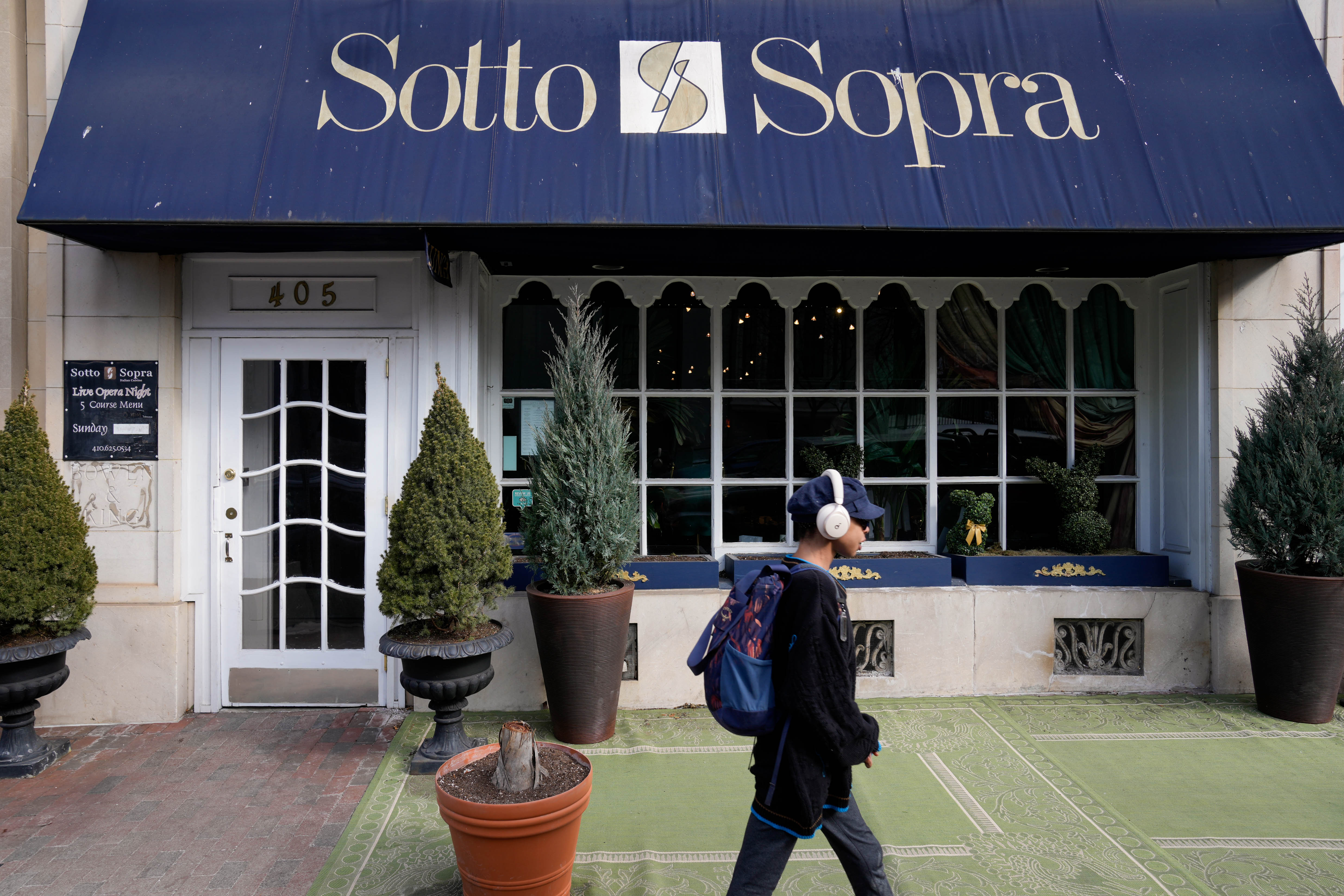
As a Gen X woman, I was raised to expect dress codes, be they official ones, like skirt lengths in school, or the unspoken kind, like slips and pantyhose at church.
Some of those standards have faded over time, but rules about attire remain in some institutions, including restaurants. Mount Vernon mainstay Sotto Sopra recently posted an official “Dress Code & Guest Courtesy Policy” that caused a lot of chatter.
I still hate pantyhose. But I’m not mad at this.
The guidelines, seen on the cozy 30-year-old Italian restaurant’s Instagram page and website, establish these rules for its suggested “upscale casual/business casual” attire:
- No hats indoors for gentlemen
- No exposed undergarments
- No shirts featuring offensive, obscene, vulgar or sexually explicit language or graphics
- No excessive wear and tear on clothing
In addition, the guidelines allow jeans and shorts if they’re clean and not overly torn or distressed.
And, though it should seem obvious, the restaurant says “footwear is required at all times.” I mean, seriously, nobody wants to eat next to your nasty bare feet! This should not be controversial.
Read More
Honestly, I don’t read controversy in most of this, considering the classy atmosphere of the restaurant. It’s not clear why the owner suddenly saw the need to post its dress code. Management declined comment, other than to reiterate its stance on social media.
Although some people have objected to the newly posted rules, I’m not one of them. If I’m paying Chipotle money, I’m not worried about the wording on my T-shirt. Sotto Sopra is not Chipotle. It’s a purposely elevated experience, and I don’t think it’s wrong to dress and act accordingly.
“If I’m going to an upscale restaurant, I expect the attire to reflect that,” said Tashia Bagwell of Baltimore, who goes to Sotto Sopra about four times a year.
From the wording of the post, the policy seems to imply it’s simply a formalized, written version of preexisting standards. Such guidelines are to be expected in establishments like this, because the whole experience is a very carefully cultivated vibe, said Zoey Washington, a Baltimore-based style and fashion editor.
“A lot of restaurants are taking into account the environment, from the architecture to sound control,” she said. “It’s to elevate the consumer experience.”
There’s a difference, of course, between a more traditionally formal style of dress and outfits that are expensive but suspect, like, say, velour tracksuit ensembles with the word “Juicy” emblazoned in rhinestone on the butt. This would thankfully violate Sotto Sopra’s prohibition against vulgar phrases and language.
My knee-jerk reaction to any dress code is that the restaurant is trying to exclude specific communities. Rules that prohibit athletic wear, Timberlands or certain jewelry popular with Black patrons seem targeted. In 2020, a young Black kid and his mother said they were discriminated against when denied entry into Baltimore’s Ouzo Bay because of his athletic shorts, a stated no-no in the restaurant’s dress code at the time. A similarly dressed white child sailed through. The family sued for racial discrimination, but the suit was dismissed. The restaurant recently announced it was closing.
Sotto Sopra’s dress code, in and of itself, doesn’t seem to do that, although another part of its policy about scents may be more controversial. The website cautions against heavy perfumes, colognes and other smells “that might interfere with another guest’s comfort,” specifically “marijuana and cannabis-related odors.”
Many Black social media users got the impression that including marijuana but not cigars or cigarettes was racially coded.
That part of the dress code gave pause to Christian Richardson of Baltimore, who visited Sotto Sopra a few weeks ago.
“I agree that I don’t want to be smelling like someone who just hotboxed in their car,” she said. “But also I don’t want to be near someone who just sucked down four cigars or several Newports. That’s equally offensive. The omission does feel very coded.”
Generally, though, Washington said, regulating smells is not uncommon in a restaurant like Sotto Sopra, which is going for a certain mood and atmosphere. “There’s a reason that some places have no big bouquets of flowers. They want the integrity of the experience to speak for itself,” rather than having those scents compete with the aroma of the food.
I ate dinner at Sotto Sopra last week with a mixed demographic of guests, including my 12-year-old in his school-ordered khakis and his Nike Tech hoodie purposely unzipped to show his polo shirt, a female friend in her late 20s clad in neat work wear and a similarly dressed male colleague. All of the other diners were dressed just as appropriately, including a woman at a nearby table wearing a stylish winter hat that conformed to the rules that forbid similar headwear for men.
All in all, the experience felt comfortable and not snooty but definitely elevated. No one was shouting or in a rush. The music wasn’t loud. There was, as Washington said, a controlled atmosphere that wasn’t stuffy. And everyone looked, intentionally, like they weren’t headed to Chipotle.
And that’s OK. If I want to experience their excellent cocktails and fettuccine al pesto, I’m going to have to wear, at the bare minimum, business casual. If I wear sequins next time, I won’t be out of place.
And shoes. Because I’m not a cretin.
There are, of course, people who legitimately have sensitivities to scents. It reminds me of a very old bit by comedian Bill Engvall that supposes that most signs and restrictions originate with complaints that violate seemingly commonsense understandings.
“Setting these standards means prioritizing the consumer experience. These are things one notices,” Washington said.
Of course, such distinctions “can feel exclusionary, but there is a happy medium between that and setting a standard,” she said. “It’s what you expect for an experience that aligns with those prices.”





Comments
Welcome to The Banner's subscriber-only commenting community. Please review our community guidelines.