
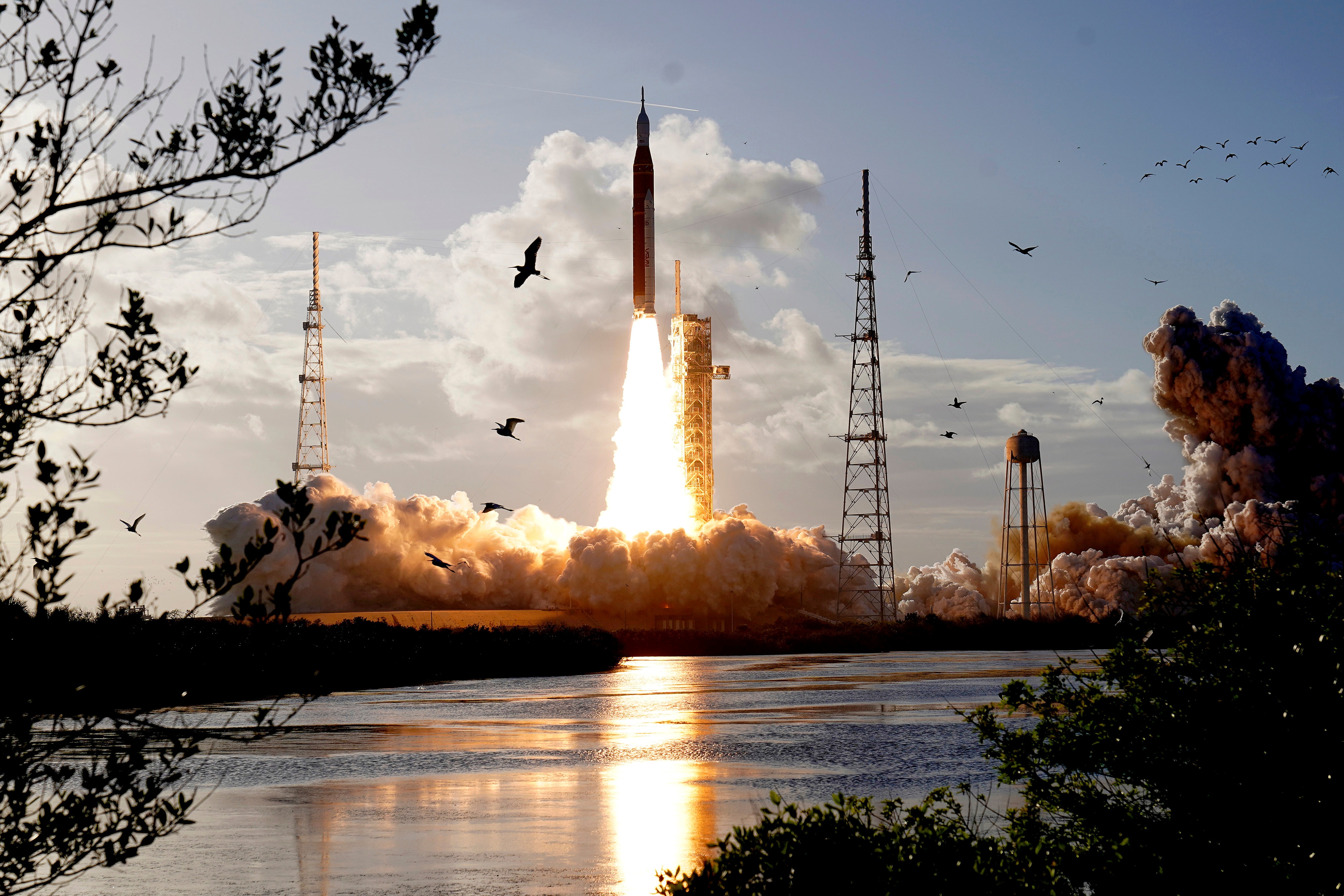
CAPE CANAVERAL, Fla. — NASA’s moonbound astronauts have reason to celebrate, and not just because their launch went so well. Their toilet is now working.
The so-called lunar loo malfunctioned as soon as the Artemis II crew reached orbit Wednesday evening. Mission Control guided astronaut Christina Koch through some plumbing tricks to fix it.
Commanded by Baltimore County native Reid Wiseman, the four astronauts busted out of orbit around Earth on Thursday night and zoomed to the moon for a lunar fly-around. It will be Mission Control’s first translunar injection since Apollo’s swan song in 1972.
Mission managers gave the “go” late Thursday afternoon for the engine firing. “We love those words, and we’re loving the view,” Canadian astronaut Jeremy Hansen said.
To set the mood, Mission Control’s wake-up music for the crew was “Green Light” by John Legend featuring André 3000. The song segued into the 3-2-1 of the astronauts’ thunderous liftoff, followed by a medley of greetings from NASA teams around the country.
“We are ready to go, and that was awesome,” pilot Victor Glover said.
Mission Control gave the final go-ahead minutes before the critical engine firing, telling the astronauts that they were embarking on “humanity’s lunar homecoming arc” to bring them back to Earth. Koch replied: “With this burn to the moon, we do not leave Earth. We choose it.”
While awaiting their orbital departure, the astronauts savored the views of Earth from tens of thousands of miles high. Koch told Mission Control that they can make out the entire coastlines of continents and even the South Pole, her old stomping ground.
“It is just absolutely phenomenal,” radioed Koch, who spent a year at an Antarctic research station before joining NASA.
Mission Control managed to bump up the Orion capsule’s cabin temperature. It was so cold earlier in the mission — 65 degrees Fahrenheit — that the four astronauts had to dig into suitcases for long-sleeved clothes.
The mission is due to end with a Pacific splashdown on April 10. NASA is counting on the test flight to kickstart the entire Artemis program and lead to a moon landing by two astronauts in 2028.

Before that happens, Orion’s toilet may need some design tweaks.
Located in the floor with a door and curtain for privacy, the capsule’s lone toilet is based on an experimental commode that launched to the International Space Station in 2020. That station potty barely saw any use and has been out of order for years.
Known as the universal waste management system, the compact toilet uses air suction instead of water and gravity to remove waste, similar to earlier space toilets. It’s also designed to better accommodate female astronauts.
Koch and her crewmates had to resort to a bag and funnel system for urinating until she got the toilet working overnight.
Any toilet — even a fitful one — is better than none if you ask any of the six surviving Apollo astronauts.
NASA’s Apollo capsules were too small to accommodate a toilet, so the all-male crews relied on bags to relieve themselves throughout the lunar journey. These so-called Apollo bags were repurposed during NASA’s later space shuttle flights; they served as backup whenever the shuttle toilet acted up.



Comments
Welcome to The Banner's subscriber-only commenting community. Please review our community guidelines.