
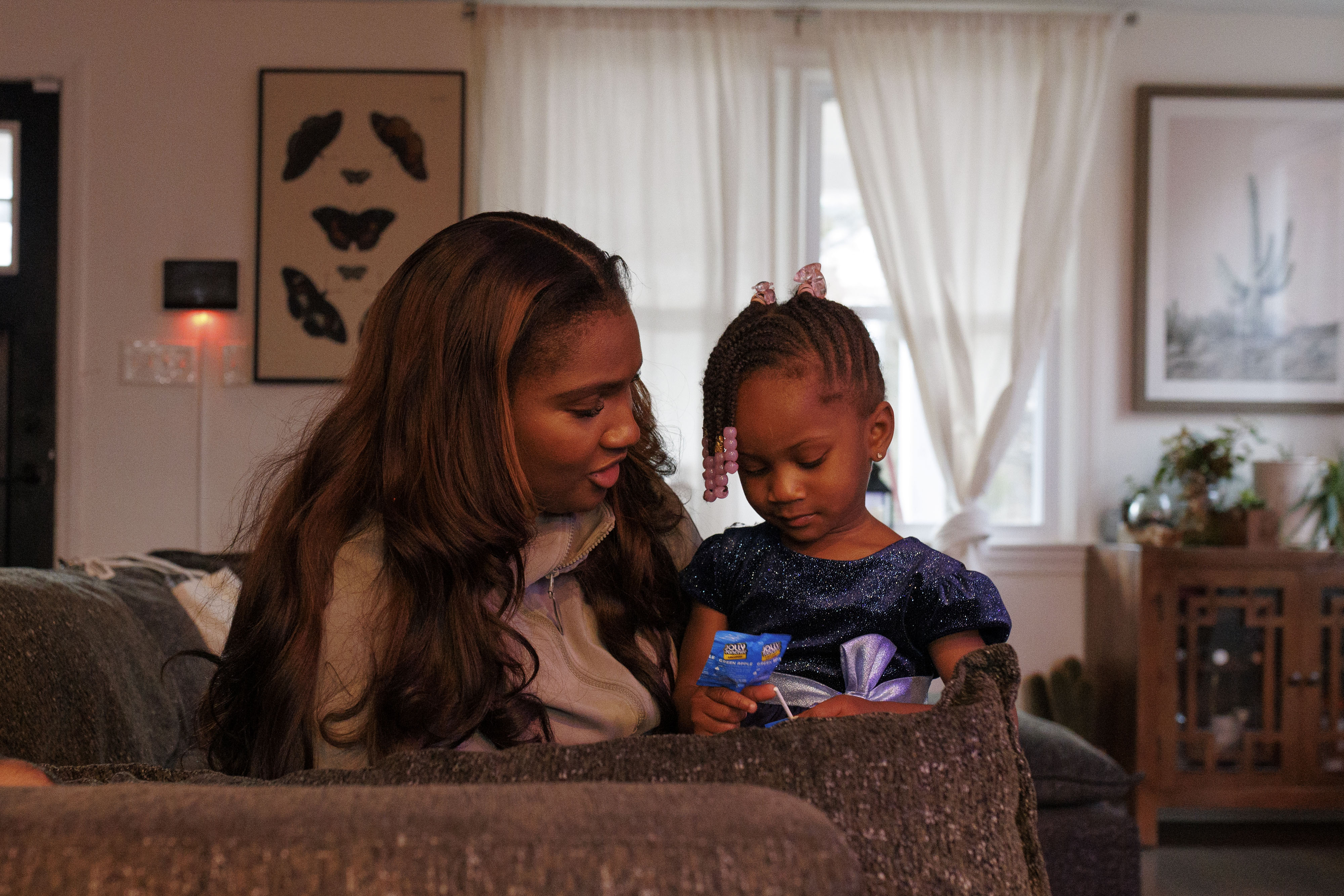
De’Jonnae Boyd Moreno was in the emergency room with a broken foot when her phone rang.
Service was spotty, but she guessed at the reason for the late-night call.
“If you’re asking about a child, we say yes,” Boyd told the person on the other end of the line. Hours later, Boyd and her husband, José Moreno, welcomed their first foster child. They’d go on to care for 14 more over the next five years, most of them under age 5.
Boyd and Moreno have taken in more kids than most foster families in Maryland, half of whom stop taking kids within their first year. They’re also among a dwindling group in Baltimore, which lost more than half its foster families from 2019 to 2014. The couple remains committed to standing between children and the future homelessness, incarceration and abuse they’re more likely to endure after entering foster care.
According to the nonprofit Foster the Family, Maryland has nearly twice as many foster kids as foster homes. Some foster children have ended up living in hospitals and hotels when the state couldn’t find them a placement. The state committed to ending the practice after a foster teen died in a hotel and to placing more would-be foster children with family.
Before she started fostering, Boyd wasn’t sure if she wanted to be a parent at all. But she had a cousin she thought might end up in foster care, so she and Moreno took the training they’d need to care for him. By the time they finished, her cousin’s custody case was closed and he remained with his parents.
Read More
“So instead we just opened our home,” Boyd said.
Boyd, 33, and Moreno, 40, have lined the stairway of their Northeast Baltimore home with photos of each kid who’s come through their doors: newborn close-ups, preschoolers posing with dinosaurs, babies swaddled in arms.
There was the 4-year-old who called the couple Supergirl and Hulk and the kid who couldn’t stop beaming when he got a scooter for Christmas. They still talk every day with the then-pregnant teenager for whom they threw a combined quinceañera and baby shower.
Boyd makes a photo album for every child’s biological family, a way for them to see the weeks, months or years they’ve missed.
Boyd said foster parent training prepared them for big topics, such as the effects of abuse on children, but less so for the day-to-day realities of parenting, such as how to burp a baby. The night they received their first placement, a 4-month-old baby, they stayed up for five hours watching YouTube videos on how to raise children.
Today, Boyd and Moreno have three under 3, a constant, joyful chaos. On a cold winter afternoon, the couple’s 2-year-old adopted daughter, Ever, who goes by Evie, and their 1-year-old foster son came home from day care hyped up on sugar, running laps around the living room and kitchen. Their laughter and shouts didn’t once wake the couple’s infant foster daughter.

Boyd and Moreno balance their foster parent responsibilities with full-time jobs. She runs a fitness studio and contracts for the U.S. State Department; he lobbies for the Quakers.
Foster kids sometimes arrive at a moment’s notice in the middle of the night. Foster parents have to get them to medical appointments and into child care despite waitlists that can stretch for months. Usually, they have to take kids to and from visits with their biological families.
Boyd and Moreno pay for their foster kids’ swim lessons, teach them Spanish, arrange playdates and enforce bedtime routines.
Boyd also considers how her foster kids’ biological parents want them to be raised. Her current foster children’s parents are religious, for example, so she reads them Christian books and sends them to church with her mom.

Alice Cook, who knows Boyd and Moreno through an advocacy group, commended the couple for respecting their foster children’s roots.
Cook said she grew up watching friends in what she thought to be bad foster homes. She recalled a white family that took in an Alaskan native child and disparaged her culture and biological relatives in front of her.
Foster parents like this “potentially cut off their ties to the rest of their community,” Cook said, especially when kids aren’t old enough to remember who they came from.
Boyd and Moreno live by the words “reunification is the goal.”
“You don’t need to pretend that nothing existed before you. It’s not fair to their story,” Boyd said. “Foster care is not to build your family. It’s to provide safe spaces for children.”

Boyd almost felt guilty adopting her daughter Evie.
The toddler has been with Boyd and Moreno since she was just a few days old. She arrived wrapped in a blanket, wearing only a diaper. The couple couldn’t even keep the car seat Evie’s caseworker used to drive her home.
The couple no longer talks to Evie’s biological mother, though she was active in their life before, even taking pictures with Evie when she turned 6 months old. Boyd still refers to her child’d birth mother as “Evie’s mom.”
“I think she has two moms. I think she has a mom that carried her for nine months and she has a mom that raises her every day,” Boyd said. “Hopefully one day, [Evie’s mom] realizes like, she might not live with you, but she’s still your kid, and we would never speak bad about you.
“I hope she calls one day.”

Bill Blevins, president of the Baltimore City Resource Parent Association, said Boyd and Moreno are examples of people making systemic change in Maryland’s challenged foster care system by demanding what kids in their care deserve.
“They just won’t take the no that some do,” Blevins said.
Boyd said lots of foster parents don’t last because they’re “so bogged down by the system” and all-consuming work: overwhelmed caseworkers, the uncertainty of where kids will go next.
Boyd and Moreno have had kids stay for as little as 13 hours. Every time a child leaves her home, Boyd has a “full freaking meltdown.” She said getting that attached is a foster parent’s No. 1 job — as is letting them go when it’s time.
“If you’re doing it right, you’re giving your all: all of your money, all of your time, all of your thinking space,” Boyd said. “You have to give with no expectation of anything. The families owe you nothing. The children owe you nothing.”
About the Education Hub
This reporting is part of The Banner’s Education Hub, community-funded journalism that provides parents with resources they need to make decisions about how their children learn. Read more.


Comments
Welcome to The Banner's subscriber-only commenting community. Please review our community guidelines.