
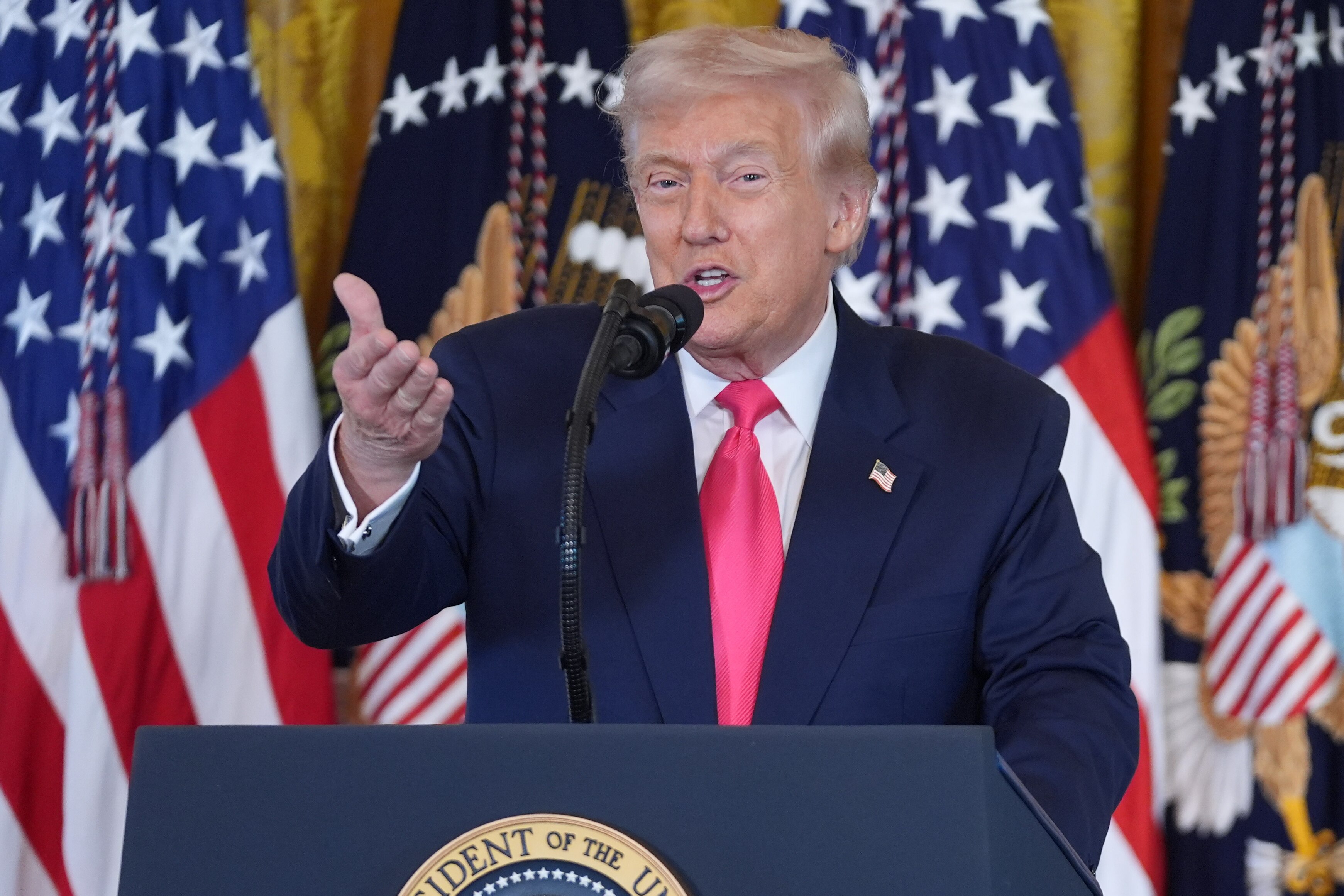
When the U.S. Supreme Court struck down many of President Donald Trump’s sweeping tariffs Friday, it opened the door for companies to seek substantial refunds from the federal government for trade levies already paid.
Over 1,000 companies have lined up for reimbursement in recent months, including Harford County-based Chesapeake Spice Company.
The nearly 40-year-old company imports seasonings into the U.S. and, like others, is seeking money back from “unlawful tariffs,” attorneys for the company wrote in a December filing.
“Because the tariffs were not authorized by federal law, the amounts paid pursuant to them were illegally exacted and a money judgment in that amount should issue against the United States,” attorneys wrote.
Chesapeake Spice did not reply to a request for comment.
It’s unclear how much the company has paid in tariffs. But major corporations — such as Costco and Toyota — are legally seeking big reimbursements, too.
Trump’s mercurial trade announcements have often left companies scrambling to understand how they might be affected.
Baltimore-based Under Armour initially projected the tariffs would cost the apparel maker $100 million over the course of its current fiscal year, before revising that figure to $80 million.
Under Armour spokesperson Matt Dornic declined to comment.
McCormick & Company, headquartered in Hunt Valley, thought in October that it would take a $140 million hit annually from the new tariffs, but in its most recent earnings report revised that figure down to $70 million.
Both companies, which depend on imported goods, have seen tariffs disrupt their bottom lines and considered whether to pass the costs of tariffs onto consumers.
McCormick spokesperson Lori Robinson did not comment about whether the company would seek a refund, but said they are aware of the ruling and assessing its potential impact.
“We will continue to review the decision, monitor related policy developments, and provide updates through our regular reporting cadence,” she said in a statement.
The Supreme Court decision would seem to be welcome news for those investing in import-reliant retailers, but Trump’s next move on trade policy has been hard to predict. During a news conference Friday, Trump indicated he would seek alternative means of imposing levies.
Neither Under Armour nor McCormick’s stock price moved more than a few percentage points Friday.
To Drew Greenblatt, owner of Marlin Steel, a Baltimore-based steel fabrication company, the Supreme Court decision felt shortsighted and foolish. Greenblatt said the tariffs gave him hope that small and mid-sized U.S. manufacturers could compete against those in Mexico and China, where he said companies underpay their workers and pollute the environment.
Greenblatt said he got an email Friday morning from his lender approving the biggest single investment Marlin has ever made: a nearly $2 million laser punch combination machine. Then he got an email alert from The Wall Street Journal about the tariff decision and uttered a “profane curse word.”
Over the long term, Greenblatt said, tariffs can bring back manufacturing jobs and wean the country off its over-reliance on foreign products.
“I know a couple T-shirts will be more expensive,” he said of Trump’s tariffs. “I care more about the middle class. I care more about a robust society.”


Comments
Welcome to The Banner's subscriber-only commenting community. Please review our community guidelines.