
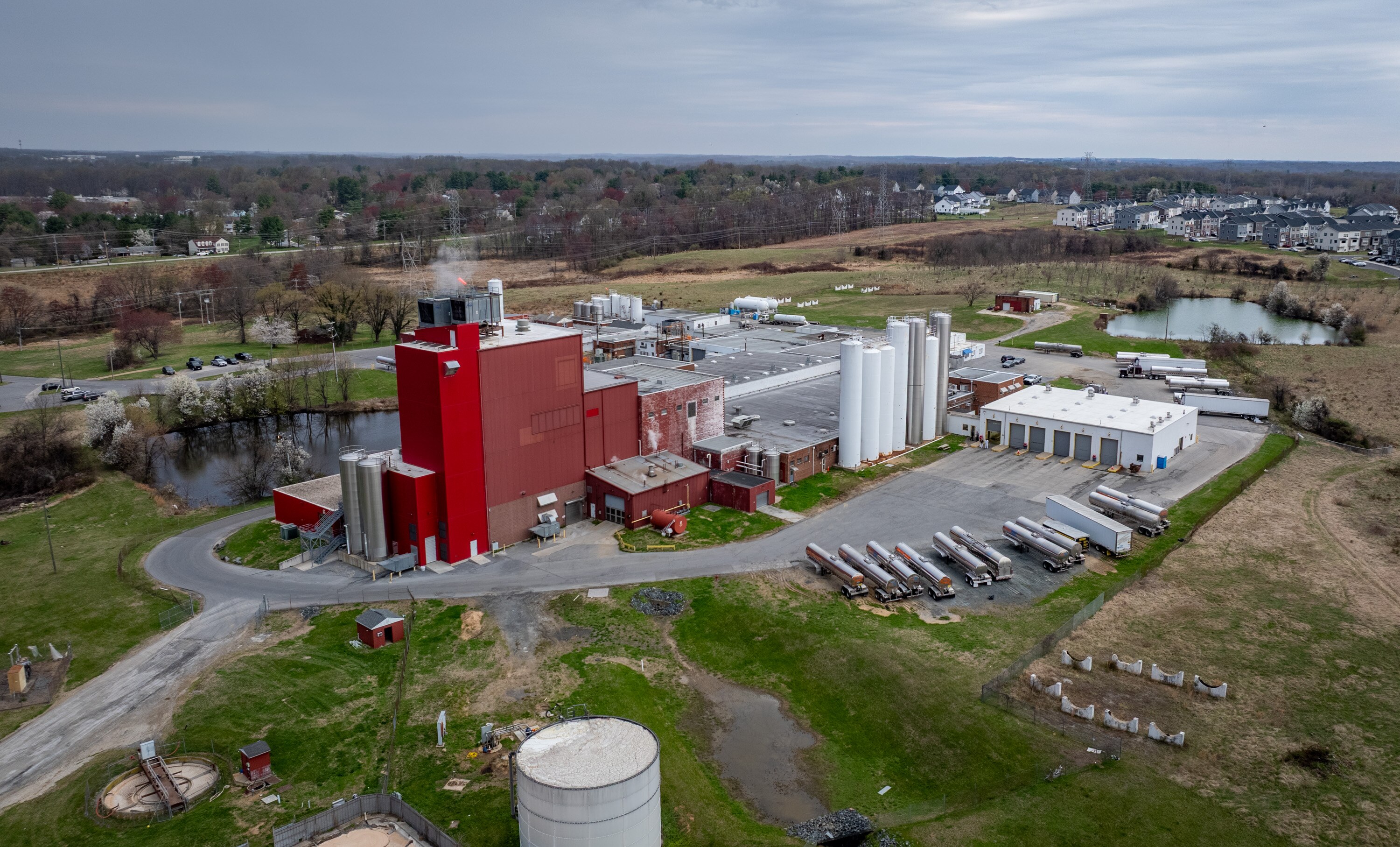
A milk processing plant in North Laurel is laying off 72 workers and closing by Dec. 31, putting an end to a decades-long dispute with neighbors over a powerful odor wafting from the property since the 1990s.
The plant’s owner, Maola Local Dairies, has filed a WARN notice, which notifies the Maryland Department of Labor of an upcoming closure or layoff. The plant’s closure impacts 72 workers, the notice states.
Maola will curtail operations in Laurel starting on June 1 and fully close the plant by the end of the year, wrote Lindsay Reames, executive vice president for Maola, in an email Monday.
“This step reflects how our processing network and milk supply needs have evolved over time,” Reames said.
The Virginia-based company — which is a cooperative of dairy farms located in Maryland, Pennsylvania, Virginia and North Carolina — hasn’t said what it plans to do with the nearly 78-acre property, located in the 8300 block of Leishear Road. The company did not address whether neighbors’ complaints about the odor factored into the decision to close the plant.
Closing the plant ensures “that resources are focused where they best support the Cooperative’s long-term goals and ongoing commitment to our farmer-owners and customers,” Reames wrote. “We remain committed to providing a reliable home for member milk and to delivering quality products and dependable service throughout this transition.”
For years, neighbors and their county councilwoman said equipment failures at the plant produced a stinky aroma that could be smelled for miles around depending on the direction the wind was blowing.
Although the scent has wrinkled noses since at least 1995, it seemed to spark a new wave of community opposition in the 2010s. Some neighbors and homeowner associations organized committees to address the odor, contact elected leaders and filed complaints with the Howard County Health Department and the Maryland Department of the Environment.
The issue prompted fierce debate within Facebook groups for neighbors in Laurel and Maple Lawn, with some defending the co-op’s dairy farmers and others calling on the plant to be a better neighbor.
Still, the plant’s closure was not the outcome some opponents were hoping for.
“I am sad for the workers,” said Jamie Faulkner, who has lived about two miles north of the plant for 17 years. “Of course, I’m happy it won’t stink anymore.”
The odor, which she compared to “noxious sewer gas,” seemed to randomly come and go over the years, said Faulkner, adding that she mostly caught whiffs during walks around her neighborhood.
Faulkner noticed the scent had returned with a particular pungency around St. Patrick’s Day and filed a complaint with state environmental authorities.
“At this point, we are receiving complaints faster than we can respond,” a state air quality regulator replied to her complaint in a March 26 email.
The facility’s waste pump had suffered a mechanical failure, the regulator explained. The facility was running deodorizers at full capacity while repairs were being made. However, waste still needed to be pumped out of the facility, which caused odors when the wind picked up.
“The facility has stated that while these odors are unpleasant, they are not harmful,” the regulator said in the email.
The odors are created by the natural deterioration of organic milk, which can be irritating but is not toxic, county health officials told residents in a statement Friday.
Symptoms may include headaches, eye, nose and throat irritation, and coughs, officials said. They recommended people stay inside and keep doors and windows closed when the odor is strong.
In addition to pump failure, health officials identified issues with an aeration ditch, which caused further odor and required repairs and clean-out. Work is expected to be completed by the middle of the week, officials said.
State environmental officials were at the site Monday performing an odor survey, MDE spokesman Jay Apperson said in an email.
Untreated sludge, which was the primary source of the odor, was removed from a storage tank, Apperson said. The facility expects repairs to be completed by Tuesday, which should resolve the smell.
The survey identified no odors at the plant entrance or at nearby Hammond Elementary School. Some noticeable odors were identified in the neighborhood northeast of the facility, Apperson said.
Officials will continue to monitor the facility as repairs are completed, he said.
Howard County Councilwoman Christiana Rigby, whose district includes North Laurel, said she’s fielded complaints every year since taking office in 2018 and recalls problems even before then. On a drive home Thursday from Savage, she rolled down her car window and caught the familiar scent of sour milk.
“Maybe I’ll take the long way home,” she said.
In a way, the milk plant’s conflict with neighbors represents a growing tension between Howard County’s fading agricultural roots and new development projects tied to a major housing shortage. The plant is not 2 miles from northeast Montgomery County, which faces similar strains.
In 2019, the plant’s parent company sold off some nearby land to residential developers, citing financial issues tied to the decline of dairy consumption and tariffs on exports.
The developers built Wellington Farms, a community of single-family homes and townhouses. The new construction was a boon to Liz Nudo, who moved in three years ago after struggling to find a home in Howard’s hyper-competitive housing market following the COVID-19 pandemic.
No one told her about the smell.
Even as she kept her windows shut and avoided going outside, Nudo bought Maola milk to support the dairy farmers and workers.
“We’re living in a paradoxical environment,” she said.
The 45-year-old never filed complaints to the state or county, even as the air brought back memories of an abandoned, rat-infested home near her grade school. She never wanted anyone to lose their job.
At the same time, Nudo said, “it’s not our fault that we moved here.”
Faulkner said she and other neighbors saw the Wellington Farms development as a sign that all was not well with the milk processing plant. So she wasn’t surprised to learn of the plant’s closure.
Instead, her mind wandered toward what could replace it.
“It could be worse than a milk plant.”





Comments
Welcome to The Banner's subscriber-only commenting community. Please review our community guidelines.