
How much are you willing to pay for a pizza?
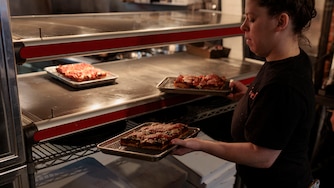
At Underground Pizza Co., choosing to order a pie through a delivery app instead of at the restaurant could cost you up to $20 more, including tip. That’s a big difference for your wallet — and the restaurant’s.
Third-party platforms like DoorDash and Uber Eats take up to 30% commission on each order, so Underground owner Evan Weinstein raises the price of his food on those apps by nearly the same percentage. That means customers who eat at Underground or order pickup directly through the company’s site pay much less for the same items.
“You have to be taking business back from these third parties,” Weinstein said. “I think they can be parasitic.”
That doesn’t mean the apps aren’t useful: About 40% of Weinstein’s business comes from third-party platforms. Without them, he wouldn’t be able to offer delivery — a service that’s all but required to compete in the restaurant industry. The apps also offer marketing services, which Weinstein said helped grow his business.
But as the cost of ingredients, gas and utilities continues to increase, Weinstein and other restaurateurs say the fees required to exist on the platforms are squeezing local eateries too tight, leaving customers to pick up the bill. In early March, Uber Eats announced plans to raise some of its fees on restaurants.
Read More
There should be a limit on what the platforms can charge, he said. Raising prices is a risk Weinstein can afford to take since he has a strong customer base across his restaurants in Baltimore and Towson.
“It’s going to be a big problem for smaller restaurants that don’t know how to increase revenue,” Weinstein said. “They’re bleeding businesses. It’s like death by 1,000 cuts.”
At Charm City Food Co., an incubator for microbusinesses in the Abell neighborhood, eateries such as Baltimore Lao Eats and Unavu are considered ghost kitchens, which means they have no seating and rely on delivery and takeaway from DoorDash and other platforms for all their revenue. They, too, pay a 30% fee on each order. The kitchens also pay additional marketplace fees so that the apps can place discounts — commonly seen as “buy one, get one free” or “up to 20% off” deals — in an effort to entice new customers.
“Sometimes, we feel like we’re boxed in,” said Saroj Sharma, who helps his wife manage Baltimore Lao Eats. But he said they also wouldn’t know how to reach customers or grow the business without the platforms.
DoorDash spokesperson Darrell Davis repeatedly referred to restaurants the platform works with as more than its clients or customers, but its partners. He disagreed that the company’s fees hurt businesses and pointed to several partnership plans DoorDash offers at varying commission percentage points to help grow local eateries and their customer bases.
“Our team’s been working on finding what other supports we can provide to restaurants,” Davis said.


Spokespeople for Uber and Grubhub did not respond to questions.
Mayuree Thai Tavern owner Andy Thammasathiti, who has operated his restaurant in Fells Point for 11 years, also feels stuck. His business joined Uber Eats eight years ago when fees were lower and the app was still finding its footing, but that changed during the pandemic. As the platform’s user base grew, so did its fees. He said he had to raise menu prices to stay on the app and stop the fees from eating away at the tavern’s earnings.
Thammasathiti and his mother, who runs Mayuree with him, said they try to take on as much of the cost of doing business on the apps as they can, despite the risk of it hurting the restaurant.
“We still have to use them because it’s a city and sometimes people don’t want to go out, they don’t want to have to move their car,” he said. “It’s just like another tax.”
Thammasathiti called Uber’s potential new fees “concerning” and said he is considering raising menu prices in the coming weeks.


Uber said in a statement to Restaurant Dive that the increase was part of an effort to “drive more customer demand for restaurants, courier reliability, and improved products and tooling to support your business.”
Samantha Claassen, owner of Hampden’s Golden West Cafe, believes there will be a breaking point.
For about two years, the owner stopped using delivery platforms for her restaurant. She said it started to “feel predatory” in 2022 when undiscussed fees started popping up on Grubhub orders — some over 30%. At one point, Claassen said, the platform started charging prices from an older version of Golden West’s menu, meaning customers were purchasing food for a lower cost. Alongside rising ingredient prices and operational costs, she decided staying on the platforms was too difficult to shoulder.

But in January, an employee convinced the restaurateur to rejoin the delivery services and agreed to provide some oversight. Claassen said they were missing out on too many customers, so they created a separate, higher-priced menu for the apps to help offset the cost of doing business on those platforms. Claassen said it’s only fair to split the fees, with the restaurant absorbing some of the cost and customers paying more for the same food. Unlike Weinstein, Claassen doesn’t believe her customers would be able to withstand much more of a price hike.
“We live in a world that requires these services, and for our survival we have to give people the convenience of meeting them where they are,” she said.
“But I believe when restaurants start pulling away, platforms will modify.”


Comments
Welcome to The Banner's subscriber-only commenting community. Please review our community guidelines.