
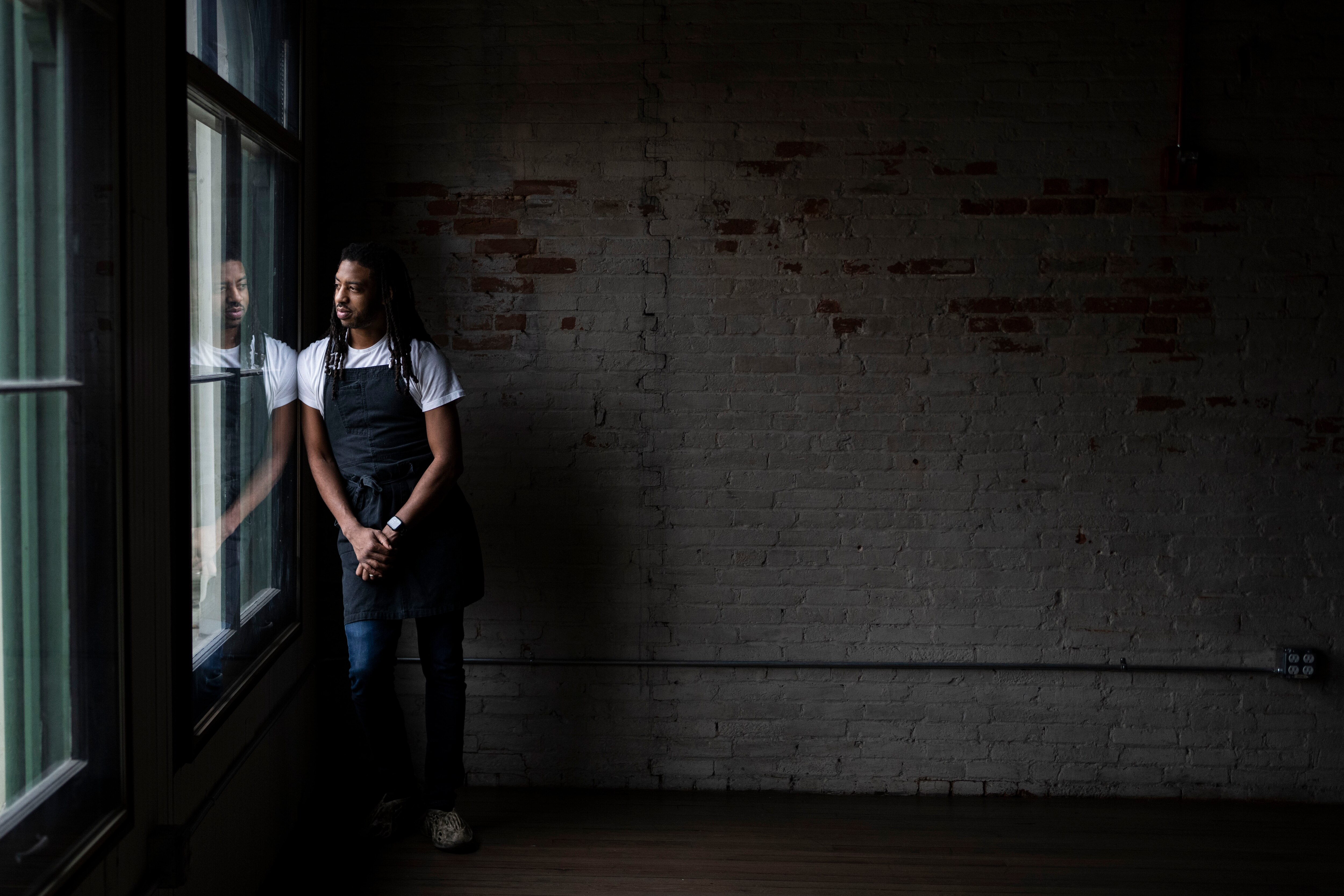
Tonya and David Thomas are known for throwing large, extravagant $300 dinners where guests come dressed to the nines and celebrity chefs such as Carla Hall have been among the attendees. The evenings have included red carpet-style photos, DJ battles and decked-out event spaces.
Tonight at Stem & Vine, they will host a relatively toned-down affair for no more than 30 guests, and part of the evening will be devoted to discussing memories evoked by the food. The conversation will tie the food to the role Black Americans have played in history.
“There’s so much going on in the country where our culture and our history is trying to be erased and silenced,” Tonya Thomas said.
This year, the Thomases and other local restaurants and chefs are incorporating the diasporic tradition of oral history and conversation into their Black History Month dinners. Most enslaved Black people in America were forbidden to read and write, so much of their history was passed down through word of mouth and storytelling.
Local chefs cited the current political climate, including attacks on Black history and diversity efforts, as the motivating factor.
“I think this is more important than probably any other time,” Tonya Thomas said.
In about a year, the Trump administration has worked to eliminate references to slavery across federal institutions, redefined the federal defense of civil rights and threatened to punish schools, colleges and other organizations for anything that hints at DEI — diversity, equity and inclusion.
Last March, Trump signed an executive order name-checking the National Museum of African American History and Culture and accusing the Smithsonian of engaging in a “concerted and widespread effort to rewrite our Nation’s history.” (In one response, artist Amy Sherald canceled her exhibition “American Sublime” at the Smithsonian’s National Portrait Gallery last summer, citing censorship, and brought it to Maryland.) And, just last month, the administration took down an exhibit in Philadelphia about nine people enslaved by George Washington, which a judge later ordered to be restored.
All of that is why sitting and talking with the guests while they are enjoying a meal is more important than ever, Tonya Thomas said. She and her husband are food historians behind the catering company H3irloom Food Group.
Thomas’ dinner was initially set to be one of those trademark $300 events. She dropped the price to $175 per person. (The contents of the menu are under wraps.) And it will be a family-style meal to encourage conversation.
Private chef Durian Neal is planning a similar gathering.
“That’s why my dinners exist — to spread a light on our history so it won’t be forgotten,” said Neal, who will host a cozy, sold-out, 35-person dinner Saturday at Collective Spaces downtown. “We are being erased out of history. And not necessarily erased out of history, but the history is being altered, which I think is even worse.”

Neal’s event, which costs $180 per person, will trace his trajectory in the culinary industry, from his beginnings in Baltimore to his work as a chef in Denmark and Ireland and his return to Baltimore working at Gunther & Co. and Ida B’s Table. He also was head chef at his own restaurant, Loving Spoon Collective.
Neal is finalizing the menu, but he revealed the dessert course, a plantain donut with a buttercream milkshake. It’s a nod to his mother, who bought him donuts each time she embarked on a military assignment.
He believes, by sharing his personal journey, he will reinforce the contributions Black Americans have made to shape fine dining and so much more in America.
For instance, James Hemings, an enslaved man who was President Thomas Jefferson’s personal chef, was also the first American trained as a French chef and widely considered a pioneer of fine dining cooking techniques in America. Hemings was born in Virginia in 1765 but lived in Baltimore as an adult.
Black Americans are credited with being the first caterers in this country. And Maryland, which boasted one of the largest freed Black populations in the country, was at the forefront of that industry with Pennsylvania. It was a natural evolution for a population that had experience serving as cooks while enslaved or as domestic workers who were accustomed to making elaborate meals on plantations, in grand estates and in homes that were using enslaved cooks.
Neal said recently he has noticed other chefs making historical connections to the African diaspora and its relationship with the culinary industry.
“Everyone’s doing their research,” said Neal, who has spent time at Baltimore’s Reginald F. Lewis Museum and The National Great Blacks in Wax Museum in the past year researching Black food history. These efforts will ultimately allow for Black Americans to help fill the void in their history, “which is a wonderful thing,” he said.
Kea Avery, a Parkville resident who works in health care, is excited by Neal’s plans to honor Black history because it “is the opportunity to go beyond the plate.”
Avery, who is also a digital content creator, appreciates the storytelling, understanding of cultural roots, the lived experiences and legacy behind the flavors.
“Food is memory, resistance, creativity and community all at once,” said Avery, who will be attending Neal’s dinner. “I hope to walk away not only inspired by the dishes themselves but also more connected to the history, narratives and voices being centered at the table.”

At Alma Cocina Latina, a Venezuelan restaurant in Station North, a collaboration with Magdalena at the nearby Ivy Hotel will highlight the African influence in the South American country.
“We have a very big Afro Venezuelan community,” said Irena Stein, the restaurant’s owner. “Their food is completely, completely integrated in the African traditions that they brought. Even the names of the meals are still the names from Africa.”
The second annual Africa in the Americas Celebration will feature Alma Chef Héctor Romero, who this year will collaborate with Magdalena Chef Scott Bacon for a four‑course tasting menu being advertised as a “journey of taste that honors kaleidoscopic gastronomy and collective thriving.”
This $90 dinner will also be communal to encourage conversation and allow guests to engage in the multidiasporic experience, Stein said.
Storytelling and history play a crucial role in the culinary process, Bacon said.
“By honoring ingredients and techniques from the past, we are able to highlight the cuisine and people that brought us here,” Bacon said. “It is nice to put a spotlight on this tradition with events like Africa in the Americas and allow a more dynamic platform for this type of storytelling.”
Bacon believes solidarity among marginalized people is “more important now than ever” — especially in what he called the current sociopolitical climate.




Comments
Welcome to The Banner's subscriber-only commenting community. Please review our community guidelines.