
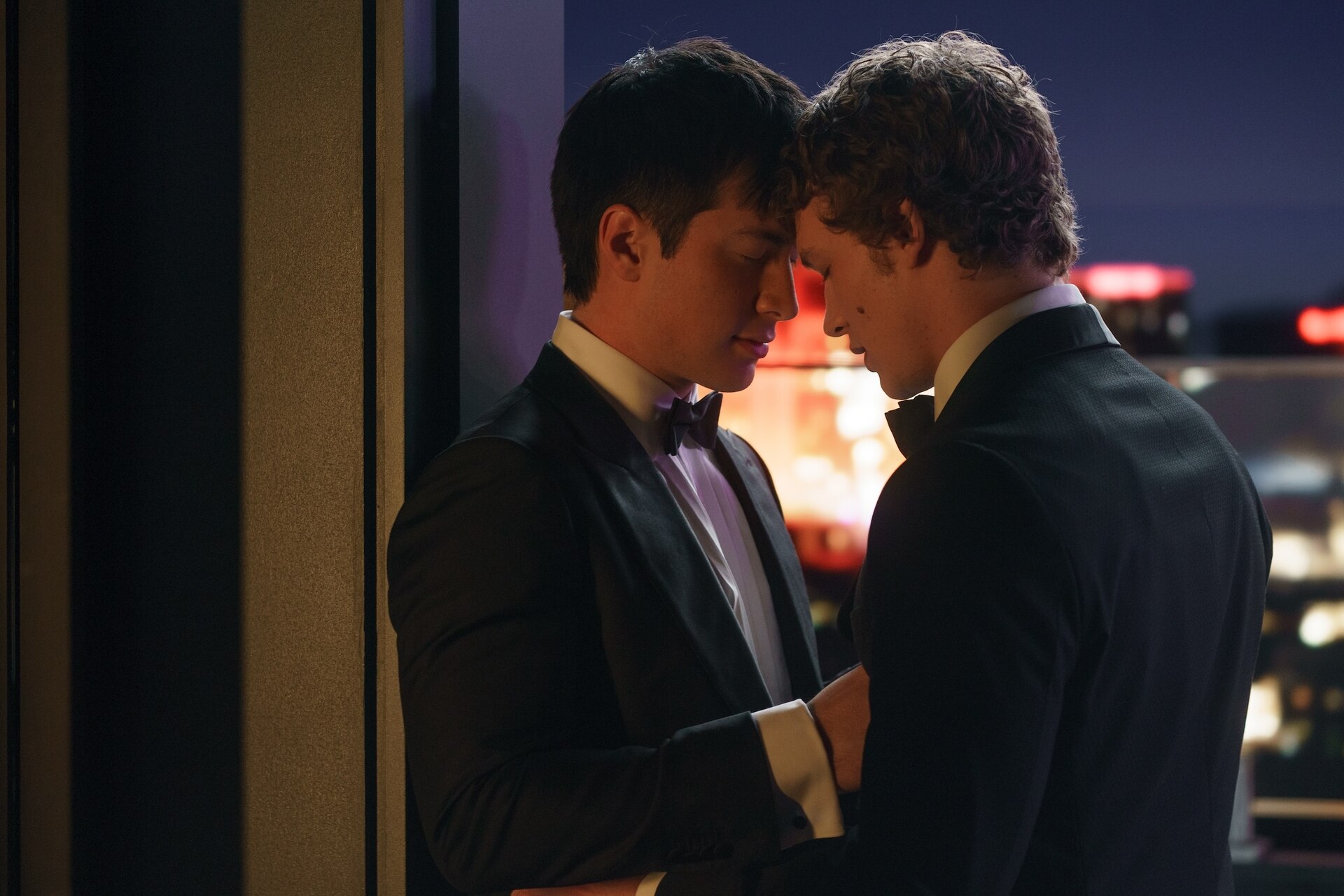
“Heated Rivalry,” the surprise gay hockey romance that has captivated global audiences and become a cultural phenomenon, has inspired sold-out parties celebrating the characters from the steamy series, including in Baltimore.
For some, love of the show has exposed the loss of a once-vibrant gay nightlife in Charm City and splintered its LGBTQIA+ community. It also brings up layered questions about identity, cultural representation and the limits of identity politics.
In Baltimore, the majority of the parties also appear to be missing a key ingredient that has been a part of the show’s success: gay men at the helm. Last month, women hosted a dance party at Ottobar, a straight establishment.
Initially, Robert Greene, 52, a director of people and policies in the IT consultation and staff augmentation field, didn’t have a problem with the party at Ottobar. But the more he thought about it, the more problematic it became.
“It is important that more mainstream communities understand and are familiar with the struggles the LGBTQ community faces,” he said. “But understanding our culture and snatching our culture are two very different things, and unfortunately the latter continues to happen more and more often.”
Others were more blunt.
“It almost just feels like people are just trying to monetize always, you know, on the gay community or the queer community in general,” lamented Ryan Haase, owner of The Club Car, a queer lounge just a hop, skip and jump away from Ottobar. “It’s like how everyone wants to monetize on queer culture during Pride Month and they go back to not caring about it days after that.”
Robert Lynch, 39, a business owner who lives in Fells Point, believes intent is important.
“If they host nights and special events, good on them,” he said. “If it’s only for viral hype, shame. Same goes for places that only host for Pride and spend the rest of the year not being inclusive beyond that. Shame on them.”
Ilhan Alyanak said gay men should get over themselves and open up their spaces.
“If you feel some type of way about this, I encourage you to face your biases and perhaps question if you are a misogynist. Also, give us Chappell Roan back,” she said.
It was a no-brainer for Alyanak to celebrate “Heated Rivalry.”

Alyanak and her business partner Lyla Shlon throw various Dyke Nite events throughout the year, and that included the sold-out “Rivalry”-themed dance party last month at Ottobar. (The Banner is participating in an unrelated Dyke Nite event on Saturday.) The event featured drinks named after characters. The dress code was jock gear and sportswear.
“I see it as a bunch of lesbians rooting for gay love. I wish we could all just focus on that, celebrating each other’s love and safety,” Alyanak said.
Shlon gives a side-eye to the complaints about gay male representation when it comes to throwing parties associated with the show — especially in Baltimore, where there are “so many spaces for cis gay males,” she said.
“We have had to carve out our own space,” she lamented. “We deserve to celebrate this show in the comfort of our own home [Dyke Nite] too.”
Others don’t have a problem with all kinds of businesses embracing gay culture. Cole Bishop, 36, a Canton resident, said he thinks “it’s really cool” that people who identify as gay can have gay events at different spaces. Bishop said he feels safe in all places he frequents and that he’s a fan of the show because it showcases a not “stereotypical gay” culture.
Shlon remembers the “very few” lesbian bars that existed in the past. She called them “problematic” and said they were not welcoming to trans people. She also didn’t feel like they were for her.
“I built Dyke Nite originally because I wanted to be in a space that felt more like it catered to the gender freaks, the leatherdykes and the DIY underground,” she said.
“Heated Rivalry” is groundbreaking for many gay men who are just now learning that parts of the lesbian community have been consumers of gay men’s erotica and gay men’s porn for as long as gay men have been making it, said Kate Drabinski, a professor of gender, women’s and sexuality studies and the director of the Humanities Scholars Program at the University of Maryland, Baltimore County.
“You just didn’t know we were watching it,” she said. “I would also say that this is one of the examples of the limits of identity politics. Like so many different identity groups, kinds of people are getting turned on by ‘Heated Rivalry.’ Like, straight women have been talking to me about this show more than any show I can remember. They’re excited about it.”
With this show, “women are able to feel safe experiencing men’s bodies in an erotic way that isn’t threatening,” Drabinski explained, adding that one of the main characters is bisexual and engages in sex with women. “These gay guys aren’t going to rape us. So I think there’s a safety in the erotics for some groups of women. I think for others, it resonates with our own sexual exploration. The show isn’t about gay men.”

Haase plans to throw his version of a “Heated Rivalry” party, “The Tuna Meltdown,” on Feb. 13. (The name is a nod to a sandwich one of the main characters eats.)
He’s not worried that his customers will be fatigued by the other parties that have been thrown in Baltimore. He’s promising a different experience with dueling DJs — fitting for a hockey show — drink specials, and episodes playing muted in the background.
And while Haase is somewhat appreciative that lesbians are supportive of gay love stories, he can’t help but wonder why there aren’t more options for them to latch on to.
“Where’s the lesbian version of this? You know what I mean?” he mused. “There really isn’t any ‘The L Word.’ I feel like there just hasn’t been. And maybe I just feel like there needs to be something for [lesbians] that hits mainstream as hard as ‘Heated Rivalry’ did.”
Comments
Welcome to The Banner's subscriber-only commenting community. Please review our community guidelines.