
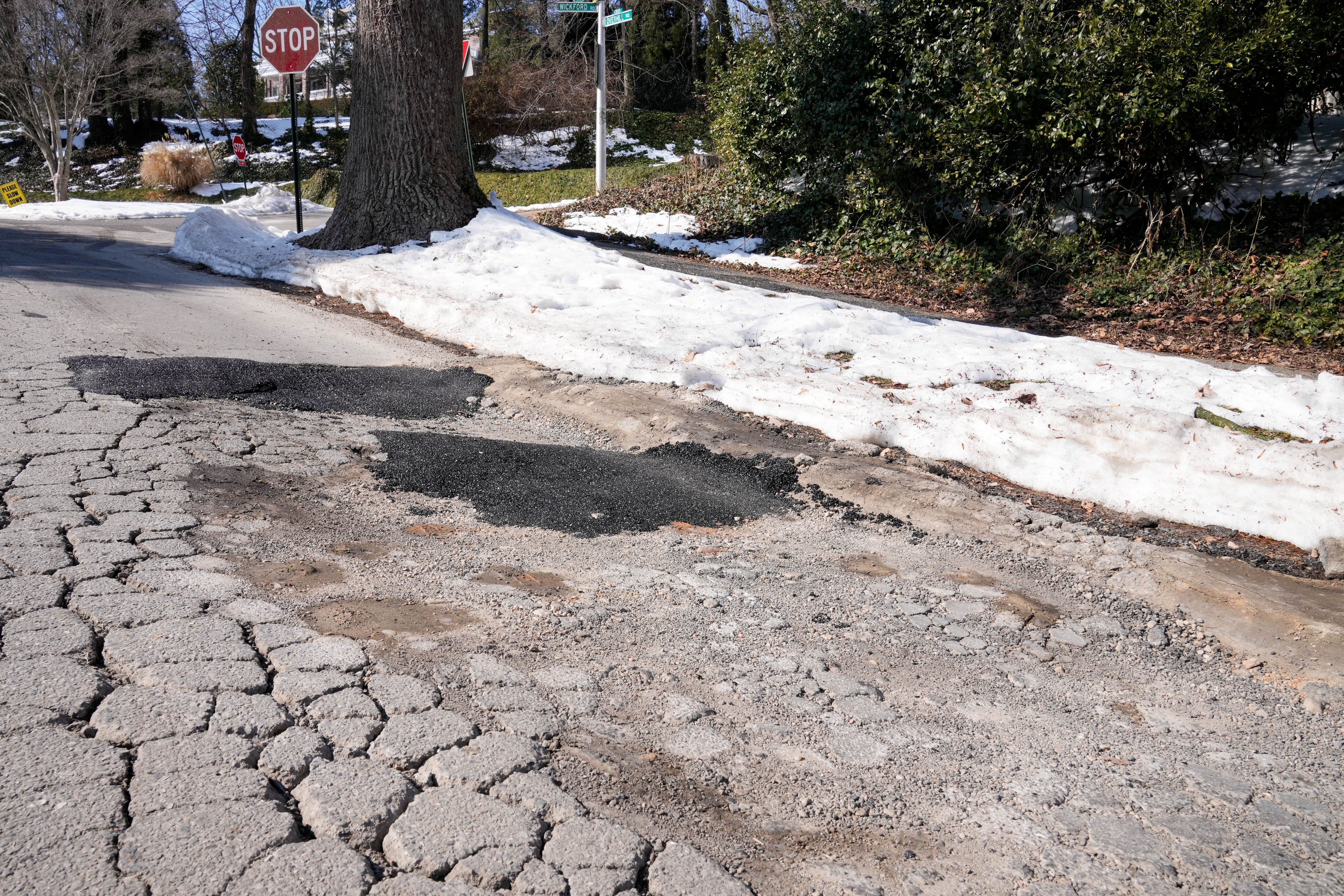
Baltimore road crews will pick up where they left off last year with plans to pave about 91 lane miles across the city in 2026.
That total represents roughly 1.75% of the city’s roads. At that pace, it would take about 57 years to repave the entire city.
Facing a growing backlog of street resurfacing projects, city transportation officials said Thursday that they are retooling how they plan repaving projects to deliver better, faster results in the years ahead. But they will face plenty of obstacles, including a massive funding deficit that will kick in next year unless state lawmakers take action.
At his State of the City address Tuesday, Mayor Brandon Scott said he’d oversee a revamp of the Department of Transportation’s street resurfacing program “from top to bottom,” hiring more contractors, better analyzing the work of city crews and keeping better accounting of current street conditions. The pledge drew shouts of approval from the crowd.
City Transportation Director Veronica McBeth provided City Council members with more details Thursday morning, calling the revamp a “forward-looking approach” known as Repave Baltimore that will improve transparency and accountability.
One of the main improvements will be an updated, detailed accounting of road conditions across the entire city — known as a “pavement condition index” — to help McBeth’s team better prioritize where to lay asphalt. McBeth said the index will be completed this fall and made publicly available online.
The pavement index isn’t a new idea — it’s long been the key piece of data in a prioritization process that also includes City Council input and equity considerations. But the current index is more than 10 years old, and updating it will help DOT return to a more objective, data-driven approach.
The department is also in the process of hiring more engineers, which will smooth out the process for developing plans that adhere to city code. In recent years, after the City Council passed the Complete Streets law, advocates have decried that resurfacing projects haven’t included required road safety improvements.
McBeth also wants to move away from relying too much on outside contractors that often are “not prioritizing Baltimore,” she said. Year after year, the same small group of companies bid on and win the department’s larger resurfacing projects, and McBeth hopes that breaking contracts into smaller bites will bring new companies into the mix.
Department officials also plan to use more precise language when discussing mileage goals. Yearly goals used to include multiyear projects, meaning they were doomed to fail in the public eye.
About 41% of Baltimore’s major roads are in poor condition, according to a March report from national transportation research group TRIP. That’s worse than the statewide average of 30%. The average Baltimore motorist loses about $3,000 per year because of lost time stuck in traffic and vehicle damage, according to the report.
Roads generally need repaving every 10 to 15 years, though that timeline depends heavily on the types and frequency of traffic. Without that degree of regular maintenance, problems can grow.
DOT plans to launch a 90-day sprint in mid-April to kick off paving season, including repairs to 25,000 potholes. The department has filled about 31,000 potholes in 2026, meaning it needs to pick up the pace to compete with 2025, when it filled 134,000.
Even with a revamped approach to resurfacing, McBeth’s team could remain behind the curve without more money.
Baltimore uses state pass-through funds called Highway User Revenues to pay for resurfacing and a slew of other infrastructure needs. Counties across Maryland use those revenues for repaving small, local roads and rely on the State Highway Administration for larger ones. Baltimore is unique in that it’s responsible for it all and, as a result, gets an outsized portion of HURs.
The state cut Highway User Revenues amid the Great Recession of 2008, and Baltimore estimates it has missed out on roughly $900 million worth of funding since. McBeth said the city could have resurfaced about 60% of its roads in that time.
State lawmakers temporarily restored HUR funding levels in 2022, but the law sunsets next year.
Scott’s proposed budget for fiscal year 2027, released this week, indicates that funding levels for resurfacing will increase slightly, rising to $22.4 million from $21.9 million in the current fiscal year.
Banner reporter Emily Opilo contributed to this story


Comments
Welcome to The Banner's subscriber-only commenting community. Please review our community guidelines.