
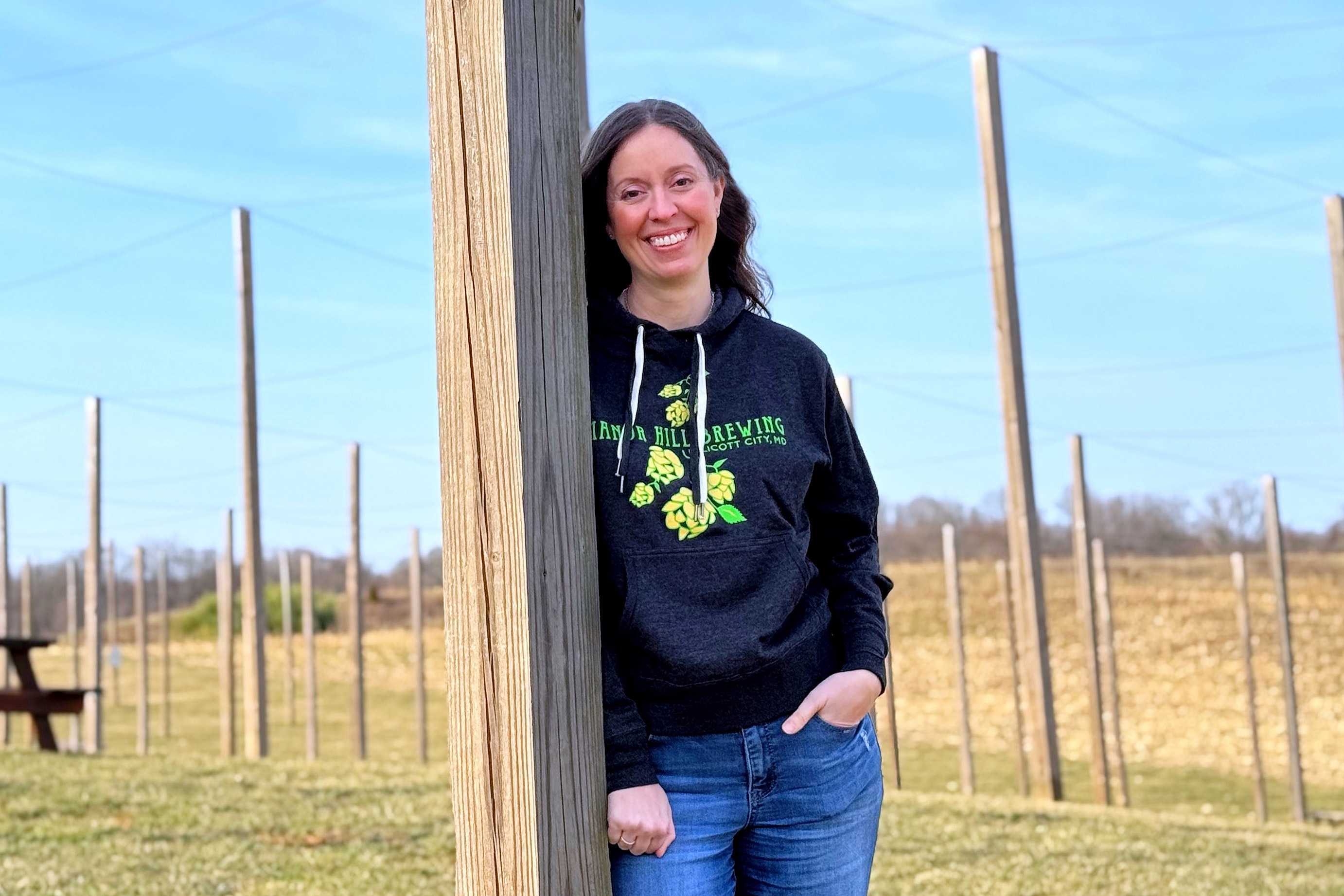
Rachael Mull was 39 and Christina Wachter was 41 when they were told they had colon cancer, a particularly deadly form of the disease people are more likely to associate with old age.
Mull, who lives in southern Howard County, had some on-and-off abdominal pain. Wachter had a little bleeding she attributed to hemorrhoids.
“I finally said something to my primary care physician, and he said, ‘I’m sure it’s fine but let’s get a colonoscopy,’” said Wachter, an accountant who grew up in the Baltimore area and still receives care at Sinai Hospital in North Baltimore.
“I woke from the procedure and the doctor said he found polyps,” she said. “And he wanted to share that he also found a mass.”
Both women were shocked by the diagnoses, but they are far from alone. Cases of colon and rectal cancer have been quietly climbing among younger people for decades, alarming and somewhat confounding experts.
A new report from the American Cancer Society found the incidence of colorectal cancer among those ages 20 to 49 is now rising at about 3% annually. Maryland’s rate mirrors the federal trend, according to federal data shared by the Maryland Department of Health.
Read More
The rate is also rising among those ages 50 to 64, but more slowly, possibly because many have already been screened. Cases are dropping among those over age 65.
“It’s important because what we’re seeing is an increase in colorectal cancer risk in every generation born after 1950,” said Rebecca Siegel, the cancer society’s senior scientific director of surveillance research.
“Something changed in the middle of the century, and we don’t know what.”
Colorectal cancer is now the third most common cancer in both men and women in the United States and the second leading cause of cancer-related death. It’s first for adults under 50.
A small percentage of cases is tied to people’s genes. But experts believe there is more risk from behaviors such as smoking, drinking heavily, eating an unhealthy diet and avoiding exercise.
Siegel said there is another potential culprit and target for researchers: ultraprocessed foods.
To reduce risk of all kinds of cancers, Siegel said people probably already know they should exercise more, quit smoking and eat more whole grains, fruits and vegetables. She also cautioned against too much red meat, and particularly processed meats like bacon.
Screening at age 45 — or earlier, if there are symptoms — could catch cases when they are precancerous or at the early stage, and therefore far more treatable. Both Wachter and Mull’s cancers were caught in stage 3, meaning the cancer spread to their lymph nodes but was still considered curable.
When the disease is caught early, more than 90% of patients survive. The odds drop considerably, to less than 15% in stage 4, when the disease has spread to other organs.

In 2021, the U.S. Preventive Services Task Force lowered the recommended age for routine colorectal cancer screening to age 45 from 50, meaning insurance policies would cover colonoscopies as well as less-invasive methods such as Cologuard that test stool samples.
Wachter and Mull said they each initially put off talking to their doctors because symptoms were mild and they were busy with family and jobs.
Mull eventually called her physician for an appointment, which led to her 2017 diagnosis. She had four surgeries, radiation and chemotherapy at Johns Hopkins Hospital.
Now 47, she remains cancer-free and feels deep appreciation for the time after her treatment that she now has on the family’s Ellicott City farm with her kids, ages 13 and 15.
“What’s so scary about colorectal cancer is you can have such minor symptoms, and they’re easily ignored,” said Mull, the CEO of Manor Hill Brewery.
Mull noted that her pain was likely due to a kidney stone, but it prompted the critical doctor visit.
“Here I am, eight years after surgery,” she said. “It all worked. But it’s one of those things that if you don’t pay attention, it may not smack you in the face that something is wrong.”
Wachter, too, was more nudged than smacked by symptoms. She had a colonoscopy in November 2024 and while she was coming out of anesthesia, her doctor told her that the mass was likely cancer. The lab couldn’t confirm until it reopened after the holiday, an excruciating wait.
“I honestly didn’t know what to say,” Wachter said. “I think I sat there with my husband sitting next to me. He touched my hand.”
Because of her age, her doctor sent her for genetic testing that revealed she also had Lynch syndrome, a genetic condition that increases the risk of colorectal, uterine and ovarian cancer.
She had a 10-hour surgery that also included a hysterectomy, plus four rounds of chemotherapy in three-week cycles, a harsh period that left her unable to work.
She came out of the experience grateful for her doctors at Sinai Hospital and her “village,” including her parents and husband who made sure life went on for her 13-year-old daughter and 20-year-old stepson. Her daughter will have genetic testing when she’s 18.
Wachter will be scanned at regular intervals for several years but is now cancer-free. To reduce the risk of recurrence, she reads labels, closely monitors her diet and makes sure she exercises.
Dr. Jessica Felton, one of Wachter’s surgeons at Sinai, said a cancer diagnosis is “devastating for everyone,” but the team will ensure they get tailored treatment. But she also said people shouldn’t assume they have cancer when they’re referred for a colonoscopy.
“Usually there is a polyp or the colon looks normal,” said Felton, adding that she can usually remove polyps, and their risk, on the spot. “I always tell people, why not have the colonoscopy and rule out cancer.”
Dr. Shana Ntiri, an American Cancer Society spokeswoman, said people shouldn’t be embarrassed about bathroom talk with any provider.
Part of the challenge may be that younger people may not have a regular doctor but rely more on urgent care. Others are uninsured or underinsured. To encourage more people to get tested, Ntiri says she points them to free screening at the Baltimore City Cancer Program at the University of Maryland Marlene and Stewart Greenebaum Comprehensive Cancer Center.
“Some people run to the doctor for every ache and pain, and some only go when they think they’re dying. I’ll tell you to take a deep breath and we’ll talk it through,” said Ntiri, who directs the cancer program.
“Maybe the worst thing that happens is I treat your hemorrhoids.”





Comments
Welcome to The Banner's subscriber-only commenting community. Please review our community guidelines.