
For years, when a call came into Anne Arundel County’s 24-hour crisis line reporting someone in the throes of mental illness or addiction, Jen Corbin, the county’s director of crisis response, sent a specially trained police officer and a clinician to attend to the person’s needs.
But not anymore, if the person faces legal troubles, such as a warrant for minor charges.
Now, she sends two mental health clinicians to handle those cases.
“I’d rather do it in a way that I can work with the client and it’s less traumatic,” said Corbin, adding that the change makes her concerned for her clinicians’ safety.
What’s changed her response is the Anne Arundel County Police Department’s newly strict adherence to policies that require officers to handcuff people and arrest them if they have a warrant.
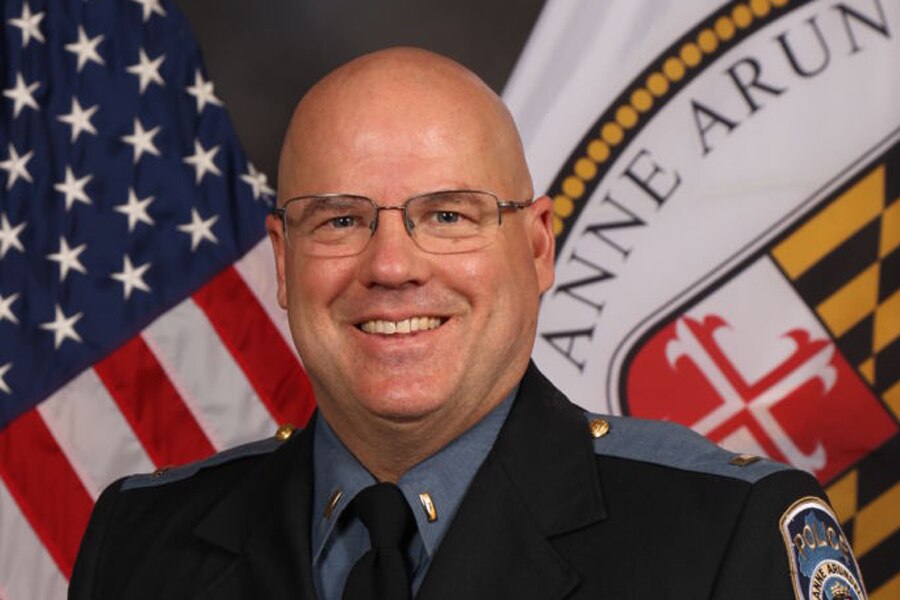
Last month, the department reassigned the longtime head of its acclaimed Crisis Intervention Team after he was disciplined for giving his officers discretion not to handcuff people. Lt. Steven Thomas, a 30-year police veteran, led the unit to international renown but sometimes looked past department policies in the name of helping people.
Under Thomas, the police crisis unit would work with the public defender’s office to bring people with warrants before a judge and pause the matter so the person could enter treatment. Legal issues could be addressed later when the person was of sound mind.
The change shows the fraying of the department’s partnership with the county’s mental health arm, which was long heralded as a national model. It also means some of the fears expressed by leaders of the mental health and addiction treatment communities in light of Thomas’ ouster are being realized.
“How did this get past the police chief’s desk?” asked Angel Traynor, who founded the substance abuse recovery group Serenity Sistas, of Thomas’ reassignment to mall duty. “I don’t know that our county executive is the one that makes the decision, but he had to be informed.”
“How does that happen that Steve [Thomas] is not able to fully prepare the person who’s stepping in to take his place?”
Police Chief Amal Awad declined to be interviewed. In a statement, she reiterated the department’s commitment to crisis intervention.
“Our department’s primary goal is to provide safe, effective, and respectful care when responding to a person experiencing a mental health crisis,” Awad said. “It is our policy that officers should prioritize non-arrest solutions in misdemeanor cases involving a person experiencing a mental health crisis, with the preferred outcome being voluntary admission to an appropriate mental health facility.”
Awad, who’s been chief for five years, added that Police Department policy also seeks to ensure officer safety.
In a statement, County Executive Steuart Pittman called Thomas, who’s about to retire, “a hero to thousands of families who have faced trauma and crisis in our county for many years.”
The Democrat said he’s had “extensive conversations” with Awad about the importance of crisis intervention and that he’s “confident that she and her leadership team will continue to deliver the high quality, respectful, and compassionate policing practices that we have become known for.”
He added that the handcuffing policy is “open for discussion and debate.”
Danny Watkins, a mental health and addiction treatment professional who serves on Anne Arundel’s Police Accountability Board, said in an email that the partnership between law enforcement and mental health professionals “is essential to ensuring safe and effective responses during times of crisis.”
“Officer safety is, and must remain, a priority,” Watkins said. “However, it is equally important to balance that priority with thoughtful, individualized approaches to care — especially when individuals present a low risk of harm to others.”
County Councilwoman Allison Pickard, a Democrat who is running for county executive, worries that the police department could be turning away from the critical and creative thinking to help people that Thomas encouraged.
“The concern going forward is: Are crisis response officers just in a different uniform or is the way they respond to situations really different than a traditional response?” asked Pickard, referring to the distinctive light-blue collared shirts worn by the specialized police officers. “It’s not simple. These are complex situations and they do take a lot of care so that everybody is safe at the end of the day. But crisis response is different than traditional policing.”
Pickard said she wasn’t privy to the Police Department’s reasoning for Thomas’ ouster but called “the optics of it” concerning.
“I do not want this personnel issue to be an indication of us turning our back on this kind of service in the county,” Pickard said.
She and two other leading candidates for the county’s top office — Pete Smith and James Kitchin, both Democrats — said in separate interviews they would prioritize crisis response if elected.
“If we trust the training, which again is theoretically like the best in the world, then the people making the call should be the trained officers responding, not a policy paper,” said Kitchin, who works as a special assistant to Pittman but spoke to The Banner in his capacity as a candidate.
Carl Snowden, convener of the Caucus of African American Leaders of Anne Arundel County, said Thomas’ ouster sends the wrong signal to the rest of the department: “Do not show empathy.”
“While technically he violated the standing general order, given the number of unfortunate incidents that have involved the fatal shooting of people who are mentally challenged, it’s probably time to look at revising the way you addressed the issue, which is what he was doing,” Snowden said.
Nearly 1 in 4 people killed by police in Maryland since 2021 were experiencing a mental crisis, according to the Office of the Attorney General, which reviews all fatalities involving police.
Last month, a 25-year-old autistic man who’d called 911 in distress was fatally shot by Howard County Police officers who responded to the scene; authorities said he’d approached them and ignored commands to drop a knife.
It is Anne Arundel Police Department policy that officers handcuff people with mental illness or addiction when transporting them. Another rule, effective as of February 2025, says officers must arrest people with outstanding warrants.
The consequences of both can be significant, Corbin said. Restraining someone in mental crisis could exacerbate their symptoms, she said, and jail can be even more traumatic and worsen mental illness or addiction.
If a judge deems someone who is acutely mentally ill to be incompetent because they can’t understand their charges or the court system, he or she orders the Maryland Department of Health to treat them at one of its psychiatric hospitals. By law, the transfer is supposed to happen in 10 days. But because of a statewide hospital bed shortage, mentally ill people often languish in jail for months.
“We’re not getting them out of jail free,” Corbin said. “We’re trying to lessen the people waiting in jail for a bed they may not need because they got help on the front side.”
State judiciary and health officials are looking at the possibility of incorporating Anne Arundel’s practice statewide to ease the hospital bed crisis.
Corbin said the county’s crisis response system continues to try to divert people from jail, but often now without the security of specially trained police officers.
Corbin said she expects the crisis response and police crisis intervention units to continue long after she and Thomas are gone, even if they looks different.
“I think,” she said, “the ultimate goal for the police department and the crisis system is to work together as best we can because we are two separate entities: law enforcement and mental health.”




Comments
Welcome to The Banner's subscriber-only commenting community. Please review our community guidelines.