
Rain muddied the ground and lightning cracked through the sky as “audacious Villains” tried to use pickaxes, spades and other tools to dig under the foundation of the Old Treasury Building in Annapolis.
The attempt, in August 1762, proved unsuccessful. The Maryland Gazette did not report any collapse of the building or successful burglary.
And, the newspaper wrote at the time, “We hear that Two Men are in Gaol on Suspicion of being concerned in this Affair.”
It wasn’t the first time some ne’er-do-wells attempted to break into the building that once held paper currency in the state capital — nor would it be the last.
The attempted break-ins are part of the lore of the state’s oldest public building, which recently opened to the public as a free museum after renovations.
Some “evil-minded persons” attempted to do so in 1746 but were unsuccessful, the Gazette reported at the time.
Read More
One successful break-in was recorded in 1784, by a person or persons “who got down the chimney,” according to the Gazette. One suspect, though, already had been arrested by the time the burglary was reported in the newspaper.
The Maryland State Archives also has a letter from 1791 in which Thomas Harwood, who was treasurer of the Western Shore, said an attempt to break into the vault through the ceiling failed.
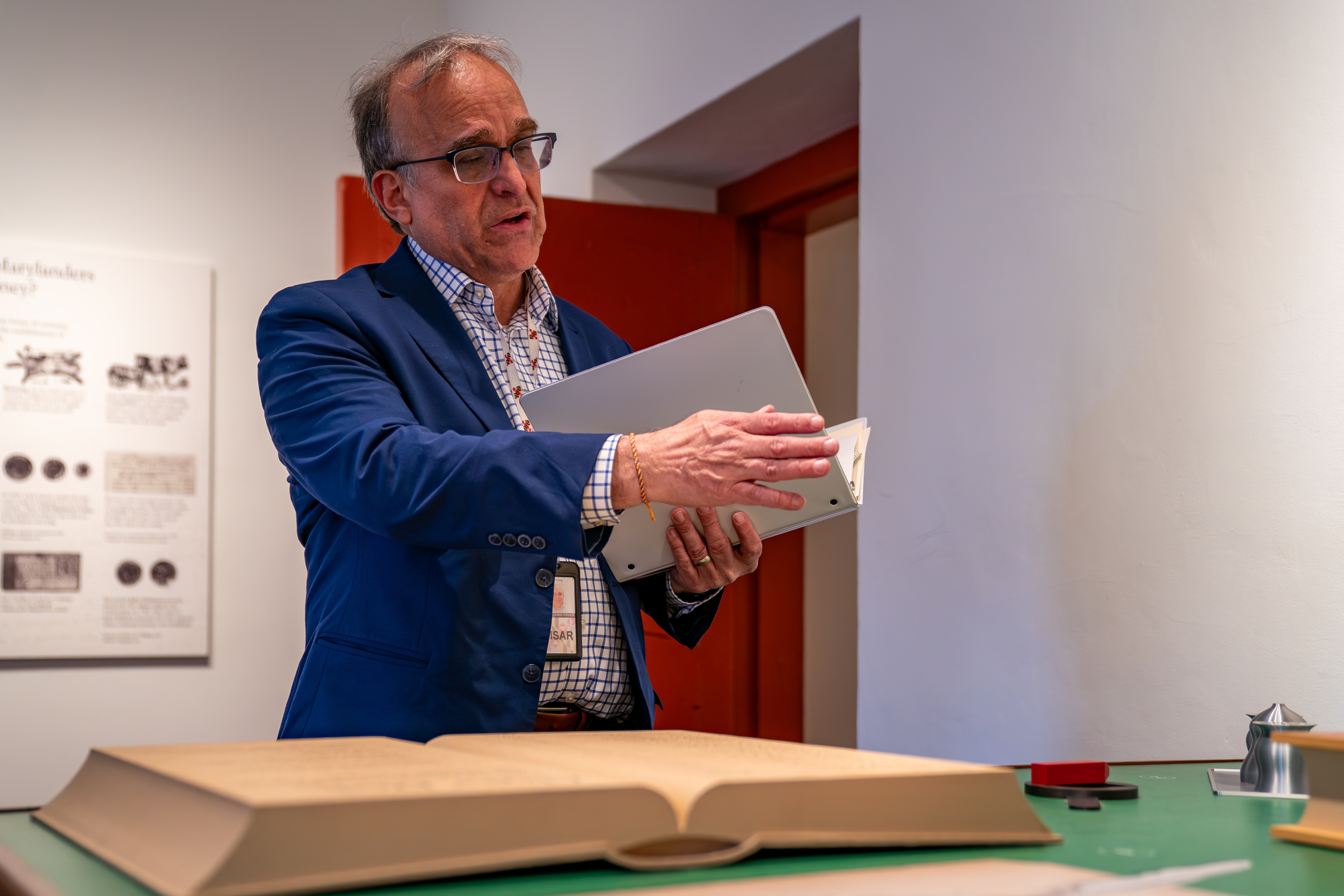
Whether those four attempts were the only ones is unclear, said Chris Kintzel, director of the Maryland Commission on Artistic Property at the Maryland State Archives.
But it’s easy to imagine more “audacious villains,” or others down on their luck, attempting to rob the state treasury back in the era of the American Revolution.
Built in 1737, the Old Treasury Building still stands in Annapolis, in the shadow of the State House. It has thick brick walls and a heavy wooden interior door. The windows once would have been protected with bars and shutters.

Kintzel said it’s a near certainty that enslaved laborers helped build the structure.
“Money that was exchanged and stored in this building, Maryland’s wealth, was directly tied to enslaved labor,” he said.
The funding to construct it would have come from taxes on the importation of slaves, he added.
The structure was first used by the “commissioners for emitting bills of credit” in colonial Maryland. The bills would come in large books from England, according to Kintzel, and the commissioners would sign and number each as it went into circulation.
Following the revolution, the building held the state treasurer’s office — where it gets its name — from 1779 to 1903.
It’s small, just three rooms with a porch. Inside is an assembly room, the treasurer’s office and the repository — the vault.

The building’s vaulted ceilings are notable features. Curving from wall to wall, the extra height created by unconventional ceilings makes it harder for flames to climb to the top of the building — a colonial-era fire mitigation technique, Kintzel said.
During the early 20th century, the Old Treasury Building housed a variety of offices, including Historic Annapolis, which was founded in 1952.
Eventually, the building fell into disuse and wasn’t much more than a glorified storage shed. Major renovations and restoration work began in 2007 with the publication of a State House master plan. The costs were included in the $20.2 million State House renovations, according to Maryland Matters.
The museum’s exhibits focus on the building’s history and function, and detail the security measures once used to protect Maryland’s money.
There are informational signs, a repeating video that discusses the building’s history and replica furniture to show what the offices looked like during the Colonial period.

A few artifacts sit safely in display cases, including old coins and heavy iron locks. It features an explanation of what might be considered the earliest version of multi-factor authentication.
Instead of entering a number on a PIN pad or using a thumbprint, early Marylanders had an analog way of securing the iron chests filled with money in the treasury building. The chests required two or three keys to open, and each key would be in the possession of a different person.
“Everything about this building was meant to secure Maryland’s currency from theft, counterfeiting and embezzlement,” Kintzel said.
Rachel Robinson, vice president of preservation at Historic Annapolis, said historic properties such as the Old Treasury Building “contribute to the essence of Annapolis and help make it special.”

The town was a “witness to the American Revolution,” Robinson said, and though some buildings change and have been remodeled or renovated, she thinks swaths of Annapolis would be recognizable to the founders.
“Because these buildings survive in such great number, you can walk around and begin to imagine what it was like for 18th-century residents and visitors to be in Annapolis,” she said.
Managing change, growth and development doesn’t happen by accident, Robinson said. Keeping the city’s historic charm recognizable has been the work of Historic Annapolis and other organizations for more than 70 years.
“Preservation is not one and done,” she said. “It takes years and generations to keep at it.”
Visitors to the Old Treasury Building can take self-guided tours daily from 8:30 a.m.-5 p.m., except for Christmas and New Year’s Day.





Comments
Welcome to The Banner's subscriber-only commenting community. Please review our community guidelines.