
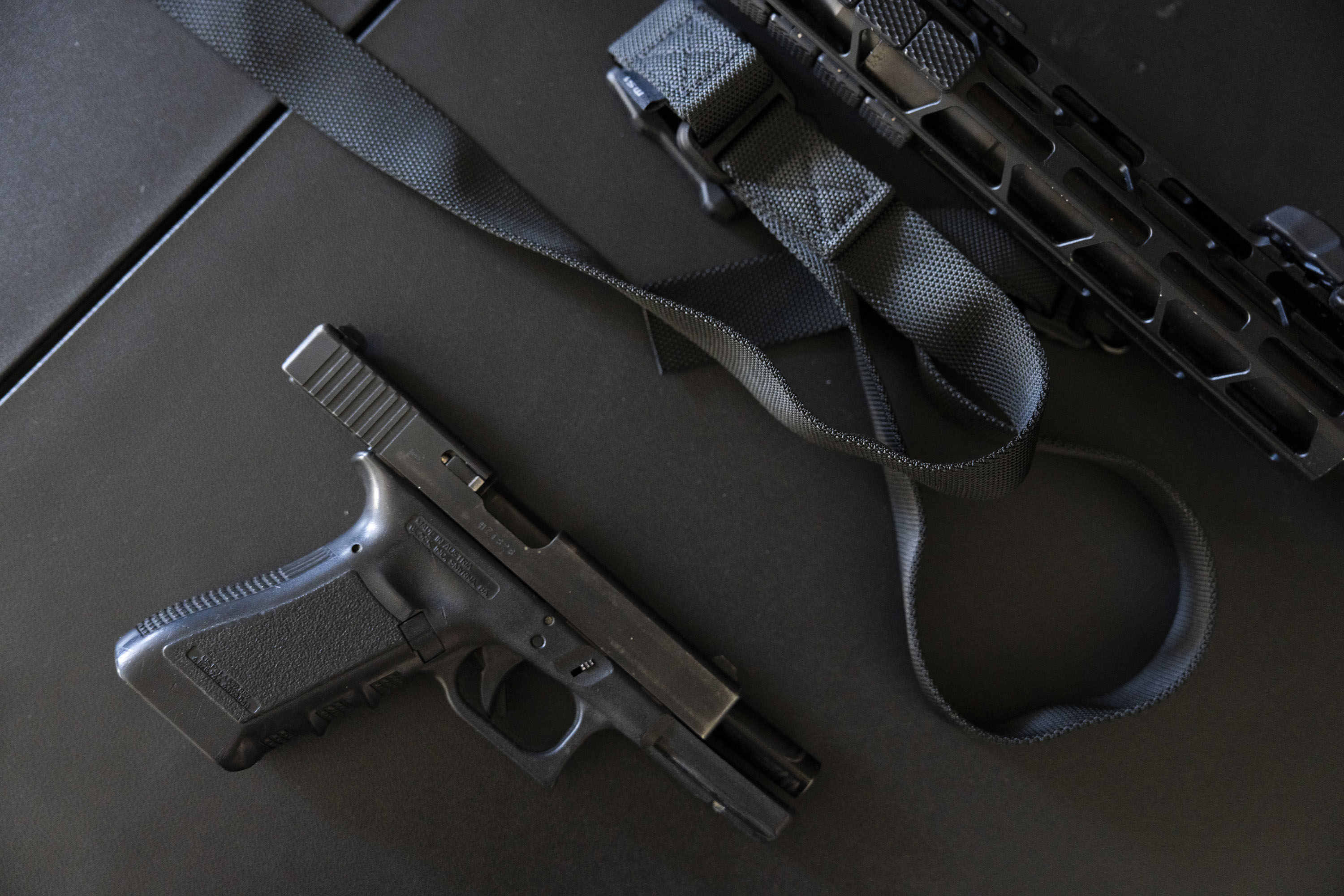
As the child of a father who hunted, Vera Snively shied away from firearms, influenced by her mother’s aversion to guns.
Now, the 18-year-old Westminster electrician goes to the shooting range at least once a month. She owns a rifle and a shotgun, and plans to get a handgun when she turns 21.
“I want to be able to defend my community, especially being in political spaces and queer spaces,” said Snively, a trans woman. “It’s just having that extra line of safety, having that extra peace of mind would be important to me.”
Snively is among what some say is a growing number of LGBTQIA+ gun owners across the United States. Gun rights organizations and advocates say interest in gun ownership appears to have increased in that community since President Donald Trump returned to the White House last year.
David Phillips, part of the national training team for The Liberal Gun Club, said prior to Trump’s second election, his organization received about 20 inquiries a month. It’s now about 500 — a jump he attributed to an increase in political division and violence.
The trend doesn’t surprise academics. Kate Drabinski teaches about gender and sexuality at the University of Maryland, Baltimore County. She said that “the logic is, we have to stand up for ourselves, and if we see our communities facing violent attack, it makes sense to get armed and trained to protect ourselves and our communities.”
The state of Maryland does not track the number of registered gun owners who identify as queer, but there are several indications of increased interest. A dozen people who talked to The Banner said they’ve explored firearm training because of fears triggered by recent violence against LGBTQIA+ people and conservative groups’ attacks on them.
Byron Macfarlane said he’s felt a “simmering revolutionary attitude settling in” over the last two years.
“Even for someone like me, unabashedly anti-gun and a supporter of repealing the Second Amendment, I don’t feel safe, and I have seriously considered training and becoming a firearm owner,” said Macfarlane, Howard County’s elected register of wills.
Solidarity Firearms Training, an LGBTQIA+-led firearm training company based in Westminster, has reported a bump in website traffic and inquiries, especially after reports of violence against the community.
“I can say with certainty that the majority of the students” attend because they believe their personal security is at risk, said Robert Roys, one of the company’s founders.
“We will get batches of folks who are very worried about this,” added co-founder Erik Shilling.


The two said they opened the business after each separately heard an instructor at another firearm training facility use homophobic language. They have trained more than 500 people, most of whom are LGBTQIA+.
Cam Taylor-Canner took Solidarity’s class right after Trump’s win.
Taylor-Canner, 29, said he wanted to be “more knowledgeable” about firearms “because I recognized the need for a way to defend myself as a queer and disabled person in America.”
“Realistically, the time for peaceful acquiescence I don’t think never existed, but it certainly isn’t going to get us anywhere when somebody could be getting gunned down and is getting gunned down,” Taylor-Canner said.

The organizers of Black Pride Month plan to offer gun-related programming this fall, said Christopher Henderson-West, co-executive director of BLAQ Equity Baltimore, which serves LGBTQIA+ African Americans.
“Part of this is knowing how to disengage in these situations,” he said.
David Burch said he knows firsthand the importance of being armed in a dangerous situation.
In 2021, while Burch was getting a haircut at Bladi Style Barber Shop in Baltimore, a man shot and killed his barber. Burch, an off-duty Baltimore Police sergeant, returned fire at the Medford neighborhood shop, killing the man. He was cleared of any criminal wrongdoing.
In June, Burch, now 34, launched a firearm training company, Vigilant Protection Services. He has trained 100 or so people, many worried about the political climate — and almost all were people of color or LGBTQIA+.
“They say the world is insane right now. There’s so many crazy people out there. The mass shootings and crime, that’s why people want to carry firearms,” he said.

Mo Mullings, a 32-year-old Evergreen Lawn resident, said his friends often talk about the Trump administration’s adverse relationship to the LGBTQIA+ community. That’s partly why he enrolled in gun training.
“They’re limiting our freedoms in specific ways, targeted ways, and at some point, we may need to fight back,” he said.
Not everyone thinks arming themselves is the right response.
Phillip Westry, executive director at FreeState Justice, a Baltimore nonprofit providing free legal services to LGBTQIA+ people across the state, said guns aren’t the answer, but he understands why some think they are.

For state Sen. Mary Washington, a Democrat representing District 43 in Baltimore City and Baltimore County, guns promote violence that contradicts the LGBTQIA+ message that “love is love.”
“It’s really difficult to reconcile,” Washington said, adding that she believes reducing gun ownership will limit violence.
Adam David Bencomo, a 39-year-old who lives in Station North, has thought about firearm training since the Pulse nightclub mass shooting in Orlando targeted the gay community a decade ago.
“There’s an erasure that’s trying to happen,” he said, referring to how some in the Trump administration are targeting his community.
He plans to take Burch’s course.



Comments
Welcome to The Banner's subscriber-only commenting community. Please review our community guidelines.