
Anne Arundel County Councilman Pete Smith sees something missing in the local real estate market, something he believes would ease the county’s affordable-housing crisis.
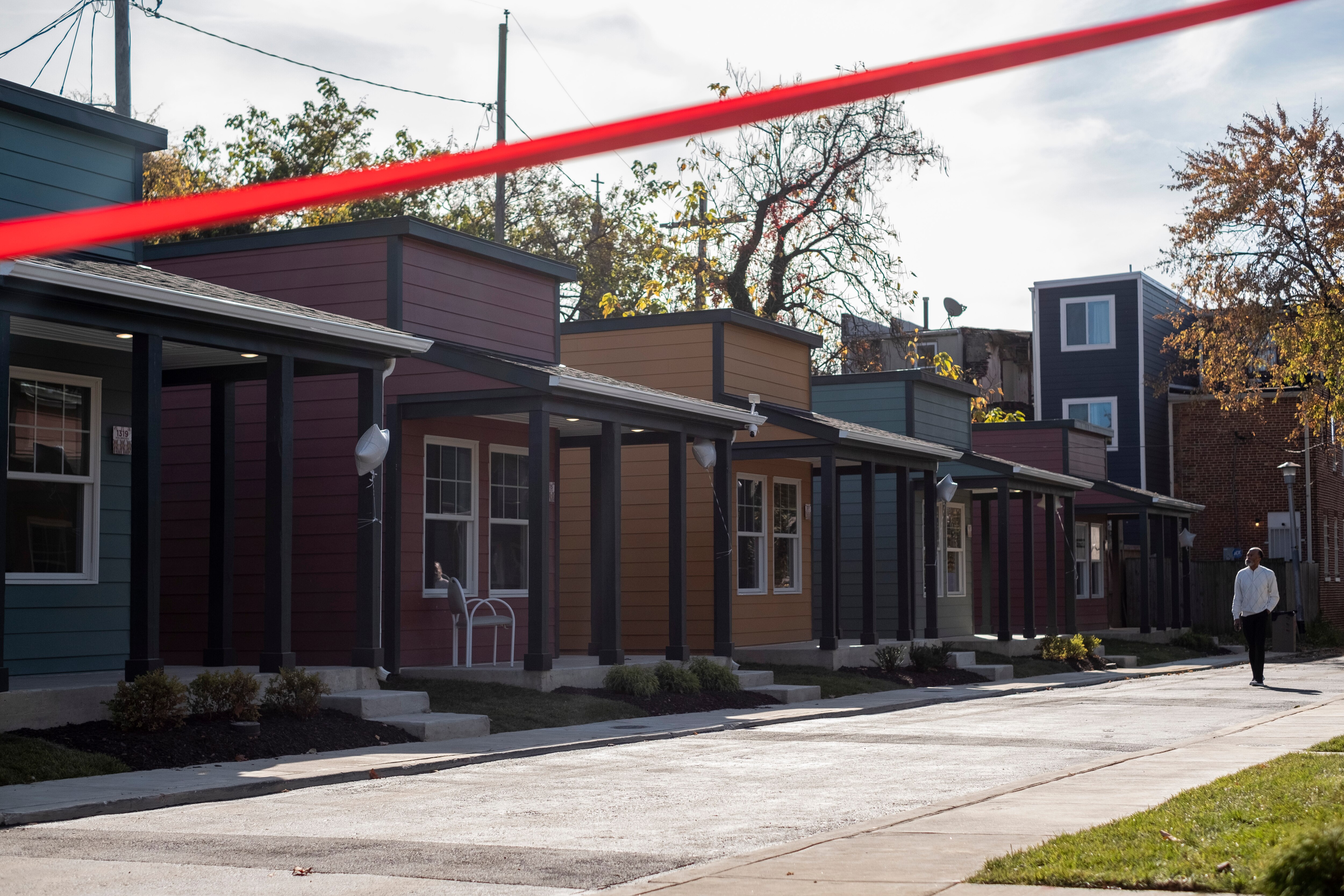
Tiny homes, also known as cottages, look like any other house — only they are, as their name suggests, smaller. Their footprints number in the hundreds of square feet rather than the thousands. They’re relatively cheap to build and buy.
They are, however, not practical under county code.
But Smith is hoping to change that with legislation he introduced to allow developments of the little homes in certain residential and commercial areas — and at a scale that would not be permitted for other types of housing. The measure also places income restrictions on who can buy these residences.
It’s scheduled for a final vote at Tuesday night’s council meeting, where it’s expected to pass along party lines, with Smith’s fellow Democrats in favor and Republicans opposed.
“We don’t have to have 2-, 3-, 4,000-foot homes to have a high quality of life,” Smith said in an interview. “We want to give home ownership opportunities to everyone up and down the income spectrum.”

Housing instability and affordability is personal to Smith, he said at a recent council meeting.
When Smith was 17, finishing up high school, his mother lost their house. He said he lived in a relative’s closet after that. It’s part of what led him to join the Marine Corps.
“They’re simple. They’re easy to build, which means they should be sold for a moderate price, so that everyone can afford them,” Smith said of cottage homes. “Creating home ownership for folks like me who had nothing going into the military is something I’m dead set on.”
The bill, Smith’s second attempt at the legislation, has been amended extensively since November. One advocacy group that worked closely with him ultimately refused to support it.
Other cities, including Baltimore and Sacramento, California, have turned to tiny homes to combat homelessness. Smith said he also sees cottages as the perfect product for young people and seniors looking to downsize.
While cottage homes are not prohibited under Anne Arundel code, they aren’t feasible for developers. For example, in a zoning district that allows one residence per acre, a builder likely wouldn’t be able to sell one profitably.
Under Smith’s bill, a developer could build 12 cottages in an area zoned for one residence per acre. It includes similar density incentives for all residential zoning districts and allows cottage homes on certain commercial and industrial lots.
“The bill allows the increased density to actually make it a viable project for a developer,” Smith told The Banner.
Tiny homes will have to be 800 square feet or smaller. Only people who make up to or less than the area median income, approximately $130,000, will be allowed to purchase the cottages. It’ll be up to Arundel Community Development Services, a quasi-governmental agency, to regulate that income provision.
“By putting constraints on the buyer, it also puts constraints on the builder to build products that also fall in the price range we are trying to serve,” said Smith, adding that he expects such homes to sell for around $200,000, far below the county’s median home price of more than $500,000.
The administration of County Executive Steuart Pittman, who has championed housing affordability, supports the bill.
Janssen Evelyn, Pittman’s deputy chief administrative officer, called Smith’s bill “an additional tool in the toolbox” to address the “housing affordability crisis.”
“It reflects a good-faith attempt to expand flexible housing options,” Evelyn said in a statement.
Council members Julie Hummer and Allison Pickard, Democrats who persistently advocate for affordable-housing policies, echoed Evelyn.
“Any time we’re thoughtfully adding a new housing type into the mix I think it’s a positive step towards attainable housing for folks in the county,” said Pickard, describing housing policy as complicated and stubborn to take hold. “The big question for all of our policies is: Will it get built?”
During Pittman’s almost eight years in office, the council has passed — and Pittman has enacted — a variety of measures aimed at curbing the housing crisis. But progress has been slow, with few developers seizing on the new rules.
Smith said he expects cottage homes to be different because he knows developers who “are interested in building these kinds of products.”
Pasadena Republican Nathan Volke, however, said he’s heard the opposite from developers. He doesn’t support the cottage home bill.
Volke said he doesn’t think it’s the right approach to address the affordable-housing crisis.
“I don’t know if these cottage homes communities are going to spring up everywhere or if there is going to be one of them,” Volke said.
Anne Arundel Connecting Together, a coalition of faith-based groups focused on housing, supports Smith’s measure. The Growth Action Network, which typically takes a more cautious approach to expanding housing, worked closely with Smith on the bill but ultimately decided not to take a position.
The network’s Kate Fox said its legislative committee felt there were not enough guardrails on cottage home developments. While Smith’s bill includes provisions requiring tiny home developments to be built in places served by water and sewer and suitable roads, the group believes it could be applied too broadly.
“Our concern is that it’s just too high density for some areas of the county,” said Fox, expressing concern about the county’s ability to support such development.
Developments under the cottage home bill would still be subject to review by the county’s Office of Planning and Zoning, which considers public feedback on a project.




Comments
Welcome to The Banner's subscriber-only commenting community. Please review our community guidelines.